Veteran Owned Small Business · CAGE 0P327 +1 (813) 996-2583 Engineering & Manufacturing in Land O' Lakes, FL, USA
MIL-STD-704F · DO-160G · CAGE 0P327

Aerospace Redundant N+1 Power Supply Engineering & High-Reliability Solutions

Fault-tolerant airborne AC-DC & DC-DC power conversion architectures featuring active current sharing, hot-swappable module redundancy, and sub-microsecond isolation for mission-critical flight avionics.

High-Density Modular Avionics

Fault-Tolerant N+1 Power for UAVs and Fixed-Wing Platforms

Ultra-compact conduction-cooled designs operating flawlessly from -55°C to +85°C and altitudes exceeding 70,000 feet with active ideal ORing isolation.

MIL-STD-461G EMI/EMC Qualified

400Hz & Wide-Range DC Redundant Power Conversion

Designed for 115V/230V 400Hz AC inputs and 28V/270V DC buses with integrated active PFC, sub-harmonic suppression, and zero-drop transition.

Scroll
35+ Years Founded 1987 · Made in USA
N+1 Active Current Sharing Architecture
MIL-STD Qualified to 704F / DO-160G / 461G
ISO 9001 PJR Registered · ANAB Accredited
Technical Insight & Architectural Standard

Aerospace Redundant N+1 Power Supply: Mission-Critical Power Availability for Modern Flight Systems

In high-altitude defense programs, autonomous unmanned aerial systems (UAVs), commercial airliners, and tactical airborne radar platforms, power failure is not an option. An Aerospace Redundant N+1 Power Supply is an advanced electrical architecture engineered to eliminate single points of failure by pairing 'N' power modules required to meet total system load demands with '1' additional active spare unit. If any individual module suffers a thermal event, component failure, or line fault, the remaining modules immediately sustain full operational current with zero voltage interruption.

The Engineering Imperative of N+1 Redundancy in Avionics

Modern airborne systems—ranging from active electronically scanned array (AESA) radar racks to flight control computers and satellite communication suites—demand unprecedented levels of continuous power density. Traditional 1+1 dual-redundant architectures duplicate 100% of system hardware, imposing unacceptable weight, volume, and thermal penalties on modern airframes.

By contrast, an optimized Aerospace Redundant N+1 Power Supply uses a modular parallel approach. By utilizing three 500W modules to support a 1000W load (a 2+1 configuration), systems engineers reduce physical footprint and weight by up to 33% compared to dual 1000W units while maintaining absolute fault tolerance.

  • Active Single-Wire Current Sharing: Distributes load evenly across all active modules within ±3% to minimize thermal stress and double individual module MTBF.
  • Microsecond Active ORing Isolation: Utilizes low-Rds(on) MOSFET switches to isolate short-circuit failures instantly without voltage droop.
  • Hot-Swappable Module Replacement: Allows flight line technicians to replace damaged power modules without powering down critical flight computers.
  • MIL-STD-704F & DO-160G Compliance: Holds steady output voltage through extreme input transients, phase imbalance, and voltage sags.

Contact Us

Aerospace Redundant N+1 Power Supply module architecture for rugged airborne platforms
Information Gain & Architectural Deep Dive

Inside High-Reliability N+1 Airborne Power Conversion: Design Mechanics & Information Gain

Designing an Aerospace Redundant N+1 Power Supply requires far more than connecting standard power supplies in parallel. It demands precise high-frequency control loops, ultra-fast fault isolation, and specialized thermal management to survive extreme environmental stresses.

1. Active Current Sharing vs. Droop Sharing

Passive droop current sharing relies on output voltage drops to balance current between parallel supplies, resulting in poor line regulation (often degraded by ±5%). AJ's Power Source implements high-speed Active Single-Wire Current Sharing control logic.

An internal high-side current sensing amplifier monitors each module's contribution and continuously micro-adjusts the PWM feedback loop. This guarantees balanced output current down to load levels as low as 10%, keeping junction temperatures identical across all power devices and extending overall operational life.

2. High-Speed Active Ideal ORing MOSFET Isolation

Legacy redundant power supplies used passive Schottky ORing diodes to isolate parallel rails. However, Schottky diodes introduce significant forward voltage drops (0.5V to 0.8V), generating excessive waste heat at 100A+ current output.

Our aerospace N+1 platforms replace passive diodes with N-Channel Active Ideal ORing FETs controlled by high-speed sensing ICs. During an internal module short, the reverse current is detected within less than 200 nanoseconds, driving the gate voltage low and turning off the switch to prevent downstream voltage degradation on the main avionics bus.

3. Wide Bandgap (GaN & SiC) Topologies

Integrating Gallium Nitride (GaN) switches and Silicon Carbide (SiC) diodes allows switching frequencies to scale from 100kHz up to 500kHz+. Higher switching speeds significantly shrink the footprint of planar transformers and output inductor chokes.

This wide bandgap efficiency breakthrough yields power densities exceeding 35 Watts per cubic inch while operating cleanly across altitude profiles up to 70,000 feet without dielectric arc-over or thermal runaway.

Technical Parameter Matrix for Aerospace N+1 Power Supply Solutions
Design Parameter Legacy Dual Redundant (1+1) AJPS Aerospace Redundant (N+1) Operational Advantage
Volumetric Power Density 10 – 15 Watts / in³ 30 – 45 Watts / in³ 3x space savings in constrained avionics bays
System Efficiency (Full Load) 84% – 88% (Diode ORing) 94% – 96% (Active Ideal ORing) Dramatically lower heat dissipation in sealed cockpits
Current Balancing Accuracy ±8% to ±12% (Passive Droop) ±2% to ±4% (Active Bus Controller) Eliminates localized thermal hotspots, boosting MTBF
Module Fault Isolation Speed 10 to 50 Microseconds < 200 Nanoseconds Prevents output voltage dip during module failure
Input Frequency Range 400Hz Fixed (±5%) 360Hz – 800Hz Wild Frequency Fully compatible with modern variable frequency aircraft generators
Thermal Dissipation Path Forced Air Fans (High Failure Risk) Conduction Cold-Plate / Potted Baseplate Maintenance-free cooling for high-altitude unpressurized compartments
Product Showcase & System Solutions

Featured Aerospace Redundant N+1 Power Supply Solutions

Select from proven COTS platforms, modified standard configurations, or custom-engineered enclosures developed for defense primes and aerospace OEMs worldwide.

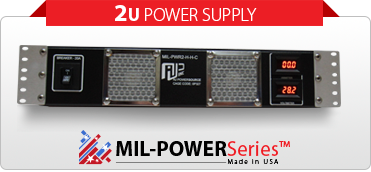
2U Aerospace Redundant N+1 AC-DC Power Supply Chassis

Modular 2U Aerospace N+1 AC-DC Power System

Configurable 19-inch rackmount or custom chassis featuring 3x 1200W hot-swappable modules (2+1 2400W redundant output). Accepts 115/230VAC 400Hz input with active PFC.

  • MIL-STD-704F & MIL-STD-461G Compliant
  • Active single-wire current sharing
  • Front-panel status LED and SNMP/PMBus telemetry

Contact Us

View Platform Specs
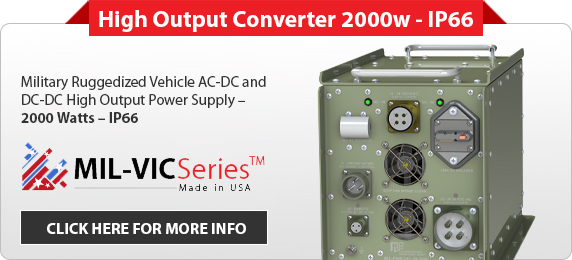
Sealed IP67 Airborne N+1 Redundant DC-DC Converter

Sealed IP67 Airborne N+1 DC-DC Power Converter

Conduction-cooled, sealed aluminum chassis designed for unpressurized UAV weapon bays and mast applications. Delivers 28VDC or 270VDC redundant power with zero fan dependency.

  • Operates from -55°C to +85°C baseplate temp
  • MIL-DTL-38999 circular keyway connectors
  • IP67 / IP66 waterproof submersibility

Contact Us

View Sealed Series
High-Output 270VDC to 28VDC N+1 Redundant Power System

High-Voltage 270VDC to 28VDC N+1 Power Converter

High-density converter system for next-generation military aircraft architectures. Transforms 270VDC high-voltage bus power into regulated 28VDC redundant output with sub-microsecond trip limits.

  • Efficiency up to 96% using GaN power stages
  • Integrated hold-up time capacitance
  • Qualified to MIL-STD-810H shock and vibration

Contact Us

View Converter Range
Qualification Pedigree

Airborne Standards & Environmental Qualifications

Every Aerospace Redundant N+1 Power Supply designed by AJ's Power Source undergoes rigorous verification to satisfy the most stringent defense and commercial flight standards.

Aerospace Standards Compliance Matrix
Standard Scope & Description AJPS Engineering Compliance Method
MIL-STD-704 (A through F) Aircraft Electrical Power Characteristics (115V/230V 400Hz, 28VDC, 270VDC) Active PFC front-end circuits sustain zero drop during input interrupts up to 50ms and transient spikes up to 80V.
RTCA / DO-160G Environmental Conditions and Test Procedures for Airborne Equipment Qualified across Section 4 (Temp/Alt up to 70k ft), Section 8 (Vibration), Section 16 (Power Input), and Section 22 (Lightning Transients).
MIL-STD-461 (E, F, G) Electromagnetic Interference Emission and Susceptibility Requirements Integrated multi-stage differential and common-mode passive filters ensure compliance with CE102, CS101, RE102, and RS103 limits.
MIL-STD-810 (F, G, H) Environmental Engineering Considerations and Laboratory Tests Fully potted encapsulated assemblies or ruggedized structural ribs withstand extreme shock (Method 516.8) and salt fog (Method 509.7).
Why AJ's Power Source

Over 35 Years of Aerospace Power Conversion Superiority

AJ's Power Source, Inc. (AJPS) is a Veteran-Owned Small Business (VOSB), CAGE code 0P327, located in Land O' Lakes, Florida. Since 1987, we have specialized in the design, qualification, and USA manufacturing of high-reliability power systems for defense primes, government agencies, and aerospace integrators.

  • Proven Airborne Pedigree: Trusted supplier to the US Air Force, US Navy, US Army, US Marine Corps, US Coast Guard, and tier-1 aerospace defense contractors.
  • Modified COTS (MOTS) Acceleration: We leverage qualified baseline building blocks to customize connectors, output rails, and form factors in weeks rather than years.
  • In-House Test & Manufacturing: Complete control over magnetic design, PCB layout, surface-mount assembly, vacuum potting, thermal chamber cycling, and EMI pre-compliance testing.
  • ISO 9001 Quality Certified: Quality management system certified through Perry Johnson Registrars (PJR) with full ANAB accreditation.

100+ Design Years

Our senior electrical and mechanical engineering staff holds over a century of combined power conversion design expertise.

VOSB / CAGE 0P327

Small business agility paired with full compliance with FAR, DFARS, ITAR, and domestic sourcing mandates.

Zero Maintenance

Solid-state conduction cooling designs eliminate moving fans, providing MTBF ratings exceeding 150,000 hours.

Rapid Prototyping

Dedicated first-article assembly line ensures prototype delivery within aggressive program milestone deadlines.

Search Intent & Engineering Procurement FAQ

Aerospace Redundant N+1 Power Supply Frequently Asked Questions

Answers to key technical inquiries submitted by aerospace procurement specialists, system architects, and electrical engineers.

N+1 redundancy utilizes 'N' power modules to satisfy the maximum continuous electrical load requirement plus '1' additional spare module. If any single module fails, the remaining 'N' modules instantly carry 100% of the load without output voltage interruption or bus sag. 1+1 (or 100% redundancy) mirrors a single primary power supply with an identical backup, which is cost- and weight-prohibitive for high-power aircraft systems. N+1 offers optimized volumetric density, reduced overall thermal envelope, and lower total weight while delivering continuous fault tolerance.

Zero-drop performance is achieved through active current sharing control circuits combined with high-speed active ideal ORing FET switches (or low-loss Schottky isolation diodes) at each output rail. In active current sharing, all online power modules dynamically balance out current within ±2% to ±5% of total system output. If one module experiences an internal short, input phase loss, or thermal shutdown, the ideal ORing FET turns off within microseconds to isolate the faulted module, while the remaining operational modules increase output smoothly without dropping line voltage outside MIL-STD-704 transients limits.

Aerospace N+1 power supplies must strictly comply with MIL-STD-704 (Aircraft Electrical Power Characteristics for 115V/230V 400Hz AC, 28V DC, and 270V DC buses), RTCA/DO-160G (Environmental Conditions and Test Procedures for Airborne Equipment), MIL-STD-461G (Electromagnetic Interference Emission and Susceptibility Requirements), and MIL-STD-810H (Environmental Engineering Considerations including shock, vibration, altitude, and thermal extremes up to 70,000 feet).

Gallium Nitride (GaN) and Silicon Carbide (SiC) power switches offer significantly higher switching speeds, lower gate charge, and near-zero reverse recovery losses compared to legacy Silicon MOSFETs. This allows aerospace power supply designers to shrink magnetic components (transformers and inductors), achieve power densities over 30 to 45 Watts per cubic inch, reduce heatsink weight by up to 40%, and achieve electrical efficiencies surpassing 95% under full load.

Yes. Through our Modified COTS (MOTS) engineering framework, AJPS can modify base circuit topologies, internal transformer windings, chassis mounting geometry, thermal baseplates, and circular MIL-spec connectors (such as MIL-DTL-38999 or 3U/6U VPX backplanes) without starting a clean-sheet redesign. This accelerates program schedules, reduces NRE cost, and preserves pre-qualified qualification baseline testing.

At high altitudes (e.g., 50,000 to 70,000 feet), atmospheric air pressure drops sharply, reducing convective air cooling capability by over 60% and lowering dielectric breakdown voltages (Paschen's Law). AJPS aerospace N+1 power supplies overcome these constraints using conduction-cooled baseplates, custom heat pipes, high-thermal-conductivity potting encapsulants, enlarged internal creepage and clearance distances, and vacuum-impregnated high-voltage transformers.

Engineer Your Aerospace N+1 Power Solution Today

Contact our senior power design team in Land O' Lakes, Florida to discuss your input transient profile, physical envelope limits, active current sharing specs, or MIL-STD compliance matrix.

Direct Engineering Line: +1 (813) 996-2583 | CAGE Code 0P327