Choosing the right Shipboard Backplane UPS requires more than comparing battery capacity or cabinet dimensions. Marine power systems face vibration, salt air, heat, electromagnetic interference, and sudden load changes. A dependable UPS must keep navigation, communication, automation, and safety equipment operating during unstable power conditions. Small details matter.
This guide examines major UPS types for global buyers in 2026. It considers online double-conversion, modular, rack-mounted, DC-input, and redundant backplane configurations. Each type serves a different operational need. A compact rack system may suit an integrated bridge cabinet. A modular design may better support phased expansion. Redundant units can reduce single-point failures, but they increase cost, weight, and maintenance demands.
Practical evaluation should include output stability, battery chemistry, bypass behavior, thermal management, service access, and alarm integration. Buyers should also review applicable marine standards and classification requirements. Approval expectations may differ among ABS, DNV, Lloyd’s Register, and other authorities. Supplier test records, environmental ratings, and documented maintenance procedures deserve close attention. A datasheet alone is not enough.
No single type wins every vessel. That is the difficult part. A technically impressive UPS can still fail as a poor installation choice. Space restrictions, cable routes, cooling airflow, and crew skills may change the decision. This overview therefore compares performance with real shipboard constraints. It also identifies trade-offs that product brochures often simplify. Some recommendations may require further verification against vessel-specific drawings and class requirements. That caution is intentional. Reliable purchasing begins with evidence, not attractive specifications.
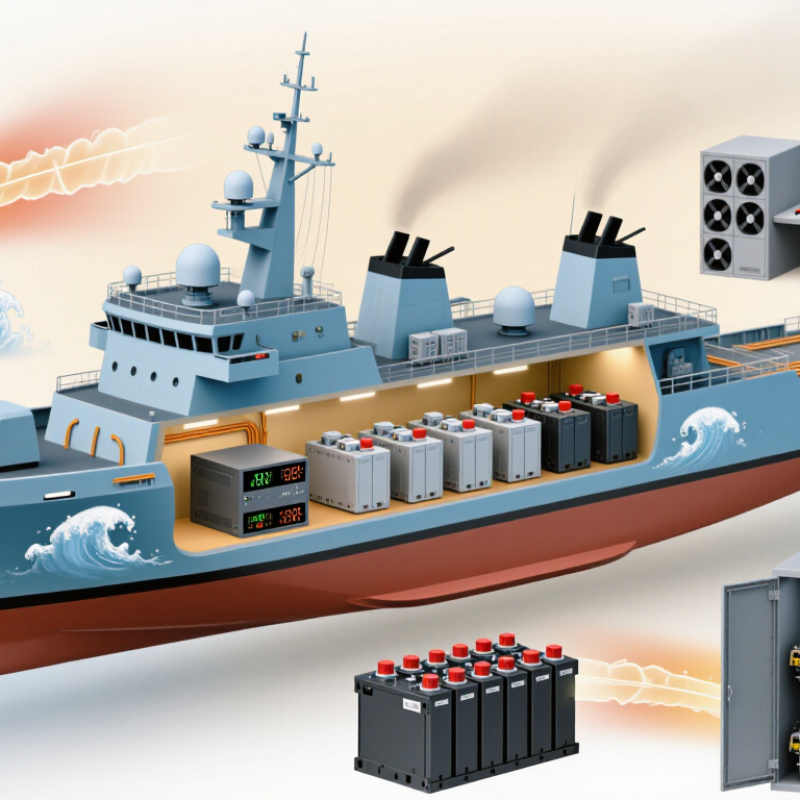
For 2026 shipboard backplane UPS selection, define the system boundary before comparing UPS types. A backplane UPS may support navigation, automation, alarm, communication, or emergency control circuits. It can use an AC output, a DC output, or a modular architecture with separated battery strings. The correct type depends on load behavior, ride-through time, fault isolation, and available maintenance access.
IEC 60092-504 is relevant to control and instrumentation arrangements, including dependable operation under shipboard conditions. It does not make every UPS automatically compliant. Engineers should document connected loads, bypass behavior, battery alarms, isolation points, and failure responses. IEC 60533 focuses on electromagnetic compatibility for electrical and electronic ship installations. Therefore, conducted emissions, immunity, cable routing, bonding, and enclosure interfaces deserve practical testing. A clean workshop test is not enough.
During selection, inspect the installed arrangement, not only the UPS cabinet. Verify performance near switchboards, radio equipment, propulsion controls, and long cable runs. Online double-conversion UPS units offer strong voltage conditioning, while DC UPS systems may simplify control-backplane distribution. Modular UPS designs can improve service continuity, but shared controls may create a hidden common failure. This detail is easy to miss. Edition dates, flag requirements, and classification rules should be checked for the vessel’s delivery year. Even experienced teams sometimes treat EMC as a product feature rather than an installation responsibility.
| UPS Type / Architecture | Typical Shipboard Backplane Application | Typical Output Arrangement | Transfer or Ride-Through Characteristic | Typical Battery Range | Main Advantages | Main Limitations | IEC 60092-504 / IEC 60533 Scope Considerations |
|---|---|---|---|---|---|---|---|
| Online Double-Conversion UPS | Navigation, propulsion-control, alarm-monitoring, communication, and automation controller backplanes requiring continuous conditioned power. | AC input converted to DC and regenerated as regulated AC; optional DC output modules may feed control backplanes. | Normally zero-break transfer to stored energy because the inverter continuously supplies the load. | Commonly 5–30 minutes at rated load; longer autonomy is possible through a correctly sized external battery system. | Strong voltage and frequency regulation, electrical isolation options, and good protection against short interruptions and disturbances. | Higher losses, heat output, weight, acoustic noise, and maintenance requirements than simpler UPS architectures. | Requires evaluation of control and instrumentation continuity, alarms, bypass behavior, earthing, segregation, ventilation, and electromagnetic emissions/immunity in the installed ship environment. |
| DC UPS / Battery-Backed DC Distribution | PLC, remote I/O, safety, fire-detection, monitoring, and automation backplanes designed around nominal low-voltage DC supplies. | Rectifier or charger feeds a DC bus while the battery remains connected or available through a controlled coupling arrangement. | Generally no AC transfer event at the protected DC load when the battery is continuously connected to the DC bus. | Common nominal system voltages include 24 V DC and 110 V DC, but the selected value must match the equipment and vessel power system. | Efficient for DC control systems, simple load interfaces, and well suited to distributed control cabinets and remote I/O stations. | Requires careful DC voltage-drop, short-circuit, battery charging, polarity, selectivity, and battery-fault coordination studies. | The complete charger, battery, distribution, wiring, cabinet, and connected control system should be assessed as an installation; EMC filter and cable-shielding practices are especially important for long DC runs. |
| Line-Interactive UPS | Non-critical monitoring workstations, auxiliary automation nodes, and low-power information or communications equipment. | AC output normally follows the input through voltage regulation, with an inverter supporting the load during an interruption. | Typically a short transfer interval, often several milliseconds; the actual value must be confirmed from the equipment specification. | Commonly 5–15 minutes at rated load for compact installations. | Lower cost, lower operating losses, and smaller size than online double-conversion equipment. | The transfer interval, limited waveform conditioning, and bypass relationship may be unsuitable for safety-related or highly sensitive control backplanes. | Use only after confirming that the protected load tolerates the transfer time and residual disturbances; EMC performance must be verified in the final cabinet and cable arrangement. |
| Standby / Offline UPS | Low-priority auxiliary electronics where a short interruption is acceptable and continuous voltage conditioning is not required. | Load is normally supplied directly from the incoming AC source; inverter starts when the source falls outside the operating limits. | Non-zero transfer, commonly several milliseconds; the exact performance depends on the design and load response. | Commonly 5–15 minutes at rated load for small units. | Simple construction, low energy consumption, and relatively low acquisition cost. | Limited voltage regulation and filtering; generally inappropriate for essential control, navigation, alarm, or safety functions without a documented compatibility assessment. | The installation assessment should address interruption tolerance, source switching, conducted emissions, immunity, enclosure protection, and separation from sensitive shipboard circuits. |
| Modular / Parallel-Redundant UPS | Mission-critical automation, integrated bridge systems, propulsion support controls, and backplanes requiring maintainability or capacity growth. | Multiple power modules operate in parallel, commonly with independent or coordinated bypass and battery arrangements. | Online modules can provide continuous inverter power; redundancy may be configured so that one module failure does not interrupt the protected load. | Often 5–30 minutes, with autonomy determined by the shared or segregated battery design and required load profile. | Scalable capacity, easier replacement of power modules, and potential fault tolerance when properly engineered. | More complex control, synchronization, bypass, fault-current, heat-removal, and maintenance arrangements. | The safety and availability concept should be documented at system level, including independence of redundant paths, alarm handling, common-cause failures, EMC interaction between modules, and cabinet installation conditions. |
| Rotary UPS / Motor-Generator UPS | High-power loads or installations requiring substantial short-term ride-through and strong isolation from upstream disturbances. | Mechanical energy storage and generator-based conversion provide regulated AC power; some designs include batteries or other energy storage. | Designed for continuous supply with stored mechanical energy supporting the load during source disturbances. | Ride-through may range from seconds to several minutes, depending on stored energy and the connected generating arrangement. | High overload capability, robust isolation, and suitability for larger power ratings. | Large footprint, rotating-equipment maintenance, vibration, noise, cooling, and more demanding mechanical installation requirements. | Assessment must include vibration, ventilation, fire safety, mechanical mounting, electromagnetic fields, earthing, and interaction with shipboard control and instrumentation systems. |
Its inverter continuously powers the load. Battery support begins without a transfer gap. This suits navigation interfaces, control processors, communication racks, and monitoring equipment. A “0 ms” display alone proves little. Wiring and bypass settings still matter.
It can regulate moderate voltage changes at a lower cost. Many industrial devices tolerate its brief transfer interruption. Some backplane controllers may reset during that interval. Confirm the load’s maximum acceptable transfer time before purchasing.
They usually provide slower transfer and limited voltage conditioning. That may be acceptable for simple equipment. Critical controllers need stronger continuity. The engine room is not a laboratory.
Begin with the backplane voltage, not the cabinet name. Centralized 24 VDC systems fit compact control and navigation loads. Modular 48 VDC shelves can reduce current and cable losses. A 3 kW load at 48 V draws about 62.5 amperes before conversion losses.
Look for hot replacement, current sharing, and galvanic isolation. Fault isolation is also important. These features can limit failures across connected modules. Small errors matter.
Check runtime at actual temperatures and expected load profiles. Include battery aging, recharge time, and end-of-life capacity. Lead-acid batteries are familiar and widely serviced. Lithium-based systems can reduce weight and increase usable energy. They require stronger thermal monitoring and installation controls.
Consider vibration, heat, humidity, salt exposure, and restricted cabinet space. Ventilation and service access need practical inspection. A neat specification sheet may hide weak field performance. I would repeat environmental checks after installation.
Test sudden generator loss, voltage distortion, frequency changes, and full-load runtime. Check alarms, bypass behavior, battery replacement access, and power-system compatibility. Test realistic operating conditions, not only factory settings. Test it again. One judgment can be wrong.
This guide explains how to define a Shipboard Backplane UPS within the scope of IEC 60092-504 and IEC 60533, focusing on reliable power for marine automation, communication, and control systems. It compares online, line-interactive, and offline UPS architectures, emphasizing the importance of 0 ms transfer for equipment that cannot tolerate even brief interruptions. The discussion also covers marine DC UPS solutions for 24 VDC and 48 VDC backplanes, including compact 1–3 kW modules suited to distributed shipboard loads.
For higher availability, the article evaluates modular UPS designs according to N+1 redundancy, efficiency above 95%, and hot-swap capability, helping operators maintain service during maintenance or module failure. It also presents practical selection criteria for 2026, including marine certification, DNV approval, suitable IP protection, environmental durability, and a typical 10–30 minute battery runtime. Together, these factors support safer, more resilient, and easier-to-maintain power infrastructure for modern vessels.