Veteran Owned Small Business · CAGE 0P327 +1 (813) 996-2583 Engineering & Manufacturing in Land O' Lakes, FL, USA
0%

Network equipment rarely fails at a convenient time. A loose plug, crowded outlet, or overloaded circuit can disrupt an entire work area. A Wall Mount Power Distribution Unit helps organize power near the equipment it serves, whether that is a small server cabinet, a security system, or a telecom panel. The right choice depends on more than outlet count. Input voltage, current rating, plug type, mounting space, and expected load all matter.

This guide introduces the main wall-mounted PDU types relevant to 2026: basic models, units with local meters, remotely monitored options, and switched PDUs with individual outlet control. Each serves a different purpose. A basic unit may suit a stable setup, while monitoring can help teams spot unusual load changes before they become urgent. Switched models offer remote control, but they also require careful configuration and access management. Simple, but not always obvious.

Real installations can be less tidy than product pages suggest. Cables bend, doors limit clearance, and future devices change the load. I have seen outlet placement matter more than a long feature list. That detail is easy to overlook. The sections ahead compare common designs, explain practical selection factors, and point out trade-offs to check against manufacturer specifications. They are intended as a starting point, not a substitute for a qualified assessment of the installation. A suitable PDU should fit both the electrical requirements and the physical space, with enough capacity for planned growth.
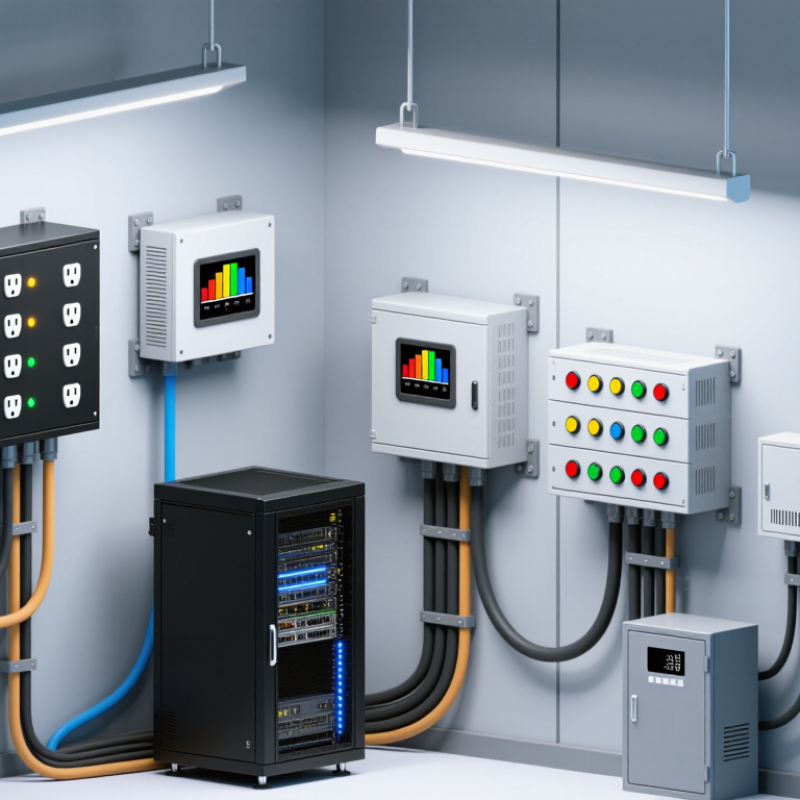
2026 Top Wall Mount Power Distribution Unit Types

What a Wall-Mount Power Distribution Unit Is and How It Works

A wall-mount power distribution unit (PDU) is a fixed electrical assembly that brings power to equipment mounted in a cabinet or on a wall. It typically has an incoming power connection, internal conductors, and several outlets for devices such as network switches, security systems, or control equipment. Unlike a loose power strip, it is secured to a suitable surface and arranged to keep connections accessible. Some models provide basic distribution, while metered versions display electrical readings and switched versions allow individual outlets to be controlled.

Here’s how it works. Power enters through the unit’s input connection and is distributed across its outlets. The connected equipment draws current from that shared supply, so the combined load matters. Check the PDU’s rating, the supply circuit, and each device’s requirements before connecting equipment. A breaker or fuse may provide overcurrent protection, but it does not make an overloaded circuit safe. Small details count: leave room for plugs, avoid blocking ventilation, and secure cables so their weight does not pull on sockets.

Installation should match the equipment layout and the electrical system. A vertical unit can save rack space; a horizontal one may suit a shallow cabinet. Metering can reveal rising demand, though readings still need interpretation. I’ve seen neat installations become awkward when cable reach was guessed. Measure first. When requirements are unclear, ask a qualified electrician to review the setup.

Wall-Mount PDU Types and Example Circuit Capacity

A wall-mount power distribution unit (PDU) receives power from an electrical circuit and distributes it to connected equipment through its outlets. Basic models distribute power; metered models display electrical readings; monitored models report readings remotely; and switched models allow outlets to be controlled remotely.

The chart shows example theoretical apparent capacity, calculated as voltage × current. These figures describe the example circuits, not specific PDU models. Actual usable capacity depends on local electrical codes, circuit limits, power factor, and equipment specifications.

Types by Outlet Layout and Form Factor

2026 Top Wall Mount Power Distribution Unit Types
Types by Outlet Layout and Form Factor

Wall-mounted power distribution units vary by outlet arrangement and physical shape. Common layouts place receptacles in a single row, on both sides, or across the front face. A single row can simplify access in a narrow cabinet. Opposing rows may fit more plugs, but bulky adapters can block neighboring outlets. Check plug size and cable direction, not just outlet count.

Form factor matters when space is tight. Long, vertical units often mount beside rack rails and keep outlets within reach. Compact horizontal models can fit shallow enclosures, though they may use valuable rack width. Measure the mounting area, door clearance, and cable bend space before choosing. A tidy diagram can still miss an awkward connector. It happens.

Tips: Mark outlet positions on a cabinet sketch. Confirm the unit’s mounting orientation and input-cable exit point. Leave room for thick plugs and airflow. If access looks cramped on paper, it will probably feel cramped during maintenance.

2026 Top Wall Mount Power Distribution Unit Types - Types by Outlet Layout and Form Factor
Type Form Factor Typical Outlet Layout Common Outlet Types Typical Applications
Compact Low-Density PDU Short, narrow strip mounted directly to a wall or cabinet side 4–6 outlets in a single row NEMA 5-15R or, on compatible models, NEMA 5-20R Small network closets, work areas, and locations with a few powered devices
Horizontal Rack-Mount PDU Typically 1U or 2U, mounted horizontally in a wall cabinet or rack About 6–12 outlets across the front or rear panel NEMA receptacles or IEC 60320 C13 outlets, depending on the model Wall cabinets and shallow equipment racks where horizontal mounting is preferred
Vertical High-Density PDU Long vertical strip, often mounted along the side of a rack or enclosure Commonly 12–24 outlets arranged in one or two columns IEC C13 outlets are common; some models include a smaller number of C19 outlets Network and server enclosures requiring more outlets along the rack height
Mixed C13/C19 PDU Vertical or horizontal strip with outlets spaced for equipment power cords Typically 8–16 total outlets, combining numerous C13 outlets with 1–4 C19 outlets IEC 60320 C13 and C19 Equipment installations that use both standard and higher-current IEC power connections
Locking-Receptacle PDU Compact or full-length strip, mounted vertically or horizontally Often 4–12 locking outlets, depending on strip length and configuration Twist-lock NEMA receptacles, such as L5-20R or L6-20R, where specified Installations that require compatible locking plugs to help resist accidental disconnection
Metered PDU Vertical or horizontal strip with an integrated display or monitoring interface Outlet count varies; commonly 6–24 outlets NEMA or IEC outlets, depending on the input and output configuration Equipment rooms where local or remote visibility of electrical load is useful
Switched PDU Vertical or horizontal strip with outlet-level or group-level switching features Outlet count and switching groups vary by model NEMA or IEC outlets; outlet control features are model-specific Remote power cycling and controlled power distribution for connected equipment
Enclosed Wall-Mount PDU Receptacles and distribution components housed within a wall-mounted enclosure Outlet number and arrangement depend on enclosure size and electrical design NEMA or IEC receptacles, as specified for the installation Installations needing a protected, organized power-distribution assembly
Note: Outlet counts and connector types shown are representative configurations, not universal specifications. Confirm the PDU’s input plug, voltage, current rating, branch-circuit protection, outlet rating, and mounting clearances against the installation requirements and applicable electrical codes.

Types by Power Capacity and Electrical Configuration

Wall-mounted power distribution units differ not only by outlet count, but by the load they can safely support. Capacity is commonly described through voltage, current, and total power. A unit rated for 15 amps cannot be treated like a 20-amp model, even if both have similar-looking outlets. Check the connected equipment’s nameplates and allow room for startup surges. Small details matter.

Electrical configuration shapes where and how a PDU can be installed. Single-phase models are common in smaller equipment rooms, while three-phase units can serve higher-density racks when the incoming supply supports them. Input plugs, outlet types, and voltage must match the site; a mismatch can make an otherwise suitable unit unusable. Count the devices, too. Ten outlets may sound generous, but large power adapters can block neighboring sockets.

Choose capacity with the real installation in mind, not a best-case estimate. Network switches, storage systems, and cooling equipment may draw different loads at different times. Metered models help staff observe current use, while switched outlets allow individual devices to be managed remotely. Yet added features do not replace correct circuit planning. I would also leave spare capacity for future equipment, though defining “spare” can be difficult when expansion plans keep changing. Check mounting clearance, cable reach, and airflow before installation. A careful fit is easy to overlook.

Types by Monitoring, Switching, and Control Features

Wall-mounted power distribution units differ most in how much visibility and control they provide. Basic models distribute power to several outlets but offer little information about individual loads. Metered units add a local display, useful when a technician needs a quick reading at the rack. Monitored models report current, voltage, or power over a network. Some also support temperature sensors near the intake, where hot air can otherwise go unnoticed. Small details matter. Check whether readings are available per unit or per outlet; the difference can affect troubleshooting.

Switched units let authorized staff cycle power to selected outlets remotely. This can help recover a locked device without visiting the equipment room, but remote switching needs careful access controls and clear outlet labels. Outlet-level control is more precise than switching an entire PDU. Some advanced models combine monitoring, switching, alarms, and environmental inputs. More features are not automatically better. A compact network cabinet may need only basic metering, while a server rack may benefit from individual outlet data. Match the unit’s mounting depth, outlet layout, and rated load to the cabinet and connected equipment. Specifications can look tidy on paper; cable congestion and awkward access are less tidy in practice.

How to Choose a Wall-Mount PDU for Different Applications

For a compact office network closet, a basic wall-mount PDU may be enough when loads are stable and staff can inspect equipment locally. Choose a metered model when technicians need to track current without visiting the rack. For remote sites, a monitored or switched PDU can flag overloads and allow controlled outlet resets. Space is tight. Check cabinet depth, cable bend radius, outlet orientation, and service clearance before ordering.

Application matters more than feature count. Telecom rooms often need secure mounting and reliable circuit-level monitoring; workshops may need outlets suited to varied equipment and a suitable enclosure for dust or moisture. Confirm the branch-circuit rating, plug type, total load, and expected growth with a qualified installer. The U.S. Department of Energy-supported Lawrence Berkeley National Laboratory estimated data centers used 176 TWh of electricity in 2023, or 4.4% of U.S. consumption; its 2024 report projects 325–580 TWh by 2028. That range underlines why power headroom and monitoring deserve attention, even in smaller installations. Measure twice. A common oversight is choosing by outlet count alone: the mounting position and cable reach can make a technically compatible PDU awkward to use.

FAQS

What does a wall-mount power distribution unit do?

It receives power through an input connection and distributes it to several outlets. The outlets can serve switches, security systems, or control equipment.

How is it different from a loose power strip?

It is fixed to a suitable wall or cabinet surface, keeping connections accessible. Secure mounting also helps prevent cable weight from pulling on sockets.

How should I choose the outlet layout?

Check the number and positions of outlets, plus plug size and cable direction. Large adapters can block nearby sockets. Count alone can mislead.

What measurements should I take before installation?

Measure the mounting area, door clearance, and space for cable bends. Mark outlet positions on a cabinet sketch. Measure first.

How do I check whether its capacity is suitable?

Compare the unit’s voltage, current, and power ratings with the supply circuit and connected equipment. Allow room for startup surges. Do not guess.

What is the difference between single-phase and three-phase models?

Single-phase models are common in smaller equipment rooms. Three-phase models can serve higher-density racks when the incoming supply supports them.

Do metering or switched outlets replace careful circuit planning?

No. Metering shows electrical readings, and switched outlets allow individual devices to be controlled. Neither feature makes an overloaded circuit safe.

What details are easy to overlook during setup?

Leave room for thick plugs, airflow, and cable access. Check the input-cable exit point, too. I have seen tidy plans miss that awkward bend.

Conclusion

A Wall Mount Power Distribution Unit provides a practical way to deliver electrical power to equipment housed in racks, cabinets, or other space-conscious installations. Mounted on a wall or enclosure, it distributes power from a supply connection to multiple outlets. Its design can vary by outlet arrangement, orientation, and overall form factor, helping accommodate different equipment layouts and available space.

Wall-mount PDUs also differ in power capacity, electrical configuration, and control features. Basic models provide straightforward power distribution, while other types may offer monitoring, outlet switching, or remote control. Choosing the right unit involves considering the connected load, required outlets, supply characteristics, installation environment, and level of visibility or control needed. Matching these factors to the application can support an organized, reliable power setup for network rooms, workshops, security systems, and other equipment installations.


Amelia

Amelia

Amelia is a highly experienced marketing professional dedicated to helping businesses understand products, recognize market opportunities, and make informed decisions. With a strong command of the company’s solutions, she transforms complex product features into clear, practical, and engaging......