Choosing the best China Shipboard AC DC Power Supply for sale requires more than comparing prices and product photos. A vessel’s power system must remain stable through vibration, humidity, temperature changes, and irregular loads. In practice, small design details often decide whether equipment performs reliably at sea. Details matter. A suitable Shipboard AC DC Power Supply should match the vessel’s input voltage, output requirements, frequency, installation space, and protection strategy. It should also support critical equipment such as navigation systems, communication units, alarms, control panels, and emergency circuits.
This guide examines the technical and purchasing factors that experienced marine operators should review. These include conversion efficiency, galvanic isolation, overload protection, short-circuit response, cooling design, alarm functions, and maintenance access. Certification and testing records also deserve careful attention. Buyers should request clear specifications, factory test results, inspection procedures, and evidence of quality control. A polished brochure is not enough. Onboard performance is the real test.
Supplier capability matters just as much as the power converter itself. Reliable manufacturers can explain component selection, customize connectors, provide wiring diagrams, and offer responsive technical support. They should understand marine installation conditions rather than simply adapt an industrial model. However, no supplier is perfect, and marketing claims still require verification. That assumption fails. Sample testing, third-party inspection, and a documented acceptance process can reduce avoidable risks. This overview will help readers compare Chinese manufacturers more confidently and identify a practical balance between reliability, compliance, service, and total ownership cost.
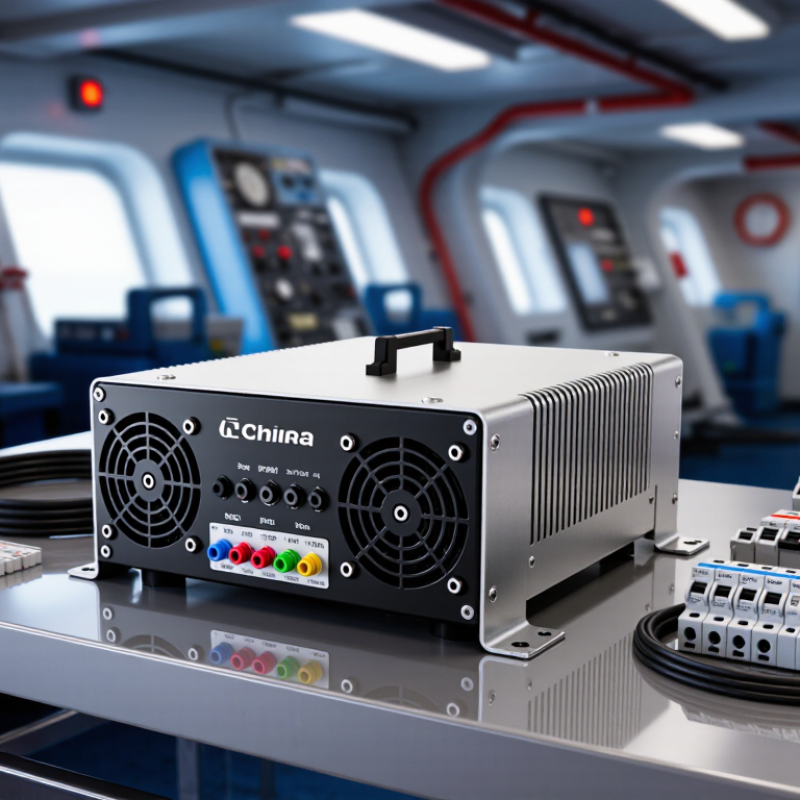
A shipboard AC/DC power supply converts and regulates electrical energy for equipment operating at sea. AC input may come from generators or shore connections. The unit then provides stable DC output for navigation systems, communication equipment, alarms, control panels, and emergency circuits.
Its core functions include voltage conversion, isolation, filtering, overload protection, and battery charging. Marine environments demand more than simple electrical conversion. Salt air can accelerate corrosion. Vibration may loosen connections. Heat can reduce component life. A dependable supply should therefore use sealed construction, clear status indicators, suitable cooling, and protection against short circuits and voltage fluctuations.
Safety matters daily. Very much. During equipment selection, engineers should verify input range, output tolerance, load capacity, efficiency, and backup behavior. Certification for the intended vessel and installation area also deserves careful checking. In practice, a supply may perform well on a test bench but behave differently inside a crowded engine room. That limitation is easy to overlook. Cable length, ventilation, grounding, and sudden motor loads can affect stability. Buyers comparing shipboard AC/DC power supplies for sale should request test records, maintenance guidance, and realistic operating data. A slightly oversized unit can improve resilience, but excessive capacity may increase cost and waste space. The best choice depends on the vessel’s actual electrical profile.
| Data Dimension | Technical Information | Why It Matters on Ships |
|---|---|---|
| Product Definition | A shipboard AC/DC power supply is a marine-rated electrical conversion unit that changes incoming alternating current (AC) into regulated direct current (DC), or supplies AC and DC outputs through an integrated power-conversion system. | It provides stable and usable power for navigation, communication, automation, monitoring, control, and emergency equipment. |
| Typical AC Input | Common shipboard input systems include 110 V AC, 220–240 V AC, 380–415 V AC, and 440–480 V AC, depending on vessel architecture and electrical distribution design. | The input range must match the vessel’s generator, shore-power connection, or distribution panel. |
| Typical DC Output | Common DC output levels include 12 V, 24 V, 48 V, 110 V, and 220 V DC. The exact voltage should match the connected equipment and battery system. | Correct DC voltage prevents equipment malfunction, battery damage, overheating, and premature component failure. |
| Output Power Range | Marine power supplies are available from compact low-power units below 1 kW to industrial systems rated at several kilowatts or more. Power selection should include continuous-load demand and starting or transient loads. | A correctly sized unit supports reliable operation without excessive thermal stress or nuisance shutdowns. |
| Conversion Function | Core functions may include AC-to-DC rectification, DC voltage regulation, galvanic isolation, power-factor correction, filtering, and battery charging. | These functions improve voltage stability, reduce electrical noise, and protect sensitive shipboard electronics. |
| Voltage Regulation | High-quality units maintain a controlled DC output despite normal changes in input voltage, load demand, and operating temperature. The allowable regulation tolerance is specified by the manufacturer. | Stable output is essential for navigation systems, alarm panels, programmable controllers, and communication equipment. |
| Redundancy Options | Available configurations may include parallel-connected modules, N+1 redundancy, dual-input systems, and automatic transfer between normal and backup sources. | Redundancy allows critical loads to continue operating if one module or source becomes unavailable. |
| Battery-Charging Capability | Some systems provide controlled charging with bulk, absorption, and float stages. Charging voltage and current must be compatible with the battery chemistry and capacity. | Proper charging supports emergency power availability and extends battery service life. |
| Electrical Isolation | Galvanic isolation separates the input and output circuits through an isolation transformer or an isolated switching topology. | Isolation can reduce the risk of ground-loop currents, improve personnel protection, and limit fault propagation. |
| Protection Features |
|
Protection features help prevent damage during abnormal operating conditions and electrical faults. |
| Marine Environment | The enclosure should be suitable for vibration, shock, humidity, salt-laden air, temperature variation, and restricted ventilation commonly found in marine spaces. | Marine environmental resistance improves service reliability and reduces corrosion-related failures. |
| Cooling Method | Typical cooling methods include natural convection, forced-air cooling, and conduction cooling. The selected method depends on output power, installation space, and ambient temperature. | Efficient thermal management helps maintain rated performance and prolongs component life. |
| Installation Type | Common formats include panel-mounted, rack-mounted, cabinet-mounted, and enclosed standalone units. | The mounting method must suit available space, cable routing, maintenance access, and the vessel’s equipment layout. |
| Monitoring and Communication | Optional monitoring may include dry contacts, alarm relays, display panels, analog signals, or digital communication interfaces such as serial or network-based protocols. | Remote status information helps operators identify input failure, output failure, high temperature, and battery faults. |
| Efficiency | Conversion efficiency varies with topology, load level, cooling method, and operating conditions. The rated efficiency should be checked at representative operating loads rather than at one test point only. | Higher efficiency reduces energy loss, heat generation, cooling requirements, and operating cost. |
| Electrical Compatibility | The unit should be checked for input frequency, phase configuration, output polarity, grounding method, electromagnetic compatibility, and permissible inrush current. | Compatibility prevents interference with other onboard systems and supports safe integration into the vessel’s power network. |
| Relevant Marine Standards | Selection may require compliance with applicable marine electrical rules and standards, such as IEC 60092 series requirements and the rules of the vessel’s classification society or flag administration. | Applicable requirements depend on vessel type, installation location, equipment function, and certification scope. |
| Recommended Selection Checklist |
|
The best shipboard AC/DC power supply is the one that matches the vessel’s electrical system, environmental conditions, critical-load requirements, and applicable marine compliance obligations. |
Common options include AC switchboards, DC converters, battery chargers, static UPS units, and shore power converters. Hybrid vessels may use bidirectional converters between batteries and AC networks.
A compact static UPS can support navigation, control, and communication equipment. It must tolerate heat, vibration, and unstable loads. Small cabinets are not automatically better.
Check input voltage, frequency, output tolerance, cooling, overload response, and salt-mist protection. Request a load profile based on real operating conditions. Price misleads.
Equipment should meet applicable shipboard electrical standards and classification requirements. Emergency systems need dependable power for lighting, alarms, and communications. Documentation must match the vessel installation.
Ask for voltage regulation, insulation resistance, dielectric strength, overload, and battery-autonomy tests. Load-step testing is especially useful. Pumps may start suddenly.
Salt air can damage exposed connections, while vibration can loosen terminals. Request records for humidity, vibration, and salt-mist testing. A certificate alone is not enough.
They can reduce generator operation and related emissions during port stays. The converter must match shore voltage, frequency, vessel loads, and connection procedures. Compatibility needs careful checking.
Review natural or forced cooling, filter access, terminal space, and alarm contacts. An engine-room unit may face high temperatures. Easy installation may create difficult repairs.
Request factory test records, independent inspection, traceable components, and required approval evidence. Check spare-part support and remote monitoring options. No supplier is perfect.
Efficiency depends on temperature, load level, and testing conditions. Compare results with expected onboard operation. Laboratory performance may differ at sea.
Choosing the best China Shipboard AC DC Power Supply requires a clear understanding of its role in converting, regulating, and distributing reliable electrical power for marine equipment. These systems support navigation, communication, control, lighting, emergency circuits, and other onboard loads while maintaining stable operation under vibration, humidity, temperature changes, and fluctuating input conditions. Important selection specifications include rated voltage, output capacity, conversion efficiency, backup capability, protection functions, cooling method, installation size, and compatibility with the vessel’s electrical architecture.
China offers various marine power supply types, including AC-to-DC converters, DC-to-DC modules, battery chargers, inverter systems, and integrated emergency power units. Buyers should confirm that products meet applicable marine safety, electromagnetic compatibility, insulation, and environmental requirements, while also checking construction quality, testing procedures, documentation, and after-sales support. The best choice is a dependable Shipboard AC DC Power Supply that matches the vessel’s power demands, operating environment, safety standards, maintenance plan, and long-term budget.