Veteran Owned Small Business · CAGE 0P327 +1 (813) 996-2583 Engineering & Manufacturing in Land O' Lakes, FL, USA
0%

Selecting a Military Sealed IP67 Power Supply is not a simple catalog decision. It affects mission continuity, equipment safety, and maintenance costs. A failed supply can disable a radio, sensor, or ruggedized computer at the worst moment.

Industry forecasts support this concern. MarketsandMarkets reports continued growth in military power solutions, driven by electrification, unmanned systems, and advanced battlefield electronics. Grand View Research also identifies rising demand for compact, durable power systems across aerospace and defense applications. These reports describe market direction, not product approval. That distinction matters.

IP67 protection means complete dust protection and temporary immersion resistance under IEC 60529 testing. It does not automatically prove resistance to vibration, shock, salt fog, or extreme temperature. Military users should also review applicable MIL-STD-810H test methods and supplier evidence. Look for test conditions, duration, sample numbers, and independent laboratory records. Marketing language alone is weak evidence.

A practical evaluation starts with the real operating scene. Picture a power unit mounted inside a vehicle, exposed to engine vibration, condensation, and limited airflow. Check input transients, output stability, thermal derating, connector sealing, and electromagnetic compatibility. Then verify service life and repair support.

Small details matter.

The right Military Sealed IP67 Power Supply balances electrical performance with environmental reliability. However, no checklist replaces application testing. Even experienced engineers can overlook cable glands, grounding paths, or cold-start behavior. This guide presents seven focused tips for making a more defensible selection.
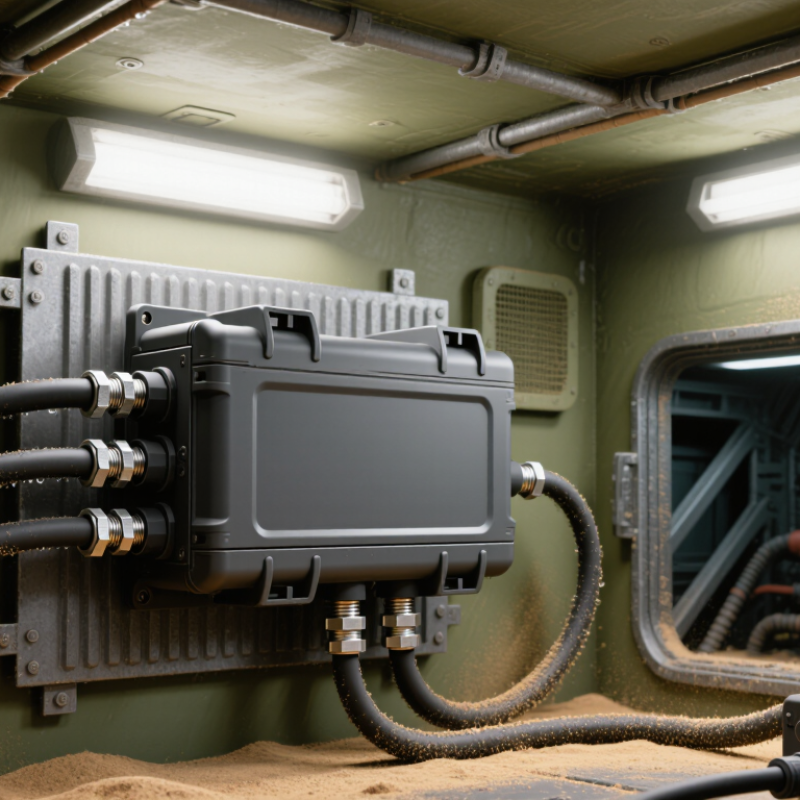
7 Tips to Choose a Military Sealed IP67 Power Supply?

Define the Mission Profile and Electrical Requirements

Define the mission profile before selecting a military sealed IP67 power supply. Record voltage, current, start-up surge, duty cycle, ambient temperature, altitude, vibration, and expected service life. Measure the load. A 24 V vehicle system may experience 18–33 V operation under MIL-STD-1275 requirements, so a narrow input range can create field failures. Include cable loss and battery discharge, not only the equipment’s label rating.

IP67 is not waterproof forever. IEC 60529 defines protection against dust and temporary immersion up to one metre for 30 minutes. It does not confirm resistance to shock, vibration, electromagnetic interference, or voltage transients. Match those risks with MIL-STD-810H environmental testing and MIL-STD-461G electromagnetic compatibility requirements. A 2024 MarketsandMarkets report estimates the military power solutions market will grow from approximately 8.2 billion dollars in 2024 to 11.3 billion dollars by 2029. That growth reflects demand for compact, dependable power in mobile systems, but market growth does not replace engineering validation. In practice, engineers often oversize wattage while overlooking inrush current and connector heating. That assumption is weak. Test the complete power path at cold start, peak load, cable length, and enclosure temperature. Leave sensible margin, but avoid excessive oversizing; it can increase weight, cost, and standby losses.

Define the Mission Profile and Electrical Requirements

A representative mission profile helps size a sealed IP67 power supply for both continuous load and short-duration peak demand. The values below are an engineering planning baseline, not a universal specification.

Select a supply with enough continuous capacity for sustained operation and sufficient peak capability for transmit, sensor startup, and other transient loads. Confirm the required input range, temperature rating, efficiency, protection features, and IP67 test conditions against the actual platform environment.

Verify IP67 Sealing and Environmental Protection Features

Verify IP67 Sealing and Environmental Protection Features

An IP67 rating means the power supply is dust-tight and can withstand temporary immersion in water. Under IEC 60529 testing, immersion commonly reaches one meter for up to 30 minutes. However, this rating does not prove protection against every field condition. Ask for the original test report, test date, sample configuration, and laboratory details. A certificate without clear test conditions deserves careful review.

Inspect the enclosure, gasket, cable glands, connectors, and pressure vents. These small parts often decide whether moisture enters the housing. Look for continuous seals without cuts, gaps, or uneven compression. Check whether the IP67 rating applies after mating the connectors. Some products meet the rating only with protective caps installed. That detail is easy to miss. It matters.

Environmental protection should also match the expected mission profile. Review operating temperature, humidity, salt fog, vibration, shock, and altitude data. A sealed case may still fail when thermal expansion stresses its gasket. Confirm that test samples used representative cables and mounting hardware. Bench testing is useful, but it cannot reproduce every vehicle, outdoor, or coastal condition. A careful evaluation should include visual inspection, pressure or immersion checks, and functional testing afterward. No test is perfect. Recheck the assumptions.

Assess Military Standards, Materials, and Mechanical Durability

Tip 1: Verify the exact military test methods, not just a “military-grade” claim. MIL-STD-810 may cover shock, vibration, temperature, humidity, and altitude. However, each method and test severity must match your application. Request test conditions, reports, and revision details. A familiar label can still hide gaps.

Tip 2: Inspect the materials and sealing design closely. An aluminum alloy housing can balance strength, weight, and heat dissipation. Stainless steel may suit harsher corrosion environments, but it adds weight. Check gasket material, compression, cable glands, and connector interfaces. IP67 means protection from dust and temporary water immersion, not permanent submersion. Small sealing errors matter.

Tip 3: Evaluate mechanical durability beyond the enclosure itself. Examine mounting points, fasteners, connector retention, and cable strain relief. During field testing, simulate vibration, repeated impacts, thermal cycling, and installation mistakes. I have seen sturdy cases fail at weak brackets. Heavier is not always better. A rigid housing may transfer shock directly to internal boards, so isolation mounts deserve equal attention. A second engineering review is worthwhile.

Compare Thermal Performance, Safety, Efficiency, and Service Life

When selecting a military sealed IP67 power supply, inspect thermal behavior before output ratings. A compact enclosure can trap heat quickly. Check the derating curve, not only the maximum wattage. Confirm operation at the real ambient temperature, mounting position, and airflow condition. A metal baseplate may transfer heat better than a sealed polymer case. Measure case temperature during full-load testing. Short tests can mislead.

Safety deserves equal scrutiny. Look for verified input protection, short-circuit response, overvoltage control, isolation, grounding, and electromagnetic compatibility data. Ask whether testing covers vibration, shock, humidity, salt mist, and repeated temperature changes. IP67 means dust-tight protection and temporary immersion. It does not guarantee resistance to high-pressure water or chemicals. Review certificates and laboratory reports carefully. Marketing language is not evidence. I have seen connector gaskets fail after repeated servicing, even when the enclosure initially passed testing.

Efficiency should be checked across the actual load range. Some units perform well near full load but waste energy at standby. Compare heat generation, ripple, startup behavior, and transient response. Higher efficiency usually reduces thermal stress and may extend component life. Still, service life depends on capacitor quality, sealing materials, storage conditions, and maintenance access. Request calculated life data and field history, while treating MTBF as a statistical estimate, not a promise. Inspect replacement procedures too. A sealed design is not automatically easy to maintain. That detail is often overlooked.

Evaluate Compatibility, Certification, Support, and Total Cost

Tip 1: Confirm compatibility before reviewing the price.

Check input voltage range, startup current, output tolerance, connector layout, mounting holes, and cooling needs. A sealed IP67 enclosure prevents dust and water ingress, but it does not guarantee electrical compatibility. Test the supply with the actual load, cable length, and battery profile. Short tests can mislead.

Tip 2: Treat certification as evidence, not decoration.

Request complete test reports for IP67 protection, vibration, shock, temperature cycling, electromagnetic compatibility, and insulation safety. Verify the test conditions match your application. A certificate may cover only one configuration. This detail is often missed. Military deployment also demands traceable materials, controlled revisions, and reliable documentation. If a supplier avoids direct answers, reconsider the purchase.

Tip 3: Measure support and total cost together.

Ask about repair procedures, expected service life, spare-unit availability, firmware control, and response times. Clear technical support can prevent weeks of redesign. Calculate installation labor, custom cables, qualification testing, shipping, energy use, and downtime. The cheapest unit may create expensive integration work. In field evaluations, connector changes caused more delays than power failures. I would also keep a small replacement stock, although that decision depends on failure data. A written warranty helps, but it cannot replace practical support. Test samples under heat, vibration, and load changes before approving production.

FAQS

What electrical details should be defined before selecting a sealed power supply?

Record voltage, current, startup surge, duty cycle, temperature, altitude, vibration, and service life. Measure the real load. Include cable losses and battery discharge. A 24-volt vehicle system may vary from 18 to 33 volts. A narrow input range can cause field failures.

Does an IP67 rating mean the power supply is permanently waterproof?

No. IP67 covers dust protection and temporary immersion up to one metre for 30 minutes. It does not prove resistance to shock, vibration, interference, or voltage transients. Seals can age. Test the complete enclosure in realistic conditions.

How much power margin should be allowed?

Leave sensible margin for startup surges, cable losses, and peak loads. Do not oversize excessively. Extra wattage can increase weight, cost, and standby losses. Test cold starts and peak loads. More power is not always safer.

Which environmental risks require testing beyond IP67?

Check temperature cycling, humidity, altitude, shock, vibration, and electromagnetic compatibility. Match test severity to the real mission profile. A familiar military label may hide missing test details. Request methods, conditions, reports, and revision information.

What housing and sealing features deserve close inspection?

Review the housing material, gasket compression, cable glands, connectors, and mounting points. Aluminum can balance weight and heat dissipation. Stainless steel may resist corrosion better but adds weight. Small sealing errors matter. Inspect every interface.

How can mechanical durability be evaluated?

Simulate vibration, repeated impacts, thermal cycling, and installation mistakes. Examine brackets, fasteners, connector retention, and cable strain relief. Strong cases can fail at weak mounting points. Rigid housings may transfer shock to internal boards. Isolation mounts deserve attention.

How should electrical compatibility be confirmed before purchase?

Check input range, startup current, output tolerance, connector layout, mounting holes, and cooling needs. Test the supply with the actual load and cable length. Include the real battery profile. Short tests can mislead.

What documents should be requested from a supplier?

Request complete reports for ingress protection, vibration, shock, temperature, electromagnetic compatibility, and insulation safety. Confirm the reports cover the exact configuration. Also check material traceability, revision control, repair procedures, and warranty terms. Missing details are a warning.

How should total cost and technical support be assessed?

Include installation labor, custom cables, qualification testing, shipping, energy use, spares, and downtime. Ask about response times and repair procedures. Keep replacement units only when failure data supports that choice. I would not judge by price alone. The cheapest unit may create expensive integration work.

Conclusion

Selecting the right Military Sealed IP67 Power Supply begins with a clear understanding of the mission profile, including input and output requirements, load behavior, operating temperature, vibration, shock, and deployment conditions. Confirm that the unit’s IP67 sealing protects against dust and temporary water immersion, while also reviewing connectors, cable glands, corrosion resistance, and enclosure design for reliable field operation.

Next, assess compliance with applicable military standards, material quality, mechanical durability, thermal management, electrical safety, efficiency, and expected service life. A dependable power supply should prevent overheating, maintain stable performance under changing loads, and support safe maintenance. Compatibility with existing systems, test documentation, certification, technical support, replacement availability, and total lifecycle cost are equally important. By evaluating these factors together, users can select a rugged, efficient, and supportable solution that meets operational demands without sacrificing long-term reliability.


Evelyn

Evelyn

Evelyn is a professional marketing specialist dedicated to helping businesses communicate their value with clarity, accuracy, and purpose. With a strong understanding of the company’s products, services, and customer needs, Evelyn regularly contributes expert articles to the company website,......