Choosing an Aerospace Power Transformer supplier is a technical decision, not simply a price comparison. Aircraft and aerospace systems can face tight space limits, vibration, temperature changes, and demanding electrical loads. A transformer that performs well on a bench may behave differently after installation. Details matter.
Global buyers should compare suppliers on engineering capability, documented test methods, manufacturing consistency, and support throughout a project. Ask how designs address insulation, thermal management, electromagnetic compatibility, and mechanical stress. Review relevant test reports and quality records, and confirm that proposed qualifications match the intended application. Requirements vary by platform and customer; a familiar certificate alone may not answer every question. No supplier is perfect.
This guide introduces leading supplier-selection considerations for buyers evaluating companies across regions. It focuses on practical evidence: clear specifications, traceable components, realistic lead times, and responsive technical communication. Buyers should also clarify design ownership, change-control procedures, repair options, and long-term availability before committing. These points can reveal gaps that a polished brochure may not show. Still, comparisons have limits. Public information is uneven, and supplier capabilities can change. Treat rankings as a starting point, then verify claims directly with engineering and quality teams. The best fit is the supplier whose documented performance, production capacity, and support model align with the aircraft program’s actual needs—not merely the lowest quotation.
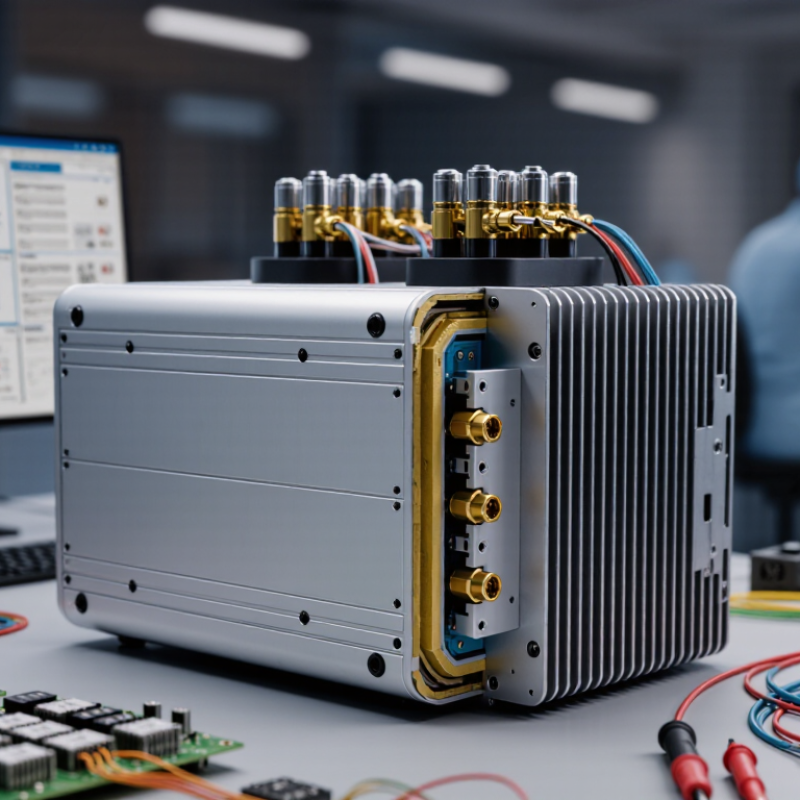
Aerospace power transformers adapt alternating-current voltage for aircraft equipment, including control circuits, sensors, and power supplies. They can also provide electrical isolation between circuit sections. That separation helps limit unwanted current paths and reduce the spread of certain electrical faults. They do not create power; output capacity remains bounded by the input and the unit’s design.
The operating principle is electromagnetic induction. An alternating current in the primary winding creates a changing magnetic field in a core, which induces voltage in the secondary winding. The turns ratio largely determines the voltage change. Easy to miss. Frequency matters too: a transformer designed for one operating frequency may not perform as expected at another. Aircraft units must also tolerate vibration, temperature changes, and restricted cooling. Designers therefore assess insulation, core losses, winding temperature, and mounting conditions together. A compact unit may save space, but its heat still needs a reliable path out. Testing under realistic electrical and environmental conditions is essential, though no single test reproduces every flight condition. Even experienced teams may need to revisit assumptions when installation details change.
A practical, supplier-neutral guide to transformer functions, operating principles, and key purchasing checks for aerospace electrical systems.
| Transformer Type or Evaluation Area | Purpose | Operating Principle | Aerospace Relevance | What Global Buyers Should Verify |
|---|---|---|---|---|
| Power transformer | Changes an alternating-current voltage level and may provide electrical isolation between circuits. | Alternating current in the primary winding creates a changing magnetic field in the core, inducing voltage in the secondary winding. The turns ratio determines the ideal voltage ratio. | Can support aircraft AC distribution and equipment requiring a different AC voltage. Transformer action does not change the supply frequency. | Confirm input and output voltage, frequency, phase, rated load, insulation requirements, temperature limits, and installation constraints against the aircraft specification. |
| Isolation transformer | Provides magnetic coupling between circuits without a direct conductive connection between primary and secondary windings. | Energy transfers through the magnetic field in the core. Separate windings provide galvanic isolation, subject to the design and insulation system. | May be used where circuit separation, electrical noise management, or equipment protection is required by the system design. | Check isolation voltage, dielectric test requirements, creepage and clearance, shielding needs, leakage current limits, and the applicable qualification plan. |
| Autotransformer | Provides a voltage change using a shared winding, often with less material than a comparable two-winding transformer. | Primary and secondary circuits share part of one winding. The shared winding means there is no galvanic isolation between input and output. | Can be suitable for voltage adjustment when isolation is not required and the architecture permits a common electrical connection. | Verify that the system permits a non-isolated connection; review voltage ratio, current rating, fault behavior, thermal limits, and applicable safety requirements. |
| Control or auxiliary transformer | Supplies a suitable AC voltage to control, monitoring, or auxiliary circuits. | Uses electromagnetic induction to provide a secondary AC voltage selected for the connected circuit’s requirements. | May serve control or support equipment where a dedicated AC supply is specified; the application depends on the aircraft electrical architecture. | Confirm load profile, inrush current, voltage regulation, short-circuit protection, mounting, connector requirements, and environmental qualification. |
| Frequency and system compatibility | Ensures the transformer is compatible with the aircraft’s AC source and the connected equipment. | A transformer transfers AC power by induction; it does not convert frequency. Core design and performance depend on the specified voltage and frequency. | Aircraft AC systems commonly use 400 Hz, but voltage, frequency, phase, and distribution arrangements vary by platform. | Specify the actual source waveform, voltage, frequency range, phase configuration, harmonics, and operating conditions rather than assuming a universal aircraft standard. |
| Thermal and environmental design | Maintains reliable operation within the equipment’s intended operating environment. | Winding resistance, core losses, insulation, cooling, and enclosure design affect temperature rise and service performance. | Aircraft equipment may face vibration, altitude-related pressure changes, temperature extremes, and limited space or cooling. | Review temperature-rise limits, cooling method, vibration and shock evidence, altitude conditions, moisture protection, materials, and installation orientation. |
| Supplier and product qualification | Establishes whether a proposed product and its manufacturing controls meet the project’s technical and quality needs. | Qualification is demonstrated through design data, inspection and test records, traceability, and evidence relevant to the intended application. | Aerospace procurement typically requires configuration control and documented conformity; requirements are defined by the program and applicable regulations or standards. | Request a controlled datasheet, test and inspection plan, material and lot traceability, change-notification process, quality-system evidence, and support for customer audits. |
Values and qualification requirements are application-specific. Buyers should use the aircraft or equipment specification and confirm all ratings, environmental limits, and compliance requirements with the responsible design authority.
Match input voltage, frequency, load profile, insulation class, and temperature rise to the aircraft system design. A bench pass alone is not enough.
A sealed avionics bay may trap heat. Check cooling, available space, and expected temperature rise under actual operating conditions. Small detail, big consequence.
Weight, vibration, altitude, humidity, and electromagnetic interference can all matter. Compare test conditions with the transformer’s actual location.
Request results for dielectric strength, insulation resistance, thermal cycling, vibration, and humidity. Test limits should match project requirements.
No. It helps guide relevant testing, but categories must fit the aircraft installation. The framework alone does not qualify a unit.
Review production tests, material traceability, revision history, and sample acceptance records. Labels alone prove little.
Ask about monthly capacity, component lead times, and shortage plans. Compare warranty terms and field-failure reporting, not only delivery dates. Delays can stall integration.
It may reveal unclear calibration labels or crowded test benches. One visit is only a snapshot; compare records across several production lots.
Ask for defined test conditions, including altitude and derating assumptions. I would treat unsupported claims cautiously and confirm requirements with the design team.
Aerospace Power Transformer systems convert and regulate electrical energy for aircraft and other aerospace platforms, helping ensure that sensitive equipment receives stable, reliable power under demanding operating conditions. Their design must account for factors such as weight, size, temperature variation, vibration, electrical isolation, efficiency, and long service life. Depending on the application, suppliers may offer standard units, customized designs, or engineering support for integration into larger power systems.
Global buyers can compare suppliers by reviewing technical capabilities, quality processes, relevant certifications, testing procedures, production capacity, and experience with aerospace requirements. Clear documentation and consistent qualification practices are essential for assessing performance and managing risk. International sourcing also calls for careful planning around lead times, communication, logistics, component availability, and continuity of supply. A thorough evaluation helps buyers select a supplier whose products and support meet the project’s technical needs while fitting its schedule, budget, and long-term maintenance plans.