Veteran Owned Small Business · CAGE 0P327 +1 (813) 996-2583 Engineering & Manufacturing in Land O' Lakes, FL, USA
0%

China’s defense sector is expanding its demand for dependable Military Power Distribution Unit solutions. These units direct, protect, and monitor electrical power inside vehicles, shelters, naval platforms, radar systems, and command equipment. A small enclosure may contain circuit breakers, busbars, filtering modules, surge protection, and digital monitoring interfaces. Every component matters when vibration, dust, heat, and unstable loads challenge system performance.

Professor Frede Blaabjerg, a leading power-electronics scholar, offers a useful principle: “Power electronics is an enabling technology for efficient energy use.” That idea is highly relevant to military power distribution. A capable unit should reduce energy loss, support rapid fault isolation, and maintain stable output during demanding missions. It should also simplify maintenance through clear diagnostics and accessible connectors. Field experience often reveals more than a specification sheet. A product may look impressive in a laboratory, yet perform poorly after repeated transport, moisture exposure, or generator fluctuations.

This overview examines China’s top 10 Military Power Distribution Unit manufacturers through practical and technical criteria. These include product reliability, customization capacity, protection design, certification evidence, manufacturing quality, delivery support, and after-sales responsiveness. The list should not be treated as an absolute ranking. Public information can be incomplete, and some defense projects remain confidential. That limitation deserves attention. Buyers should verify test reports, environmental ratings, failure data, and integration experience before making decisions. The strongest manufacturers are not always the largest companies. Sometimes, a focused engineering team provides better support, faster modifications, and more honest technical communication.
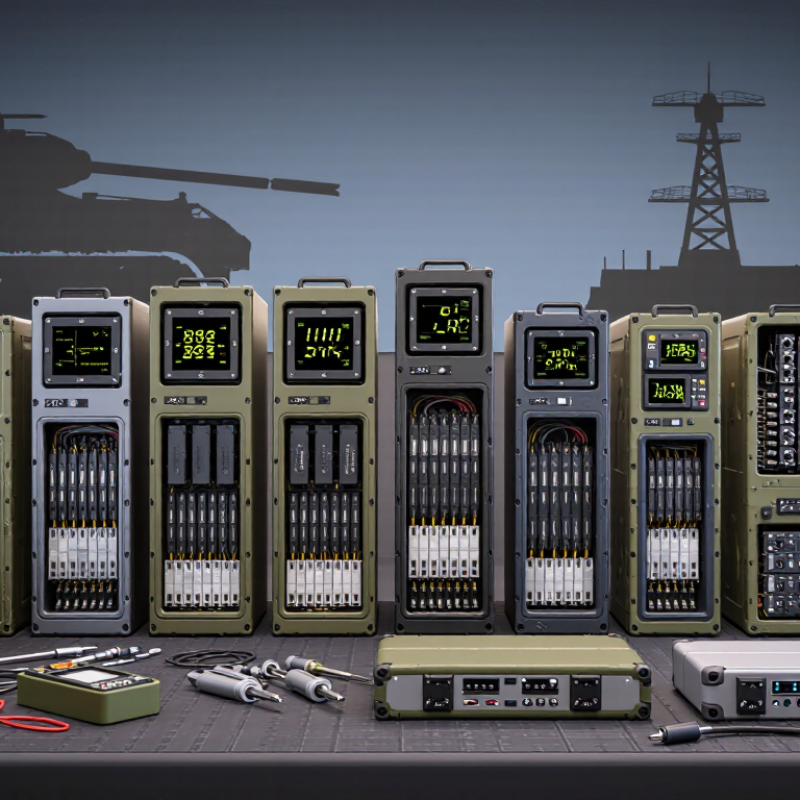
China Top 10 Military Power Distribution Unit Manufacturers

Definition and Role of Military Power Distribution Units

Definition and Role of Military Power Distribution Units

A military power distribution unit (PDU) receives electrical power, protects circuits, and sends controlled output to mission equipment. It may serve vehicles, radar shelters, unmanned platforms, or aircraft subsystems. Unlike a simple switch box, a PDU manages current, voltage, isolation, and fault response. Its enclosure must also tolerate vibration, dust, moisture, and temperature changes.

The role becomes more important as platforms carry more sensors and computing hardware. SIPRI reported global military expenditure of $2.443 trillion in 2023, showing continued investment in complex defense systems. This spending does not guarantee reliable power architecture. A poorly sized PDU can cause voltage drops, overheating, or unnecessary shutdowns. Small failures matter. Field engineers therefore examine load profiles, inrush current, connector retention, and cooling paths before approving a design.

Military PDUs commonly support monitoring, remote switching, circuit protection, and selective load shedding. Standards such as MIL-STD-704F define electrical power characteristics for aircraft equipment, while IEC 60571 addresses electronic equipment used on railway vehicles. These references help engineers verify endurance and compatibility, but they cannot replace platform-level testing. A unit may pass a laboratory test and still struggle after years of vibration. That risk deserves honest review. Better designs provide service access, clear fault logs, and measured redundancy without adding excessive weight. The most dependable PDU is not merely powerful; it behaves predictably when power quality deteriorates.

Key Technologies Used in Chinese Military PDU Manufacturing

Chinese military PDU manufacturing increasingly combines solid-state switching, intelligent monitoring, and rugged thermal design. A 2024 Grand View Research report estimates the global PDU market will grow at roughly 6% annually through 2030. This growth reflects higher demand for compact, fault-aware power systems. Chinese suppliers commonly support 28V DC, 270V DC, and 400Hz AC platforms. MOSFET and IGBT modules enable faster isolation than mechanical relays. Digital controllers also record voltage, current, temperature, and fault duration.

Electromagnetic compatibility remains critical. Designers use multi-stage filtering, shielded enclosures, controlled grounding, and short current paths. Compliance testing often references GJB requirements, MIL-STD-461 principles, and environmental procedures similar to MIL-STD-810. Thermal cycling, vibration, salt mist, and altitude tests expose weak solder joints and connector seals. Conformal coating protects circuit boards from humidity, but it can complicate repair. That trade-off deserves more attention. Advanced units may include redundant sensing, hot-swap channels, and CAN or RS-485 communication. However, software alarms cannot replace careful fuse coordination.

Tips: Request test evidence, not only catalog specifications. Check derating at high temperature. Inspect connector locking force and cable strain relief. Ask whether protection thresholds are adjustable in the field. A 2024 MarketsandMarkets defense-electronics analysis highlights modular architectures and embedded diagnostics as major reliability trends. In practice, simpler designs can still outperform complex units when maintenance access is limited. That lesson is easy to overlook.

China Top 10 Military Power Distribution Unit Manufacturers - Key Technologies Used in Chinese Military PDU Manufacturing

An anonymized technology benchmark based on commonly used military and aerospace power-distribution design practices in China; no company or brand names are displayed.

Rank Anonymized Manufacturer Profile Typical Input Architecture Primary Switching Technology Output Protection Monitoring and Control Thermal Management Environmental Design Focus Common Compliance References
1 Profile A — vehicle and ground-platform PDU specialist 28 VDC or 270 VDC nominal bus; isolated auxiliary conversion where required Automotive-grade MOSFETs for low-voltage branches; IGBTs for higher-voltage switching Electronic current limiting, short-circuit shutdown, reverse-polarity protection, surge suppression CAN or RS-485 communication, voltage/current telemetry, built-in fault logging Conductive cooling through a sealed aluminum enclosure and chassis mounting Shock, vibration, dust, moisture, temperature cycling, and salt-mist resistance GJB 150 environmental methods; GJB 151 electromagnetic compatibility requirements
2 Profile B — airborne power-management specialist 28 VDC aircraft bus with multiple regulated and switched load outputs High-frequency MOSFET switching with isolated gate drivers and redundant control paths Fast electronic circuit breakers, load shedding, overvoltage and undervoltage cut-off Discrete health signals, serial data bus, built-in test, and channel-level diagnostics Lightweight heat spreaders, conduction cooling, and low-loss power semiconductors Low mass, high altitude, rapid decompression, vibration, humidity, and temperature extremes GJB 150 environmental qualification; GJB 151 EMC control; applicable aviation electrical-interface specifications
3 Profile C — naval and shipboard PDU specialist 28 VDC, 115 VAC/400 Hz, or mixed AC/DC distribution architecture MOSFET or IGBT solid-state switching with galvanic isolation between sections Leakage monitoring, branch isolation, overcurrent protection, and transient suppression Networked monitoring, insulation-status indication, event records, and remote reset Sealed conduction-cooled housing; corrosion-resistant coatings and hardware Salt fog, condensation, vibration, shock, electromagnetic compatibility, and corrosion control GJB 150 environmental methods; GJB 151 EMC requirements; shipboard electrical safety practices
4 Profile D — radar and electronic-system PDU specialist 270 VDC or 540 VDC intermediate bus feeding isolated point-of-load converters High-voltage IGBT or silicon-carbide switching with high-frequency DC/DC conversion Fast fuse coordination, semiconductor current limiting, arc-fault mitigation, and surge protection High-resolution voltage/current sensing, Ethernet or CAN monitoring, and predictive alarms Forced-air or liquid-assisted cooling for high-density power assemblies Low conducted and radiated emissions, thermal stability, vibration, and maintainability GJB 151 EMC requirements; GJB 150 environmental methods; high-voltage insulation practices
5 Profile E — unmanned-system power-distribution specialist 12 VDC or 28 VDC battery bus with multiple independently controlled branches Low-loss MOSFET load switches and digitally controlled buck or buck-boost converters Per-channel current limiting, battery reverse protection, undervoltage lockout, and thermal shutdown CAN, UART, or RS-485 telemetry; software-configurable thresholds and fault reporting Passive conduction cooling, compact heat spreaders, and optimized PCB copper areas Low weight, compact volume, battery transients, vibration, dust, and outdoor temperature variation GJB 150 environmental methods; GJB 151 EMC requirements; battery-system safety practices
6 Profile F — missile and launch-platform PDU specialist 28 VDC or higher-voltage DC bus with tightly controlled activation sequencing High-reliability MOSFET switching, solid-state relays, and isolated control circuits Redundant inhibit circuits, soft start, overcurrent protection, and safe-state shutdown Discrete status monitoring, redundant enable lines, and deterministic fault indication Conduction cooling with low-outgassing materials and mechanically restrained components High shock, severe vibration, acceleration, thermal shock, and long-term storage stability GJB 150 environmental methods; GJB 151 EMC requirements; high-reliability electronic assembly controls
7 Profile G — command-and-control equipment PDU specialist 28 VDC or 48 VDC input with isolated outputs for computing and communications equipment Synchronous MOSFET converters, hot-swap controllers, and digitally managed power paths Hot-swap protection, current sharing, overtemperature protection, and controlled restart Ethernet, CAN, or RS-485; SNMP-compatible monitoring may be used in networked systems Forced-air cooling or conduction cooling depending on enclosure and installation constraints Continuous operation, electromagnetic compatibility, serviceability, and redundancy GJB 151 EMC requirements; GJB 150 environmental methods; relevant information-system power practices
8 Profile H — energy-storage and hybrid-power PDU specialist Battery, generator, and auxiliary DC sources combined through isolated power paths Bidirectional MOSFET or IGBT converters with contactor and pre-charge control Battery overcurrent protection, pre-charge, isolation monitoring, and emergency disconnect Battery-management communication, state-of-charge data, current measurement, and event logging Liquid or forced-air cooling for high-power systems; thermal sensors on switching devices Electrical isolation, thermal runaway mitigation, vibration, moisture, and fire-safety considerations GJB 150 environmental methods; GJB 151 EMC requirements; applicable rechargeable-battery safety standards
9 Profile I — ruggedized industrial and border-system PDU specialist Wide-range 18–36 VDC input or regulated 28 VDC supply architecture MOSFET-based solid-state distribution with wide-input DC/DC conversion Input transient protection, reverse connection protection, branch fusing, and current limiting CAN or RS-485 monitoring, local indicators, maintenance interface, and fault memory Sealed conduction-cooled enclosure with thermal interface materials Wide temperature range, rain, dust, sand, vibration, shock, and corrosion resistance GJB 150 environmental methods; GJB 151 EMC requirements; IP-rated enclosure practices
10 Profile J — laboratory, test-range, and mission-support PDU specialist Configurable 28 VDC, 48 VDC, or AC input with modular output channels Modular MOSFET or IGBT switching, programmable converters, and relay bypass paths Programmable current limits, overvoltage protection, emergency stop, and channel isolation Ethernet, USB, CAN, or RS-485; software configuration, waveform logging, and remote control Forced-air cooling with replaceable filters or conduction cooling for sealed installations Measurement accuracy, repeatability, electrical safety, EMC performance, and maintainable modularity GJB 150 environmental methods; GJB 151 EMC requirements; applicable laboratory electrical-safety standards

Note: Input voltages, switching devices, interfaces, and qualification references are representative technology choices for the stated application categories. Actual PDU specifications depend on the platform, mission profile, electrical interface definition, and customer qualification requirements.

Selection Criteria for Ranking China’s Top PDU Manufacturers

China Top 10 Military Power Distribution Unit Manufacturers

Ranking China’s top military PDU manufacturers requires more than comparing prices or catalog quantities. A credible assessment begins with electrical safety, output stability, and documented testing. Uptime Institute’s 2024 Global Data Center Survey reported that 54% of major outages caused losses above $100,000. This finding makes protection, redundancy, and maintenance evidence essential for military power systems.

The evaluation should examine compliance with applicable IEC requirements, quality systems, and military environmental standards such as MIL-STD-810 and MIL-STD-461. Reviewers should check temperature cycling, vibration, shock, electromagnetic compatibility, overload protection, and insulation performance. Factory inspection also matters. Engineers should verify calibration records, burn-in procedures, traceable components, and batch-level test reports. Paper claims are not enough.

Look for practical experience.

A manufacturer’s ranking should include field performance, engineering response, and customization capability. Useful indicators include MTBF calculations, spare-parts planning, remote monitoring security, and repair turnaround time. The International Energy Agency reported that data centers consumed about 240–340 TWh of electricity globally in 2022, showing why power efficiency deserves measurable attention. However, efficiency figures can vary by load, temperature, and test method. No scorecard is perfect. A better approach combines audited data, sample testing, customer references, and direct technical interviews. Thin documentation should reduce a supplier’s score, even when the product appears advanced.

Profiles of China’s Top 10 Military PDU Manufacturers

China’s top 10 military power distribution unit manufacturers reflect a broad industrial base, from precision enclosure builders to integrated power-system specialists.

Their profiles should be judged by engineering evidence, not marketing claims. Key differences include input voltage range, output density, thermal design, shock resistance, and maintenance access. Some manufacturers focus on compact rack PDUs for mobile command equipment. Others develop rugged units for vehicles, shelters, and naval platforms. Several combine monitoring functions with circuit protection and remote diagnostics. This can reduce inspection time, but software reliability still requires careful validation.

The strongest profiles usually show controlled production, traceable materials, and documented testing. Look for protection against overload, short circuits, vibration, humidity, and electromagnetic interference. Factory inspection records matter. So do field-service procedures.

A capable supplier should explain connector selection, grounding methods, derating rules, and replacement intervals in clear technical language. Certification claims should be checked against the exact model, not a similar product. Some public profiles remain incomplete, and that is worth noting. A polished website cannot replace test data or engineering communication.

Tips:

Request a sample specification sheet, test report, and wiring diagram before comparison. Confirm whether custom layouts affect delivery time or warranty support. Ask how failures are recorded and corrected. Visit the facility when practical. Review the details twice. A reliable PDU partner should welcome technical questions, disclose limitations, and support long-term configuration control.

Military Applications and Procurement Considerations for PDUs

Military PDUs serve in vehicles, shelters, radar stations, and deployable command systems. Procurement teams need more than outlet counts. They should verify input range, phase balance, switching behavior, cooling limits, and connector retention. The Uptime Institute’s 2024 Global Data Center Survey reported that 53% of respondents experienced an outage during the previous three years. This reinforces one point: power distribution deserves the same scrutiny as computing hardware.

A suitable unit should meet the required environmental and electromagnetic standards, such as MIL-STD-810 and MIL-STD-461, when specified by the mission. Testing should cover vibration, humidity, salt exposure, shock, and conducted interference. Engineers should also examine fault logging, remote monitoring, circuit protection, and maintenance access. A compact PDU can look efficient, yet restricted airflow or difficult cable routing may create field problems. That is an easy detail to underestimate.

Tips: Request independent test records, not only a compliance statement. Check derating at high temperature and altitude. Confirm spare parts availability and firmware control. Use a witnessed load test before acceptance. Procurement documents should define recovery time, alarm behavior, cybersecurity controls, and inspection intervals. Some specifications remain vague. They should be challenged before contract approval.

FAQS

What power platforms do these PDUs commonly support?

Common platforms include 28V DC, 270V DC, and 400Hz AC systems. Input tolerance must match the mission.

Why are solid-state switches used in military PDUs?

MOSFET and IGBT modules isolate faults faster than mechanical relays. They also reduce switching wear. Not always better.

What information can intelligent monitoring record?

Digital controllers can record voltage, current, temperature, and fault duration. These records help technicians locate intermittent failures.

How do designers improve electromagnetic compatibility?

They use multi-stage filters, shielded enclosures, controlled grounding, and short current paths. Poor cable routing can still undermine protection.

Which environmental tests should buyers request?

Request vibration, shock, humidity, salt exposure, thermal cycling, altitude, and electromagnetic interference tests. Test evidence matters more than polished catalog claims.

What mechanical details deserve inspection?

Check connector locking force, cable strain relief, airflow, and access for maintenance. A loose connector can stop an entire subsystem.

Can software alarms replace proper circuit protection?

No. Alarms support diagnosis, but coordinated fuses and reliable switching remain essential. Software is not a fuse.

What should procurement teams verify before acceptance?

Verify input range, phase balance, cooling limits, protection thresholds, spare parts, firmware control, and recovery time. Witnessed load testing is useful.

Are complex PDU designs always more reliable?

No. Modular diagnostics and redundant sensing can help, but simple designs may perform better in harsh field conditions. This trade-off deserves reflection.

Why does conformal coating require careful evaluation?

Conformal coating protects circuit boards from humidity. However, it can make repairs slower and more difficult. Protection has a cost.

Conclusion

This article provides an overview of China’s military power distribution sector, beginning with the definition and role of a Military Power Distribution Unit in supplying, protecting, and managing electrical power across defense platforms and mission-critical systems. It explains how these units support stable operation under demanding conditions, including vibration, temperature variation, electromagnetic interference, and limited installation space. The discussion also introduces key technologies used in Chinese manufacturing, such as high-efficiency power conversion, intelligent monitoring, modular architecture, thermal management, fault protection, and ruggedized enclosure design.

The article further outlines the criteria used to evaluate leading manufacturers, including engineering capability, product reliability, customization, testing standards, delivery capacity, and after-sales support. It then presents profiles of China’s top ten manufacturers without focusing on brand promotion, followed by an examination of military applications and procurement considerations. Readers will gain a practical framework for comparing solutions, assessing lifecycle value, verifying compliance requirements, and selecting PDUs suited to specific operational environments and integration needs.


Seraphina

Seraphina

Seraphina is a dedicated marketing professional with a deep understanding of the company’s products, services, and customer-focused solutions. With strong expertise in market research, content strategy, brand communication, and digital engagement, she regularly contributes insightful articles to......