Direct export configurations certified to CE, MIL-STD-810, MIL-STD-461, and MIL-STD-1275 standards for global defense contractors and OEM integrators.
In the contemporary landscape of global defense procurement, modern military operations have undergone a paradigm shift driven by the democratization of unmanned aerial vehicles (UAVs), asymmetric electronic warfare (EW), and the requirement for modular, high-efficiency C4ISR (Command, Control, Communications, Computers, Intelligence, Surveillance, and Reconnaissance) power infrastructures. As prime defense contractors and sovereign procurement authorities evaluate third-party suppliers, the role of a qualified CE Certified Military Power Exporter & Exporters has evolved from basic commercial hardware assembly to high-reliability, mission-critical systems engineering.
This technical whitepaper outlines the structural parameters, compliance protocols, semiconductor breakthroughs, and international procurement standards required for deploying ruggedized AC-DC power supplies, DC-DC converters, Gallium Nitride (GaN) RF power amplification modules, and tactical protective equipment across extreme operational environments.
Core Procurement Insight: Sourcing defense electronics from CE-certified export entities guarantees compliance with stringent European Union electromagnetic compatibility (EMC) directives (EN 61000 series) and low-voltage safety standards (EN 62368-1), while maintaining full cross-compatibility with U.S. Military Standards (MIL-STD-810H, MIL-STD-461G, and MIL-STD-1275E).
Military power conversion equipment operates under harsh environmental and electrical constraints that would instantly degrade commercial off-the-shelf (COTS) units. Fielded hardware must accommodate dirty input power, severe phase imbalances, thermal shocks from -40°C to +85°C, high-amplitude mechanical vibration, and extreme electromagnetic interference.
Engineered military power systems rely on advanced power topologies to achieve SWaP-C (Size, Weight, Power, and Cost) optimization. By transitioning from legacy silicon MOSFET switches to wide bandgap (WBG) Gallium Nitride (GaN) and Silicon Carbide (SiC) semiconductors, export-grade power modules achieve switching frequencies exceeding 1 MHz. This reduction in passive component volume translates into compact 1U/2U rackmount form factors and ultra-lightweight tactical field units.
When selecting a international defense exporter, engineering teams must audit the vendor’s compliance matrix against internationally recognized environmental and electrical standards:
| Standard Specification | Operational Scope & Parameter | Engineering Design Implementation |
|---|---|---|
| MIL-STD-810H | Environmental Engineering Considerations and Laboratory Tests | Hermetically sealed IP67 enclosures, potted magnetic components, conformal coating (Type UR/AR), structural vibration damping. |
| MIL-STD-461G | Requirements for the Control of Electromagnetic Interference (EMI) | Multi-stage LC passive filtering, double-shielded transformer topologies, conductive gasketing, low switching-noise edge control. |
| MIL-STD-1275E | Characteristics of 28 Volt DC Electrical Systems in Military Vehicles | High-energy transient absorption circuits, clamping 100V/50ms surges, reverse polarity protection, cranking-dropout energy hold-up. |
| MIL-STD-1399-300B | Interface Standard for Shipboard Systems (AC Electric Power) | 60Hz and 400Hz frequency input tolerance, low total harmonic distortion (THD < 3%), spike recovery circuits for naval zonal grids. |
| CE EN 62368-1 / EN 61000 | European Commercial Safety & Electromagnetic Compatibility Directives | Mandatory certification framework for dual-use export items, ensuring immunity to electrostatic discharge (ESD) and radio-frequency fields. |
Strategic technology roadmaps detailing the convergence of GaN RF power amplification, anti-FPV counter-UAV defense, and tactical power management.
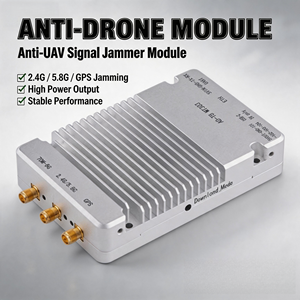
The rapid proliferation of FPV (First-Person View) loitering munitions and swarm drones has fundamentally redefined electronic warfare (EW). Traditional traveling-wave tube (TWT) amplifiers are being replaced by solid-state GaN power amplifiers (SSPAs) operating across UHF, L, S, C, and Ku bands.
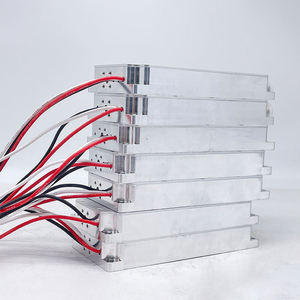
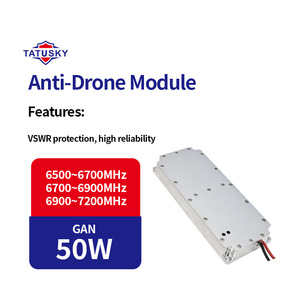
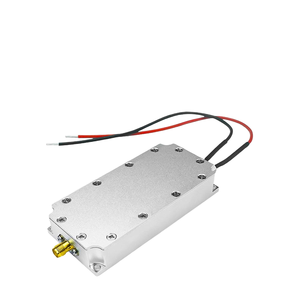
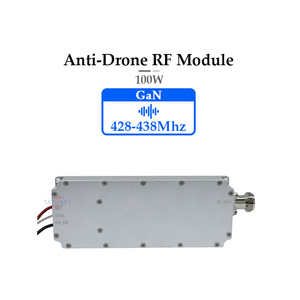
As demonstrated in our core product line—ranging from the GaN 433MHz 100W Anti-FPV Module to high-frequency 6.5–7.2GHz 50W RF Amplifiers—GaN-on-SiC technology delivers exceptional power-added efficiency (PAE > 50%), high thermal conductivity, and instant-on broad-spectrum jamming capability. Procurement teams are prioritizing suppliers offering modular GaN RF units capable of continuous-wave (CW) output under maximum VSWR mismatch conditions.
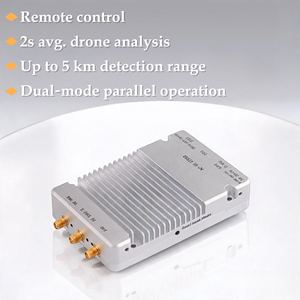
Active radar detection often exposes perimeter positions to anti-radiation missiles and electronic eavesdropping. Procurement trends are heavily shifting toward passive RF spectrum analysis paired with instantaneous directional jamming.
Modern defense systems integrate 60g ultra-portable modules capable of decoding advanced commercial protocols (such as DJI O4 transmission formats) within 2 seconds across a 5km radius. Exporters providing CE-certified passive detection electronics allow security agencies to maintain covert situational awareness while minimizing RF signature exposure.
Naval shipboard integration, armored combat vehicles, and field-deployed shelters are moving away from centralized legacy power distribution toward decentralized zonal power management systems.
By utilizing hot-swappable N+1 redundant backplane architectures, military engineers can replace failed power conversion blocks in seconds without disassembling mission consoles. Modified COTS (MOTS) approaches allow defense contractors to reduce non-recurring engineering (NRE) costs by up to 60% while shortening delivery schedules from years to weeks.
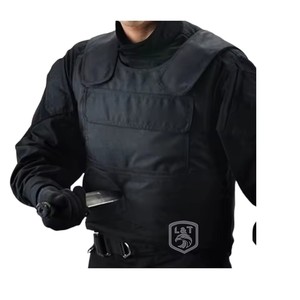
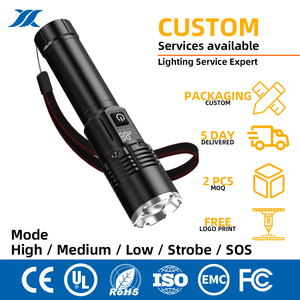
Soldier modernization programs demand lightweight, high-mobility tactical gear. The integration of ergonomic anti-stab/stab-proof ballistic vests alongside high-lumens tactical illumination and wearable power packs ensures soldier survivability in close-quarters urban combat and prolonged wilderness deployments.
Exporters must guarantee that personal protective gear complies with rigorous ISO and NIJ standards while ensuring seamless attachment of communication devices and secondary power banks.
Decades of specialized engineering expertise delivering high-reliability military power systems to international prime contractors and armed forces.
Manufacturing operations are certified under strict ISO 9001 quality management standards, backed by full component lot traceability, conflict-minerals compliance, and complete environmental stress screening (ESS).
Every military-grade export unit undergoes rigorous testing: thermal cycling (-40°C to +85°C), high-pot insulation isolation, burn-in under maximum continuous load, pre-compliance EMI scanning, and shock verification.
Experienced international trade team fluent in handling ITAR/EAR classifications, CE declaration certificates, Certificate of Origin (COO) documentation, and custom packaging for global defense logistics.
Definition of electrical rails, RF bandwidth, mechanical footprint, thermal budget, and target MIL-STD environment.
Evaluation of proven platform topologies to minimize NRE charges, accelerate build schedules, and de-risk testing.
FEA thermal profiling, ANSYS electromagnetic simulation, circuit optimization, and 3D CAD interface release.
Assembly of engineering prototypes followed by full-power testing, environmental chamber runs, and EMI pre-scan.
Final CE compliance sign-off, acceptance test documentation release, and scaled volume production delivery.
Addressing critical commercial, technical, and regulatory questions from international defense buyers and procurement officers.
Connect directly with our senior application engineers to review your power system specifications, request custom GaN RF module quotes, or receive CE compliance export documentation.