Engineered to meet stringent CE, MIL-STD-810G, and MIL-STD-461 EMC specifications for satellite ground stations, airborne platforms, and tactical defense grids.

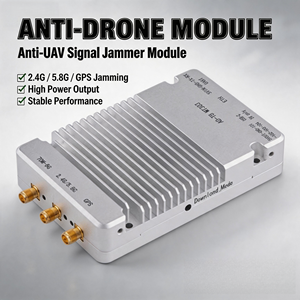
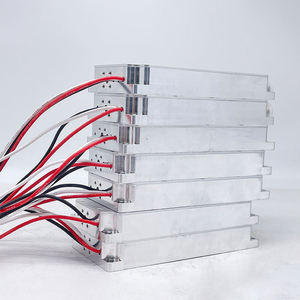
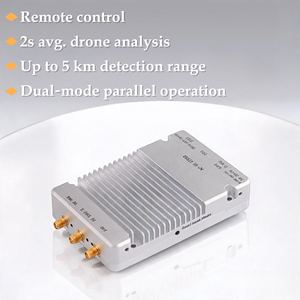
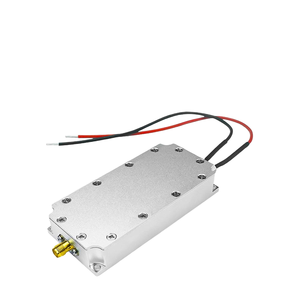
In modern aerospace, satellite communications (SATCOM), and tactical perimeter defense, power supply units (PSUs) and Radio Frequency (RF) amplifier systems represent the critical operational foundation. As Low Earth Orbit (LEO) constellations expand, mobile satellite ground terminals proliferate, and unmanned aerial system (UAS) counter-defenses become standard infrastructure, global defense contractors and commercial integrators require CE Certified Satellite Power Supplies engineered with uncompromised thermal dynamics, electromagnetic compatibility (EMC), and superior Size, Weight, Power, and Cost (SWaP-C) metrics.
SEO & Procurement Authority Insight: Sourcing satellite-grade power supplies requires evaluating non-linear load regulation, harmonic suppression under MIL-STD-461, and compliance with the European Radio Equipment Directive (RED 2014/53/EU) and CE EN 62368-1 safety benchmarks. This technical document outlines the engineering imperatives governing high-density power architectures for global procurement officers and system engineers.
Legacy satellite earth stations and tactical RF power modules relied heavily on Silicon (Si) MOSFETs and Travelling Wave Tube Amplifiers (TWTAs). However, the modern standard has shifted decisively toward Gallium Nitride on Silicon Carbide (GaN-on-SiC) High Electron Mobility Transistors (HEMTs). GaN technology enables satellite power supplies and RF Solid-State Power Amplifiers (SSPAs) to operate at significantly higher drain efficiencies, elevated breakdown voltages, and extreme power densities across L-band, S-band, C-band, Ku-band, and Ka-band frequencies.
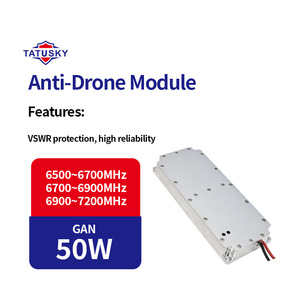
When selecting a CE certified satellite power supplier, engineers must verify that the switching power supplies and high-power RF modules maintain tight voltage regulation (typically ±0.5% or better) even under rapid transient load changes. GaN-based power amplifiers, such as our 700MHz–6000MHz 80W and 6.5GHz–7.2GHz 50W modules, utilize customized DC-DC converter topologies engineered to mitigate drain-voltage ripple, directly reducing phase noise in SATCOM uplink signals and counter-drone defense arrays.
Integrated copper-molybdenum heat sinks combined with liquid or forced-air cooling interfaces ensure minimal thermal derating up to +85°C ambient temperatures.
Multi-stage differential and common-mode filtering suppresses conductible and radiated emissions below CE EN 55032 and MIL-STD-461G limits.
Designed to absorb severe surge transients (up to 100V for 50ms) complying with MIL-STD-1275E vehicle and satellite ground supply rails.
Obtaining CE certification for satellite power supplies and high-power RF defense modules is not merely a administrative mark; it involves exhaustive compliance testing across three primary domains of European directives:
A. Low Voltage Directive (LVD) 2014/35/EU / EN 62368-1: Modern satellite communication power supplies handle high DC bus voltages (ranging from 28VDC vehicle supplies to 400VDC high-voltage distribution networks). Safety standards demand rigorous creepage and clearance distances, high-voltage breakdown insulation (typically 3000VAC isolation minimum), and flame-retardant PCB substrate selection (UL 94 V-0 rated).
B. Electromagnetic Compatibility (EMC) Directive 2014/30/EU: In satellite ground terminals, high-power switching power supplies operating at 100kHz–1MHz can radiate noise into sensitive Low Noise Blockconverters (LNBs). CE certified suppliers implement shielded metallic enclosures, high-permeability ferrite chokes, and active power factor correction (PFC > 0.98) to eliminate main line harmonic pollution.
C. Radio Equipment Directive (RED) 2014/53/EU: When power supplies are integrated alongside active transmitter components—such as GaN broadband defense modules or satellite telemetry links—they must not cause unessential spurious emissions or degrade adjacent spectrum bands.
To assist system integrators and procurement engineers in matching mission requirements with correct equipment specs, the matrix below details operational benchmarks across our certified product lines:
| Module Type | Frequency Range | Power Output / Efficiency | CE / Compliance Standard | Primary Application |
|---|---|---|---|---|
| GaN Wideband RF Module | 700 MHz – 6000 MHz | 80W Peak / 65% PAE | CE Certified EN 55032 | Anti-FPV Defense & Satellite Uplink |
| C-Band SSPA Module | 6500 MHz – 7200 MHz | 50W Continuous / 58% PAE | CE Certified RED Directive | SATCOM Earth Station Transmitter |
| L-Band Satellite Amplifier | 1160 MHz – 1260 MHz | 10W to 100W Scalable | CE Certified EN 62368-1 | GNSS Jamming Protection & Satellite Telemetry |
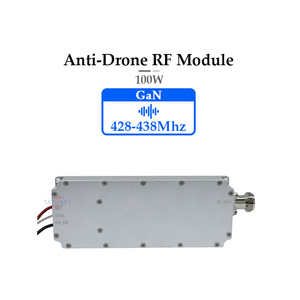
| Sub-GHz Power Unit | 428 MHz – 438 MHz | 100W Solid-State / 70% Eff. | CE Certified EMC Compliant | Long-Range Remote Telemetry & C2 Links |
| Passive RF Sensing Converter | 0.1 GHz – 6 GHz | Low Power (< 5W Consumption) | CE Certified RoHS Compliant | 2-Second Drone Detection & Satellite Beacon Track |
The global satellite power converter market is undergoing a structural transition driven by changes in satellite constellation geometry, autonomous defense requirements, and green power mandates. Senior buyers and procurement leaders must prepare for several core technological trends over the next decade:
1. Modular, Scalable Swappable Architectures: Traditional satellite ground stations used fixed-capacity bulk power supplies. Modern buyers are shifting toward modular N+1 redundant power supply racks. If one power module fails, hot-swappable mechanisms ensure uninterrupted SATCOM transmission without interrupting critical communication nodes.
2. Convergence of SATCOM and Counter-UAS (C-UAS) Power Infrastructure: Tactical command posts increasingly merge satellite backhaul terminals with active RF defense platforms. Power supply suppliers are now required to provide universal multi-rail DC distribution blocks capable of delivering simultaneous clean power to satellite tracking mounts, radar processing units, and high-power GaN RF counter-drone modules.
3. Advanced Thermal Management in Compact Enclosures: As power density exceeds 50 Watts per cubic inch, heat dissipation becomes the bottleneck for reliability. Next-generation power supplies incorporate vapor chamber cold plates, phase-change materials, and conduction cooling paths that interface directly with sealed IP67 aluminum chassis, enabling fanless deployment in dusty desert or high-humidity marine environments.
4. Strict Supply Chain Traceability & E-E-A-T Accountability: Geopolitical risks have heightened scrutinization of electronic component origin. Global buyers prioritize suppliers who demonstrate full ISO 9001 quality management, complete CAGE code traceability, conflict-free mineral compliance, and verified CE/FCC test reports issued by accredited third-party laboratories.
Selecting the right manufacturer for military, aerospace, and satellite power conversion demands a partner with proven field heritage and elite engineering capabilities. Our enterprise ecosystem stands apart through distinct technical and operational strengths:
Essential answers for satellite integration engineers, defense buyers, and regulatory compliance managers.
CE Certification for satellite power equipment requires demonstrating compliance with safety (EN 62368-1), electromagnetic compatibility (EN 55032 for emissions, EN 55035 for immunity), and active power factor correction (EN 61000-3-2). Additionally, if the unit integrates RF amplification modules, RED 2014/53/EU compliance testing is conducted.
Yes. Our GaN RF power modules (such as the 50W C-band and 80W broad-band units) feature low SWaP profiles specifically engineered for airborne avionics racks and unmanned aerial vehicles. They comply with MIL-STD-704 power quality requirements and operate under severe vibration environments.
Standard COTS units offer fixed input/output configurations. Modified COTS allows engineers to retain the pre-qualified core power switching circuitry while customizing output voltage rails, connector types (e.g., MIL-DTL-38999 circular connectors), enclosure mounting brackets, and conformal coating options, saving up to 70% in NRE fees.
Our high-power modules utilize high-thermal-conductivity copper-molybdenum bases bonded directly to the GaN HEMTs. Designed to mount onto external heat sinks or cold plates, they maintain thermal equilibrium even during 100% duty cycle continuous wave (CW) transmission in tactical defense operations.
Absolutley. Our power conversion systems support wide-range AC inputs (90–264VAC, 47–440Hz for shipboard/aerospace) as well as 28VDC vehicle inputs certified under MIL-STD-1275E, and high-voltage 270VDC/400VDC satellite DC bus architectures.
Standard catalog samples are typically dispatched within 1 to 2 weeks. Modified COTS or customized satellite power modules generally require 4 to 8 weeks for design adaptation, prototype assembly, internal testing, and delivery of initial evaluation units.
Need customized satellite power supplies, high-efficiency GaN RF modules, or tactical C-UAS conversion hardware? Speak directly with our senior power engineering team today.