Explore our precision-engineered solid-state RF power amplifiers, passive UAV detection units, and military-spec protective hardware manufactured to rigorous ISO 9001 and MIL-STD quality standards.
Modern defense systems, unmanned aerial vehicle (UAV) countermeasures, industrial power conditioning, and aerospace communication links require unprecedented levels of power density, thermal endurance, and electromagnetic reliability. As global procurement teams re-evaluate supply chain resilience and technical performance vectors, China has established itself as the world's premier innovation hub for Gallium Nitride (GaN) radio-frequency (RF) power modules, broadband jamming amplifiers, and custom COTS (Commercial Off-The-Shelf) power conversion units.
This technical whitepaper provides an exhaustive architectural overview of high-power RF amplifier modules, dynamic spectrum detection systems, and tactical defense equipment. By analyzing material science breakthroughs—specifically the shift from legacy Silicon Lateral Diffused Metal Oxide Semiconductor (LDMOS) to High Electron Mobility Transistor (HEMT) GaN-on-Silicon Carbide (GaN-on-SiC) substrates—we examine how top-tier Chinese manufacturers deliver maximum Size, Weight, Power, and Cost (SWaP-C) efficiency for defense primes and commercial system integrators globally.
The power module manufacturing ecosystem is undergoing a generational transformation. Key technological vectors driving future R&D include high-frequency wide-band gap semiconductors, integrated passive detection algorithms, advanced thermal potting compounds, and modular software-defined RF topologies.
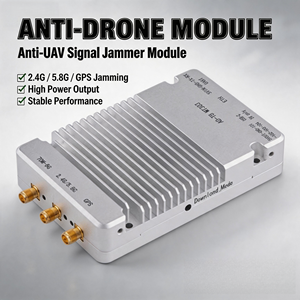
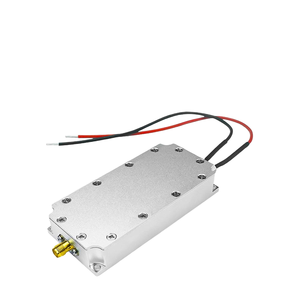
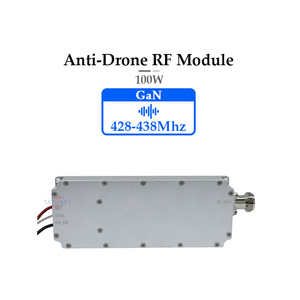
Next-generation RF modules leverage Gallium Nitride on Silicon Carbide substrates. GaN offers superior breakdown voltage, higher electron velocity, and higher thermal conductivity than traditional silicon. This enables RF amplifiers like the 700-6000MHz 80W and 433MHz 100W modules to maintain continuous duty-cycle power outputs in ambient temperatures exceeding +85°C without power foldback.
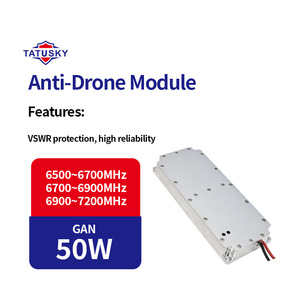
Modern UAV defense systems are forced to counter agile signal hopping protocols across emerging microwave bands. Manufacturers are extending amplification bandwidths up to 7200MHz (covering 6.5GHz to 7.2GHz high-frequency FPV control channels and 1.2GHz GPS/GLONASS/Galileo navigation bands), ensuring complete spectral dominance against commercial and custom combat drones.
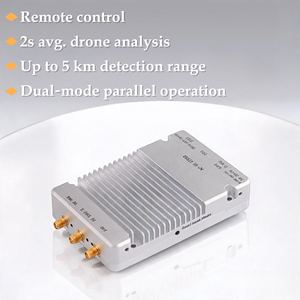
Active radar detection often exposes tactical units to electronic warfare location tracking. The industry trend favors ultra-lightweight (e.g., 60g) passive spectrum analysis modules capable of analyzing DJI O4, remote ID protocols, and custom telemetry signals in less than 2 seconds over ranges up to 5km, automatically triggering directional RF power modules without radiating unnecessary RF signatures.
System integrators require compact form factors that withstand severe vibration, salt fog, and mechanical impact. Using CNC-machined aluminum alloy housings, silicone thermal potting, and MIL-spec circular connectors, China's leading power exporters produce IP65 and IP67 sealed modules suitable for mast-mounted, vehicular, and dismounted soldier deployments.
High-power RF modules operating at 50W to 100W output are vulnerable to antenna disconnected states or high Voltage Standing Wave Ratio (VSWR). Modern smart power modules integrate directional couplers and microprocessor controls to instantly cut or attenuate power upon detecting open/short circuit conditions, extending Mean Time Between Failures (MTBF).
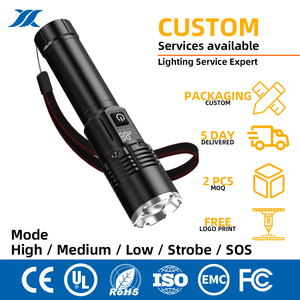
Tactical defense extends beyond electronic warfare to kinetic safety. Combining anti-knife stab-proof tactical vests, high-lumen rechargeable defensive LED illuminators, and portable RF jammer modules creates a multi-layered force protection ecosystem for tactical operators, border security personnel, and defense forces.
To quantify the information gain for engineering procurement officers, the following matrix compares next-generation GaN power modules produced in China against legacy Silicon LDMOS power amplifier designs.
| Performance Parameter | Legacy Silicon LDMOS Modules | Advanced GaN-on-SiC Modules (Our Lineup) | Strategic Advantage for Buyers |
|---|---|---|---|
| Operating Frequency Range | Narrowband (Up to 3.0 GHz max) | Ultra-Wideband (700MHz to 7200MHz) | Single module replaces 3+ legacy units |
| Power Efficiency (PAE) | 35% - 45% Typical | 55% - 70% Typical | Drastically lower power consumption & battery weight |
| Power Density (W/mm²) | ~ 1.0 W/mm² | > 5.0 to 8.0 W/mm² | Ultra-compact footprint for drone & vehicle mounting |
| Max Junction Temp (Tj) | 150°C | 225°C to 275°C | Superior thermal tolerance under prolonged continuous transmission |
| VSWR Tolerance | Susceptible to damage at > 5:1 | Integrated digital protection up to 10:1 open/short | Maximum field reliability under dynamic antenna conditions |
| Response & Sweep Analysis | Manual / Analog spectrum analysis | Micro-passive detection < 2s response | Instant autonomous threat mitigation capability |
As international prime contractors, military procurement directors, and industrial equipment builders source power conversion and RF subsystems from China, several strategic procurement trends have emerged:
Building clean-sheet custom RF modules from the ground up incurs significant Non-Recurring Engineering (NRE) costs and prolongs testing campaigns. Modern procurement strategies heavily utilize Modified Commercial Off-The-Shelf (MOTS) platforms. By modifying an existing, flight-proven or field-tested GaN RF power chassis—adjusting mounting footprints, operating voltage (28VDC vs 48VDC), RF connector types (SMA, N-type, or MIL-DTL-38999), or heatsink geometry—programs reduce lead times by up to 60% while maintaining high reliability.
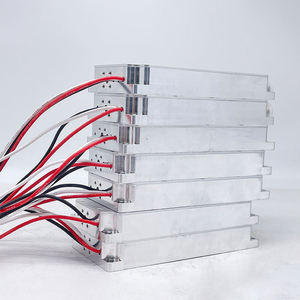
The rapid proliferation of First-Person View (FPV) loitering munitions operating across non-standard radio frequencies (e.g., 433MHz, 1.2GHz, 2.4GHz, 5.8GHz, and up to 7.2GHz) has rewritten procurement requirements. Buyers no longer seek single-frequency signal jammers. Procurement orders now mandate multi-frequency modular power stacks (such as combining 433MHz 100W modules with 1.1-1.2GHz 100W GaN units and 6.5-7.2GHz 50W modules) within a single software-controlled housing.
Global buyers prioritize manufacturers operating under ISO 9001 registered quality management systems with fully traceable component sourcing. SMT production line automation, 100% automated RF spectrum burn-in testing, and detailed thermal imaging reports are now mandatory prerequisites prior to issuing volume purchase orders.
In defense and heavy industrial deployments, equipment life cycles extend from 10 to 20 years. Leading Chinese exporters provide formal component obsolescence monitoring, delivering form-fit-function replacement guarantees whenever silicon wafer or passive component revisions occur, preventing costly system redesigns for fielded hardware.
As a leading Chinese manufacturer and global exporter of advanced RF power modules, anti-drone defense systems, and tactical equipment, our engineering organization combines deep domain expertise, rigorous manufacturing discipline, and customer-centric customization.
Our senior design teams consist of veteran microwave engineers, thermal dynamics specialists, and embedded firmware developers with decades of experience delivering high-reliability RF subsystems for defense and aerospace clients worldwide.
From high-precision SMT surface mounting and CNC aluminum heatsink machining to micro-wire bonding and hermetic sealing, all manufacturing processes are conducted under strict ISO 9001 certified quality controls inside electrostatic-discharge-protected cleanroom facilities.
Our power modules are engineered with design intent to meet or exceed rigorous international standards, including MIL-STD-810 (vibration, shock, thermal altitude), MIL-STD-461 (EMI/EMC emissions), and IP67 dust/water ingress resistance for outdoor mast and vehicle deployments.
Custom Engineering Capability (OEM/ODM):
Whether you require custom frequency tuning (e.g., 428-438MHz or 1160-1260MHz), specific output power scaling (10W to 200W+), dynamic PWM power regulation, or specialized digital control interfaces (RS485, CAN bus, Ethernet telemetry), our R&D center delivers tailored prototypes within rapid turn-around schedules.
Gallium Nitride (GaN) power amplifier modules offer significantly higher breakdown voltages, higher power density, and lower parasitic capacitance than legacy silicon MOSFETs or LDMOS devices. This allows the RF module to achieve much higher output power (such as 80W or 100W) in a substantially smaller physical enclosure. Furthermore, GaN exhibits up to 70% Power Added Efficiency (PAE), dramatically reducing heat generation and battery power draw in portable or vehicular drone countermeasure installations.
Active detection (such as radar) transmits electromagnetic radio waves to spot targets, which makes the operator vulnerable to direction-finding and anti-radiation tracking. In contrast, passive spectrum detection modules (like our 60g ultra-portable or 5km long-range units) silently scan and analyze ambient RF spectrum signatures without emitting any signals. They decode telemetry protocols (such as DJI O4, FPV video feeds, and remote ID) in under 2 seconds, pinpointing threat frequencies prior to activating directional jamming power amplifiers.
Our high-power modules (e.g., 700-6000MHz 80W and 433MHz 100W GaN units) utilize heavy-duty copper baseplates integrated with advanced thermal potting compounds to quickly conduct heat away from active GaN transistors to external heatsinks or forced-air cooling channels. To guard against VSWR mismatch (which occurs when an antenna is damaged, disconnected, or blocked), our modules integrate digital directional couplers with automatic power cutoff or attenuation protection circuits to prevent device failure.
Yes. As an established OEM/ODM manufacturer, we offer complete customization services. We routinely modify frequency ranges (e.g., custom sub-bands within 428-438MHz, 1160-1260MHz, or 6500-7200MHz), power output levels (10W, 30W, 50W, 80W, 100W), supply voltages (24V, 28V, or 48V DC), interface connectors, and physical mounting footprints to fit your existing chassis or system requirements.
We provide comprehensive export documentation packages with all international shipments, including Certificates of Origin (CO), ISO 9001 compliance statements, factory burn-in test reports, accurate HS Code classification, and detailed technical datasheets. Our international sales and logistics teams manage export compliance to guarantee smooth customs clearance for defense contractors, government agencies, and commercial buyers globally.
Need tailored GaN RF power modules, custom frequency tuning, or bulk pricing for anti-drone countermeasure systems? Speak directly with our RF engineering team today.