Explore our flagship series of standard and customized power modules, GaN RF defense amplifiers, passive UAV detection units, and military-grade tactical equipment built for critical industrial and defense programs.

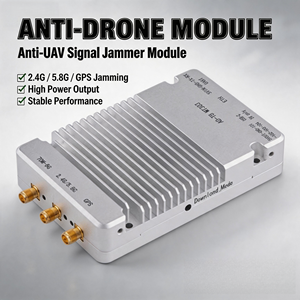
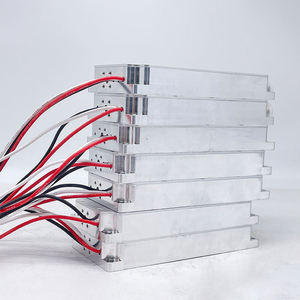
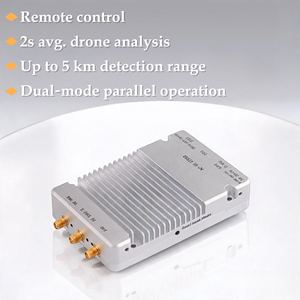
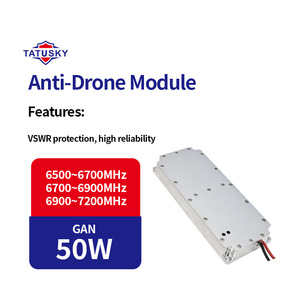
The global industrial and defense power conversion landscape is undergoing a paradigm shift. As high-power electronic systems, electric transport platforms, counter-unmanned aerial vehicle (C-UAV) defense arrays, and tactical electronic warfare assets demand higher power density, the traditional silicon-based power architectures are rapidly reaching their physical thermal and switching limits. Modern systems require sub-second agility, high electromagnetic interference (EMI) resilience, extended ambient temperature operational envelopes, and ultra-high efficiency.
China has established itself as the world’s preeminent hub for advanced charger module manufacturing and broad spectrum Radio Frequency (RF) power amplifier production. Leveraging vertically integrated supply chains, cutting-edge Gallium Nitride (GaN) semiconductor fabrication, and mature quality management systems (ISO 9001:2015, PJR, ANAB accreditations), leading Chinese manufacturers are supplying prime defense contractors, system integrators, and industrial original equipment manufacturers (OEMs) worldwide with mission-critical solutions.
Core Technical Takeaway: Transitioning from Legacy Silicon MOSFETs to GaN-on-SiC (Gallium Nitride on Silicon Carbide) substrates increases power density by up to 300%, reduces switching losses by 65%, and enables multi-gigahertz broad-spectrum amplification crucial for high-frequency tactical defense and ultra-fast DC charging networks.
Power conversion efficiency is governed by switching and conduction losses. In high-power charger modules—such as those operating in high-voltage industrial DC power supplies or high-wattage RF amplifiers (433MHz, 1.2GHz, 700–6000MHz, and up to 7200MHz)—the deployment of wide bandgap (WBG) GaN semiconductors eliminates reverse recovery loss. This permits switching frequencies in the megahertz spectrum without catastrophic thermal dissipation penalties.
In practice, GaN power modules provide distinct operational advantages for field applications:
Utilizing high-frequency soft-switching topologies (LLC resonant and Phase-Shifted Full-Bridge) to achieve power densities surpassing 45W/in³, minimizing physical rack space in shelter and vehicular enclosures.
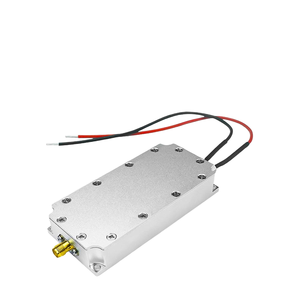
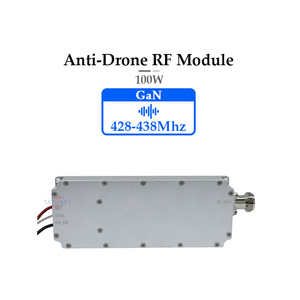
Specialized GaN solid-state power amplifiers (SSPA) operating across 428-438MHz, 1160-1260MHz, and 6.5-7.2GHz bands, providing flat gain curves and instantaneous jamming responsiveness.
Designed to conform with severe environmental standards including MIL-STD-810 (vibration/shock/humidity), MIL-STD-461 (EMC/EMI shielding), and IP65/IP67 ingress ratings.
System integrators must balance electrical efficiency, thermal limits, frequency flexibility, and lifecycle cost. The comparison matrix below outlines the operational metrics validated across our product lines.
| Performance Specification | Legacy Silicon Chargers | GaN Industrial Chargers | GaN RF Defense Modules (433M-7.2G) |
|---|---|---|---|
| Conversion Efficiency | 88.0% – 91.5% | 95.5% – 97.2% | 45.0% – 60.0% Power Added Efficiency (PAE) |
| Switching Frequency | 45 kHz – 100 kHz | 300 kHz – 1.2 MHz | Multi-Gigahertz RF Synthesis |
| Power Density | 12 – 18 W/in³ | 38 – 55 W/in³ | Ultra-Compact Solid State Modular |
| Operating Temperature | -20°C to +50°C | -40°C to +75°C | -40°C to +85°C Baseplate |
| Transient Spike Immunity | Basic TVS Protection | MIL-STD-1275 Suppression | Active VSWR & Thermal Auto-Protection |
| Typical Applications | Commercial EV Slow Chargers | Fast Charging & Industrial DC Racks | C-UAV, FPV Jamming, Tactical Comm Systems |
As procurement directors and engineering leads navigate international sourcing strategies for power supplies, charger modules, and defense subsystems, several critical shifts are defining supplier selection criteria:
Fixed single-block power supplies are rapidly being replaced by hot-swappable N+1 redundant modular architectures. In shipboard power, shelter integration, and heavy industrial microgrids, modularity reduces Mean Time to Repair (MTTR) from hours to minutes. Modular charger platforms allow engineers to scale capacity dynamically by stacking 10W, 50W, 80W, 100W, or multi-kilowatt blocks into a single enclosure without redesigning the backplane.
Modern unmanned aerial vehicle (UAV) systems, including commercial FPV (First-Person View) drones and customized tactical swarms, no longer rely solely on standard 2.4GHz or 5.8GHz control frequencies. Procurement requests now demand multi-band, wideband coverage spanning 428–438MHz, 1160–1260MHz (GPS/GLONASS/Galileo spectrums), 2.4G, 5.2G, 5.8G, and extended microwave frequencies (6.5GHz to 7.2GHz). High-power GaN modules capable of sweeping these bands instantaneously represent the primary line of passive detection and active mitigation.
Active radar detection often reveals the ground unit's electronic signature. Modern UAV defense suites now integrate ultra-lightweight, low-power passive RF spectrum monitoring modules (such as 60g ultra-portable units with 2-second signal identification speeds up to 5km detection range). Combining passive detection with automated RF power amplification modules maximizes operational stealth and battery longevity.
Procurement Strategy Tip: When sourcing charger modules and RF amplifiers from Chinese exporters, demand verified test reports covering MIL-STD-810 thermal shock, MIL-STD-461 EMI compliance, harmonic distortion plots, and automated S-parameter S21 gain curves.
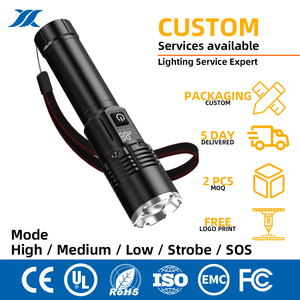
As defense modernization expands, personal protective equipment (PPE)—such as stab-proof and bullet-resistant tactical vests—is being integrated with embedded power routing systems. Power distribution harnesses built directly into tactical vests enable operators to power body-worn passive drone detectors, high-power tactical flashlights (such as Type-C rechargeable high-lumen digital display units), and encrypted tactical radios from a centralized lightweight battery module.
As a veteran-aligned, quality-first manufacturer with over 100 combined years of power electronics and RF engineering experience, our operational philosophy is rooted in technical rigorousness, full supply chain transparency, and uncompromised quality assurance.
Our manufacturing facilities house automated Surface Mount Technology (SMT) lines, high-precision vector network analyzers (VNAs), automated RF burn-in chambers, and environmental testing rigs. Every batch undergoes 100% full-load thermal burn-in prior to shipment.
Our technical engineering team collaborates directly with system integrators during the preliminary design-in phase. We provide comprehensive mechanical STEP 3D models, electrical schematics, thermal dissipation guidelines, and pinout definitions to accelerate customer certification cycles.
Connect directly with our senior application engineers to request detailed datasheets, 3D STEP models, customized frequency quotes, or schedule a technical design review for your project.
Inquire Now