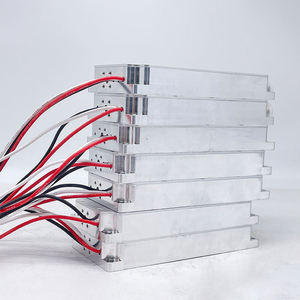
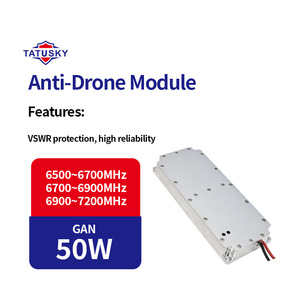
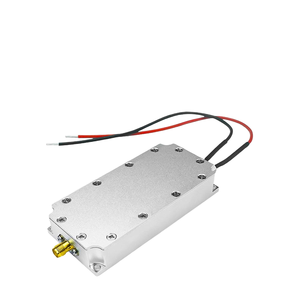
Direct OEM/ODM Sourcing for Microwave RF Amplifiers, Modular Power Rectifiers, and Counter-UAV Tactical Modules
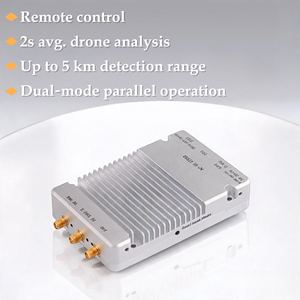
The global telecommunications landscape is undergoing a monumental paradigm shift. As 5G Advanced deployments mature and foundational ground architectures for 6G, satellite-to-cellular interconnects, and tactical remote communications take shape, the mandate for ultra-high-density telecom power conversion and solid-state RF power amplification has never been more urgent. China's manufacturing ecosystem—traditionally valued for volume efficiency—has transformed into the global innovation hub for advanced power electronics, pioneering wide bandgap (WBG) Gallium Nitride (GaN) semiconductor integration, harsh-environment IP67 outdoor thermal management, and ruggedized Commercial-Off-The-Shelf (COTS/MOTS) power platforms.
For international procurement managers, system integrators, and defense contractors searching for authentic China Wholesale Telecom Power Factories & Suppliers, navigating this technological evolution requires a deep understanding of semantic intent, field reliability metrics, and systemic compliance. Sourcing power supplies is no longer a commodities transaction; it is an architectural decision that directly influences Network Availability (99.999% uptime), Total Cost of Ownership (TCO), and mission-critical operational resilience under extreme environmental conditions.
To assist technical directors in procurement evaluation, the matrix below details the empirical performance gains realized by transitioning legacy silicon power setups to modern GaN-based telecom rectifiers and tactical RF power amplifier modules:
| Performance Metric | Legacy Silicon (Si) Rectifiers / Amps | Next-Gen GaN / SiC Hybrid Systems | Operational Sourcing Advantage |
|---|---|---|---|
| Power Density | 15 W/in³ – 25 W/in³ | 45 W/in³ – 75+ W/in³ | 50% reduction in rack space; higher payload efficiency. |
| Conversion Efficiency | 90% – 93% Peak | 96.5% – 98.2% Peak (Titanium Standard) | Massive reduction in thermal dissipation & utility costs. |
| Frequency Bandwidth (RF) | Narrowband (Single Freq Band) | Ultra-Wideband (700MHz – 7200MHz) | Multi-frequency jamming & agile telecom base stations. |
| Thermal Operating Margin | -20°C to +50°C (Derated heavily) | -40°C to +85°C Full Conduction Cooling | Eliminates active fan points of failure in outdoor cabinets. |
| Transient Protection | Standard Surge Absorbers | MIL-STD-1275 / MIL-STD-704 Compliant | Survives severe voltage spikes, lightning, & noisy DC buses. |
Through systematic analysis of global tender specifications, system integration reports, and engineering RFQs, four dominant technological trends are reshaping how telecom power equipment is designed, specified, and manufactured across top-tier Chinese facilities:
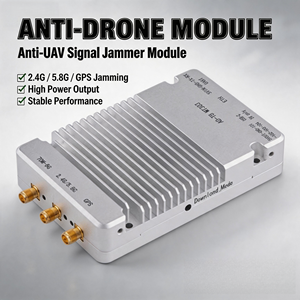
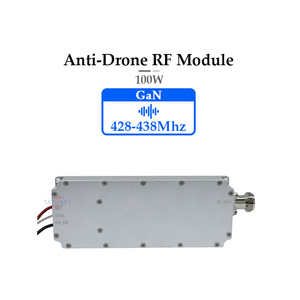
Silicon has reached its theoretical physical limits regarding breakdown voltage, switching speed, and thermal conductivity. Modern Gallium Nitride (GaN-on-SiC) devices enable power modules to switch at megahertz frequencies with negligible switching losses. In telecommunications, this yields ultra-compact 48V DC power rectifiers; in tactical counter-UAV and RF defense applications, it allows broad-spectrum power amplification (e.g., 700–6000MHz 80W/100W modules) capable of continuous-wave (CW) operation without catastrophic thermal runaway.
Modular rack-mount systems are moving away from centralized monolithic power plants toward zonal backplane architectures. Outfitted with digital communication buses (PMBus, CANbus, SNMPv3), modern telecom power supplies allow network operations centers (NOC) to remotely monitor individual module health, perform dynamic voltage scaling, manage battery charge cycles for lithium iron phosphate (LiFePO4) storage, and trigger hot-swap redundancy routines before hardware failure occurs.
The line between commercial telecom infrastructure and tactical defense communications has blurred. Modern outdoor small cells, remote radio heads (RRH), and mobile command shelters are routinely deployed in severe environments facing salt-fog exposure, violent mechanical vibration, and electromagnetic interference (EMI). Leading OEM/ODM suppliers now design commercial platforms against MIL-STD-810H (Environmental), MIL-STD-461G (EMI/EMC), and IP67 ingress standards as default engineering baselines.
With edge computing sites deployed off-grid, telecom power rectifiers must natively accept hybrid inputs—combining 110V/220V AC grid lines, 48V solar photovoltaic arrays, wind generators, and back-up DC battery banks seamlessly without power interruption or phase distortion.
Hot-swappable power modules engineered for continuous maintenance without disrupting system backplane loads, guaranteeing 99.999% uptime for critical nodes.
GaN-powered RF modules spanning 433MHz to 7.2GHz delivering high linearity, high efficiency, and robust protection against heavy load mismatch (VSWR).
Fully sealed, potted, and conduction-cooled chassis built to withstand submersion, dust, salt spray, and severe vibration without active fan replacement costs.
When evaluating a China Wholesale Telecom Power Supplier, tier-one global buyers prioritize engineering depth over catalog resale. Established manufacturing enterprises integrate full end-to-end capabilities: from clean-sheet magnetic topology design and PCB surface-mount technology (SMT) to automated full-load burn-in testing and MIL-spec environmental qualification.
Leveraging over 35 years of legacy design heritage, accredited manufacturing partners provide critical advantages for international procurement teams:
Combining U.S.-standard engineering rigor with China’s world-class electronic manufacturing velocity.
Over two decades of supplying high-reliability AC-DC, DC-DC, and RF modules for naval, airborne, ground vehicle, and 5G telecom deployments globally.
Custom transformer winding, planar magnetic integration, and finite element thermal analysis (FEA) performed entirely by senior power engineers.
Equipped with in-house EMI/EMC pre-compliance chambers, thermal shock rooms, high-g vibration tables, and automated full-power burn-in racks.
Full support for international logistics, complete technical cut-sheets, 3D STEP models, CE/UL/RoHS documentation, and export authorization compliance.
Key baseline compliance standards include IEC/EN 62368-1 for equipment safety, CISPR 32 / EN 55032 Class B for radiated and conducted EMI, IEC 61000-4-5 for surge immunity (lightning protection up to 6kV/10kV), and Telcordia GR-63-CORE / GR-1089-CORE for telecommunications building equipment standards.
GaN devices operate at significantly higher thermal limits and switching efficiencies (>96.5%). This dramatically reduces energy loss converted into waste heat, allowing the use of passive conduction-cooled (fanless) sealed IP67 enclosures. Passive cooling eliminates regular air filter replacements and fan maintenance visits, cutting site service costs.
Yes. Starting from a proven COTS/MOTS platform is the fastest, most cost-effective path. Engineers can modify input filtering to meet MIL-STD-461 EMI, add transient voltage suppression for MIL-STD-1275 vehicle DC power, apply rugged conformal coatings, and install MIL-DTL-38999 circular connectors without clean-sheet NRE fees.
RF modules can be customized across operational bandwidth (e.g., 400MHz to 7.2GHz), output RF power levels (10W to 200W+ CW), supply voltage (28V/50V DC), switching speed (<2 microseconds), digital control interfaces (RS485/UART), and physical heat-sink mounting footprints.
Connect directly with our senior application engineers to review technical specifications, request CAD/STEP models, or initiate a custom sample build tailored to your exact system requirements.
Contact Us