Engineered to meet rigorous SWaP-C guidelines and MIL-STD specifications, optimized for counter-FPV electronic warfare, passive detection, and force protection.
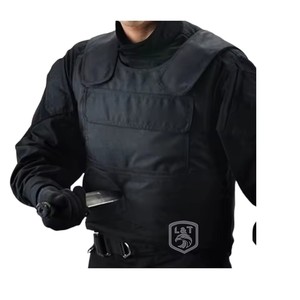
Ergonomically engineered body armor providing NIJ Level III-A/Stab-Proof protection with lightweight composite alloy matrix for field operators.
Contact Us
Ultra-fast 2-second signal analysis module featuring 5km passive RF spectrum scanning and automated countermeasure triggers.
Contact Us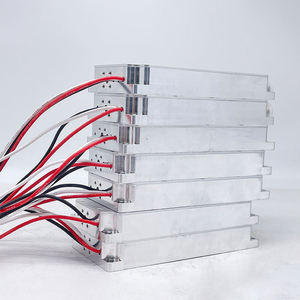
Ultra-wideband Solid-State Power Amplifier (SSPA) utilizing high-efficiency Gallium Nitride transistors for C-UAS jamming equipment.
Contact Us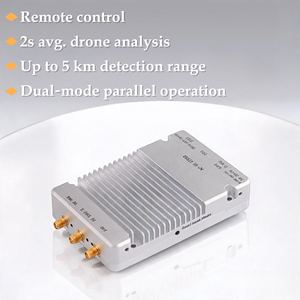
Micro-sized 60-gram tactical sensor providing dual-mode RF detection and protocol analysis for squad-level anti-drone defense.
Contact Us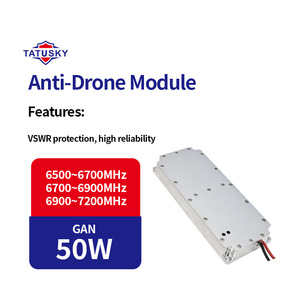
Precision microwave power amplifier engineered for targeted C-band drone control link disruption with active thermal monitoring.
Contact Us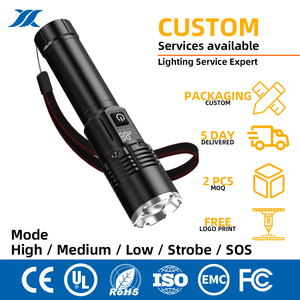
Heavy-duty aluminum alloy optical flash unit featuring Type-C fast charging, zoomable beam, and tactical emergency strobe mode.
Contact Us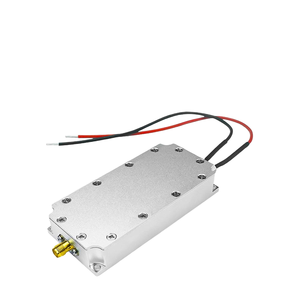
High-power L-band amplifier module customized for GPS/GLONASS spoofing and FPV video link neutralization systems.
Contact Us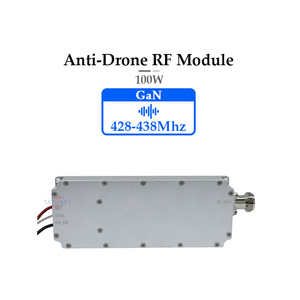
Compact 433MHz power amplifier engineered for sub-GHz long-range drone control channel suppression and defense integration.
Contact UsUnderstanding SWaP-C Optimization, Wide Bandgap Semiconductors, and Systemic Reliability in Modern Electronic Warfare & Tactical Deployments.
The rapid escalation of asymmetric battlefield threats—specifically the proliferation of low-cost, highly maneuverable First-Person View (FPV) loitering munitions and autonomous Unmanned Aerial Vehicles (UAVs)—has fundamentally transformed defense procurement priorities. Power electronics are no longer secondary support components; they serve as the foundational bedrock of combat effectiveness, electronic countermeasures (ECM), and tactical force protection. Modern defense systems demand extreme electrical efficiency, multi-band frequency agility, and rugged operational survivability under brutal environmental conditions.
In airborne, naval, and mobile ground vehicle scenarios, every cubic centimeter and gram directly impacts platform endurance and payload payload capacity. The integration of Gallium Nitride on Silicon Carbide (GaN-on-SiC) semiconductor technology has delivered up to a 5x increase in power density over legacy Silicon LDMOS devices. This shift allows manufacturers to build ultra-compact RF power modules capable of delivering 80W to 100W of continuous broadband jamming power across frequency ranges from 428MHz up to 7200MHz, directly counteracting multi-frequency frequency-hopping drone control links.
An analysis of technological trajectories shaping defense contracts and supplier qualification matrices through 2030.
Gallium Nitride (GaN) is replacing legacy vacuum tube and LDMOS technologies across electronic countermeasure (ECM) platforms. Future procurement mandates specify GaN SSPA modules for superior thermal conductivity, higher breakdown voltages, and continuous duty cycles across ultra-wideband spectra (700MHz to 6GHz+).
Next-gen anti-drone systems are moving away from active radar that alerts enemy ESM sensors. Procurement is favoring passive RF detection modules capable of scanning sub-GHz to 7.2GHz bands in under 2 seconds, utilizing edge-AI signal matching to trigger directional power amplifiers automatically.
Defense primes increasingly mandate COTS (Commercial Off-The-Shelf) and MOTS (Modified Off-The-Shelf) architectures. Power modules must feature standardized interfaces, scalable output rails, and hot-swappable backplanes to reduce NRE (Non-Recurring Engineering) costs and accelerate field updates.
| Engineering Metric | Legacy LDMOS / Tube Systems | Next-Gen GaN RF Defense Modules | Strategic Advantage |
|---|---|---|---|
| Power Density (W/cm³) | 1.2 - 2.5 W/cm³ | 8.5 - 15.0 W/cm³ | 6x footprint reduction in tactical vehicles |
| Power Efficiency (%) | 35% - 45% | 65% - 78% | Drastically reduced heat dissipation & battery draw |
| Bandwidth Agility | Narrowband (Fixed octave) | Ultra-Wideband (0.7 GHz - 6.0 GHz) | Simultaneous multi-protocol FPV/UAV jamming |
| Thermal Threshold | Up to 125°C Junction Temp | Up to 225°C Junction Temp | Operates reliably in extreme desert/combat zones |
| Transient Survivability | Requires external heavy filters | Integrated MIL-STD-1275E Clamping | Survives 100V vehicle engine cranking surges |
Over 100 combined years of high-reliability military power design, backed by certified ISO 9001 manufacturing and proven MIL-STD field heritage.
Established as a Veteran-Owned Small Business (CAGE Code 0P327), our engineering facility specializes in designing, testing, and manufacturing rugged COTS, MOTS, and clean-sheet custom power conversion platforms. From naval surface combatants to tactical UAV countermeasure rigs, our products are deployed across all branches of the armed forces and allied defense prime contractors globally.
Tailored 433MHz, 1.2GHz, 2.4GHz, 5.8GHz, and C-band GaN SSPA designs matching exact output wattage and harmonic suppression targets.
Rapid adaptation of field-proven baseline power chassis to alter connectors, voltage rails, and hold-up time while minimizing NRE cost.
Ultra-lightweight (down to 60g) passive RF spectrum monitoring modules with protocol recognition for tactical operator vests.
Complete documentation, ITAR compliance handling, and CAGE 0P327 export support for international allied programs.
Key technical matrices procurement officers must evaluate before awarding defense power supply contracts.
Evaluating suppliers for military-grade power supplies and RF defense modules requires a deep technical audit that extends far beyond initial unit pricing. Defense systems operate in extreme operational theaters where power failure directly threatens mission safety and operational capability. Procurement teams should utilize the following 4-step technical assessment framework:
Ensure the supplier provides certified laboratory qualification reports for applicable standards. Verify specific tailoring: MIL-STD-810H Method 514.8 for random vibration, MIL-STD-461G CE102/RE102 for electromagnetic compatibility, and MIL-STD-1275E Section 5.3.2 for spike voltage containment.
High-power GaN RF modules generate significant localized heat. Evaluate the supplier's thermal dissipation design—whether forced air, cold-plate conduction, or phase-change liquid cooling. Demand junction temperature derating data under maximum ambient operating temperatures (+71°C to +85°C).
Measure power efficiency across full load ranges. Modern GaN RF modules should achieve over 65% power-added efficiency (PAE) in CW/Pulse modes. Confirm that physical dimensions match standard rack units (1U-4U), modular bricks, or wearable tactical vest footprints without sacrificing output power.
Confirm the vendor holds an active CAGE code (e.g., CAGE 0P327), operates an accredited ISO 9001 facility, and maintains strict component traceability to eliminate counterfeit semiconductors in the defense supply chain.
Expert answers to critical engineering, military standard compliance, and defense RF module specification queries.
Consult with our senior power engineers to discuss your SWaP-C budget, frequency bands, thermal constraints, or custom MIL-STD qualification requirements today.