Mission-critical Uninterruptible Power Supply (UPS) systems, RF amplification modules, and tactical defense equipment qualified for extreme operational environments.

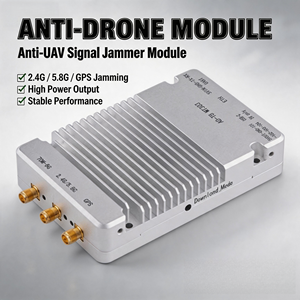
As telecom operators globally accelerate the deployment of 5G standalone (SA) core networks, edge computing nodes, and critical C4ISR tactical communication shelters, the requirement for uninterrupted continuous power has escalated from a basic operational metric to an essential pillar of national cyber infrastructure. Modern Telecommunications Uninterruptible Power Supply (UPS) systems are no longer simple battery backup units; they have evolved into intelligent power conversion hubs, integrating high-density Online Double Conversion architectures, advanced Lithium Iron Phosphate (LiFePO4) energy storage, and wide-bandgap Gallium Nitride (GaN) switching topology.
This whitepaper provides procurement directors, system integrators, and network infrastructure architects with an authoritative evaluation framework for selecting tier-1 Telecom UPS Manufacturers & Factories. Built upon thirty-seven years of specialized power conversion engineering (lineage traced back to defense-grade power manufacturing under CAGE Code 0P327 and ISO 9001 quality accreditations), this analysis bridges the gap between commercial telecom reliability requirements and rigid military-standard (MIL-STD) ruggedization protocols.
Core Technical Takeaway: Modern 5G Macro Sites and Outdoor Remote Radio Units (RRU) require a minimum power density shift to 3U/4U compact rack enclosures capable of surviving ambient operational temperatures from -40°C to +65°C while maintaining an operational efficiency exceeding 96.5% under variable load profiles.
When evaluating global UPS factories and OEM/ODM engineering facilities, purchasing teams must assess manufacturers across seven vital engineering dimensions: Total Cost of Ownership (TCO), Mean Time Between Failures (MTBF), Active Power Factor Correction (PFC), Galvanic Isolation, Ingress Protection (IP Code), Thermal Derating Curves, and Smart SNMPv3 / Modbus-TCP Remote Management compliance.
| Evaluation Parameter | Standard Commercial UPS | Industrial Telecom UPS | Tactical / Military-Grade Telecom UPS |
|---|---|---|---|
| Target Uptime Reliability | 99.9% (Three Nines) | 99.999% (Five Nines) | 99.9999% (Six Nines Zero-Downtime) |
| Operating Temperature | 0°C to 40°C | -20°C to +55°C | -40°C to +65°C (MIL-STD-810G) |
| Input Voltage Tolerance | ±15% AC Input | -25% to +20% AC / Wide DC | Ultra-Wide AC/DC + MIL-STD-1275 Spike Protection |
| Battery Compatibility | VRLA / Standard Lead-Acid | LiFePO4 / Smart BMS | Extreme Temp Lithium / Solid-State Modular |
| Switching Topology | Line-Interactive / Silicon SCR | Online Double Conversion IGBT | GaN / SiC High-Frequency Online Double Conversion |
| Ingress & Environmental | IP20 (Indoor Data Center) | IP55 / NEMA 3R Outdoor Cabinet | IP65 / IP67 Fully Potted / Sealed Chassis |
The global telecommunications industry is undergoing a structural transition driven by higher power consumption per site, decentralized edge network nodes, and decarbonization mandates. Buyers evaluating OEM factories must prioritize manufacturers actively implementing the following four technological vectors:
By replacing traditional silicon MOSFETs with Gallium Nitride (GaN) and Silicon Carbide (SiC) semiconductors, next-generation telecom UPS units achieve switching frequencies above 200kHz. This dramatically reduces magnetic component size (transformers and inductors), lowering cabinet weight by 35% while pushing efficiency curves beyond 97%.
Lead-acid batteries are rapidly being phased out in favor of Lithium Iron Phosphate (LiFePO4) chemistries. Integrated Smart Battery Management Systems (BMS) provide real-time cell-level diagnostics, thermal runaway protection, and 4,000+ charge cycles—reducing site maintenance visits by up to 70% over a 10-year lifespan.
Modern remote telecom tower sites increasingly combine grid power, solar PV arrays, and local UPS storage. Leading telecom UPS factories now engineer multi-input hybrid rectifiers with integrated Maximum Power Point Tracking (MPPT) controllers to prioritize renewable energy consumption and optimize diesel generator runtime.
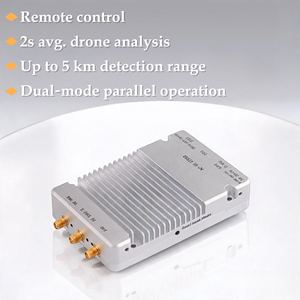
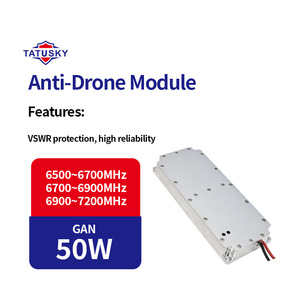
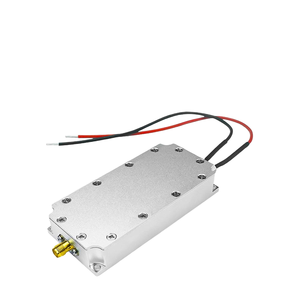
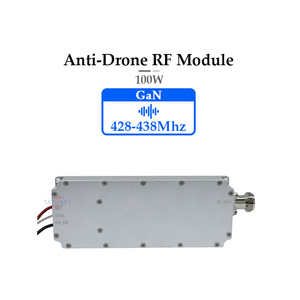
With telecom base stations playing an integral role in tactical defense communications and drone tracking networks (e.g., active RF modules and anti-UAV passive spectrum detection units), telecom power systems are adopting MIL-STD-461 (EMI/EMC immunity) and MIL-STD-810G shock/vibration compliance to guarantee zero signal distortion.
When executing supply contracts with telecom UPS factories, engineering managers must insist on fully verifiable test certificates. Selecting a manufacturer with an ISO 9001 quality system certified by accredited registrars (such as Perry Johnson Registrars with ANAB accreditation) guarantees batch-to-batch structural integrity. Crucial operational standards include:
Since 1987, AJ's Power Source Inc. (AJPS)—a Veteran Owned Small Business (CAGE Code 0P327) located in Land O' Lakes, Florida—has engineered high-reliability power supply solutions for military, naval, aerospace, industrial, and telecommunications applications. With over 100 combined years of specialized electrical design experience, AJPS bridges the strict requirements of defense-grade reliability with the cost-efficiency required for global telecom infrastructure.
Why Engineering Teams Partner with AJPS: Unlike catalogue distributors, AJPS conducts all thermal modeling, magnetic design, board layout, pre-compliance testing, and final assembly in-house. By utilizing a proven Commercial-Off-The-Shelf (COTS) and Modified-COTS (MOTS) design methodology, AJPS delivers customized AC-DC, DC-DC, and rackmount UPS systems in weeks rather than months—saving defense primes and telecom operators substantial Non-Recurring Engineering (NRE) expenses.
A standard commercial UPS is engineered for temperature-controlled data centers (0°C to 40°C) with basic VRLA battery backup and IP20 protection. A Telecom-Grade UPS is designed for harsh ambient environments (-40°C to +65°C), wide DC/AC input tolerances, rapid hot-swappable modular rails, advanced LiFePO4 battery communication, and strict NEBS Level 3 or MIL-STD EMI compliance.
GaN power transistors offer lower switching losses, higher thermal conductivity, and significantly faster switching speeds compared to traditional silicon MOSFETs. In telecom UPS units and broadband RF power modules, GaN enables higher power density in smaller form factors (e.g., 1U/2U racks), reducing heat generation and operating electricity costs.
Yes. The majority of program specifications can be met by modifying a proven AJPS COTS chassis—adjusting output rails, circular connector types, hold-up times, conformal coating specifications, or mounting brackets. This approach cuts development schedules and lowers overall qualification costs.
For unconditioned outdoor installations exposed to rain, snow, sand, and extreme humidity, a minimum of IP65 (water-jet resistant) or IP67 (submersible sealed unit) is required. Fully potted electronics with MIL-spec circular connectors ensure long-term reliability without fan failure vulnerabilities.
An Online Double Conversion UPS continuously converts incoming AC mains power into DC, and then back into pristine AC power through an inverter. Because the inverter constantly supplies the load, there is exactly 0ms static transfer time when AC utility power fails, preventing data packet loss or base station reset cycles.
Need a customized telecom UPS factory partner, modified COTS rackmount unit, or specialized GaN RF power module? Speak directly with our Florida-based power design team to accelerate your program delivery.