

Customized Outdoor Self-defense Anti Knife Proof Stab Proof Vest Protector Tactical Vest
- High-Density Composite Armor Layer
- Ergonomic Load-Bearing Frame
- NIJ Level III-A & Stab Protection
Precision-engineered airborne power modules, high-efficiency GaN RF amplifiers, counter-UAV defense systems, and tactical protective equipment built for mission-critical deployments.

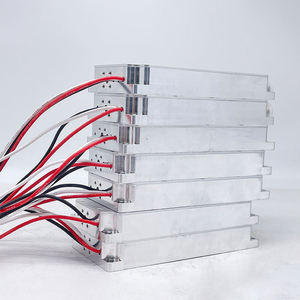
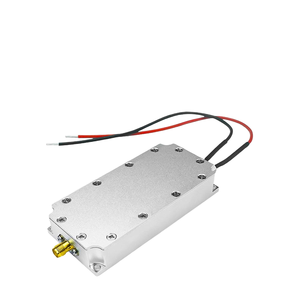
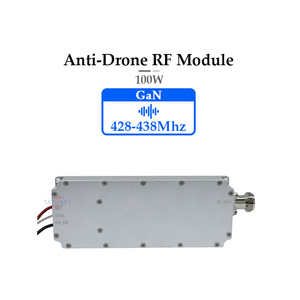
In modern aerospace, military aviation, and counter-unmanned aerial vehicle (C-UAV) warfare, electrical power management and radio frequency (RF) amplification represent the critical backbone of mission operational readiness. As aircraft platforms transition toward the More Electric Aircraft (MEA) and All-Electric Aircraft (AEA) paradigms, power conversion modules must deliver unprecedented power density, minimal thermal footprint, and uncompromising electromagnetic compatibility (EMC).
As a premier China Aircraft Power Supply & RF Amplifier Manufacturer, our engineering facility integrates advanced Gallium Nitride (GaN-on-SiC) semiconductor technology with ruggedized power electronics topology. This whitepaper provides defense integrators, procurement directors, and aerospace engineers with actionable data on airborne power standards, future procurement trajectories, thermal optimization, and counter-FPV frequency disruption modules.
Drastic reduction of Size, Weight, Power, and Cost (SWaP-C) utilizing high-frequency GaN switching topologies that decrease magnetic component mass by up to 45% compared to legacy Silicon systems.
Engineered to survive extreme vibration, thermal shock (-55°C to +125°C), high altitude decompression, and intense EMI environments per MIL-STD-810H, MIL-STD-461G, and MIL-STD-704F.
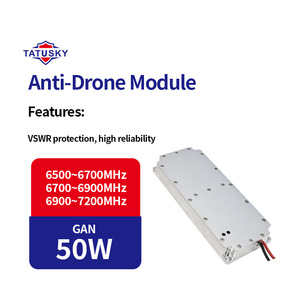
Wideband 700MHz to 7200MHz RF power amplification modules engineered specifically to counter FPV swarm drones, frequency-hopping controllers, and autonomous UAV payloads.
The global defense electronics landscape is undergoing a structural shift driven by modern asymmetrical warfare and drone proliferation. Understanding these core technological vectors allows procurement officials to establish resilient supply chains and deploy future-proofed hardware.
Wide-bandgap (WBG) Gallium Nitride (GaN) semiconductors have completely redefined RF amplifier efficiency and airborne power conversion. Operating at higher breakdown voltages and junction temperatures, GaN enables amplifiers like our 100W 433MHz Anti-FPV RF Module to operate at power added efficiency (PAE) metrics exceeding 55%. This directly translates into lower thermal dissipation requirements and lighter cooling heatsinks aboard aircraft platforms.
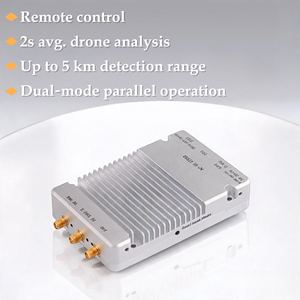
Modern drone countermeasures have evolved beyond high-power omnidirectional jamming. Today’s counter-UAS requirements mandate passive RF detection modules capable of detecting low-probability-of-intercept (LPI) signals, such as the DJI O4 protocol, within <2 seconds. Integrating passive detection with agile frequency-hopping RF amplifiers provides point-defense capabilities with minimal RF spectrum pollution.
| Parameter | Legacy Silicon / LDMOS | Next-Gen GaN (Our Standard) |
|---|---|---|
| Power Density | 1.2 W/cm³ | 4.8 W/cm³ (+300%) |
| Max Operating Temp | 150°C Junction | 225°C Junction |
| Power Added Efficiency | 35% - 42% | 55% - 68% |
| Bandwidth Agility | Narrowband tuning | Ultra-wideband (0.7-6GHz) |
| Response Time | > 500 ms switch speed | < 2 μs pulse switching |
Airborne platforms are rapidly harmonizing around standard voltage buses defined by MIL-STD-704F. While legacy 28 VDC systems remain ubiquitous for avionics control, heavy payload systems, electronic warfare (EW) pods, and laser countermeasure suites demand 270 VDC and 400 VDC architectures to prevent I²R resistive cable losses. Our OEM custom power modules provide seamless DC-DC conversion with active power factor correction (PFC) across wide AC/DC input spectrums.
Defense procurement leaders and systems integrators are shifting their sourcing methodologies to address supply chain vulnerability, geopolitical risk, and rapid technical iteration cycles. The following four strategic procurement trends dominate current RFP and sourcing specifications globally:
Commercial-Off-The-Shelf (COTS) and Modified-Off-The-Shelf (MOTS) building blocks are replacing slow clean-sheet designs. Integrators select standardized baseline chassis (e.g. 1U-4U rackmount or modular brick packaging) and customize output rails, connector pinouts, and conformal coating types to cut NRE costs and accelerate time-to-deployment.
Single-frequency jammer modules are obsolete. Future procurement mandates modular RF power amplifier slots covering 433MHz, 1.2GHz, 2.4GHz, 5.8GHz, and C-Band (6.5-7.2GHz) simultaneously. Modular backplanes allow field technicians to hot-swap amplifier cards in seconds as adversary drone communications frequencies shift.
Procurement frameworks now strictly require guaranteed 10+ year component availability, form-fit-function (FFF) replacement commitments, and transparent raw material lineage (conflict-free minerals and certified military-grade passive components).
When evaluating a Chinese manufacturing partner for aerospace power conversion equipment, ensure compliance verification across the following international defense standards:
Combining decades of power design expertise with state-of-the-art automated SMT manufacturing facilities, our enterprise bridges technical sophistication with scalable production capacity. We engineer power solutions that survive the harshest thermal, mechanical, and electromagnetic environments on Earth and in the air.
Our manufacturing floor operates under strict ISO 9001 certified quality management systems. Every power module undergoes 100% full-load thermal burn-in testing, automatic optical inspection (AOI), X-ray solder inspection, and high-potential electrical isolation testing before shipment.
Utilizing ANSYS Icepak thermal simulation and dynamic finite element analysis (FEA), our structural engineers optimize heat sink fin geometry, heat pipe layout, and potting compound selection to guarantee junction temperatures stay within safe derating margins.
Whether you require a modified mechanical enclosure, custom multi-pin MIL-DTL-38999 connectors, modified output voltage rails (e.g. 12V, 24V, 28V, 48V, 70V DC), or proprietary RF band tuning, our fast-track engineering division delivers prototype samples in as few as 15 working days.
We provide rigorous documentation support including full material test certificates, CAGE Code reference mapping, compliance declarations, Certificate of Origin (COO), and technical data packages ready for system qualification testing.
Direct technical answers addressing standards compliance, custom power modification, RF amplifier selection, and international delivery protocols.
Our airborne and defense power modules are designed, tested, and qualified against major international military standards including MIL-STD-704F (Aircraft Electric Power Characteristics for 28VDC, 115VAC 400Hz, and 270VDC), MIL-STD-810H (Environmental Test Methods including shock, vibration, altitude, and temperature extremes), MIL-STD-461G (Electromagnetic Emission and Susceptibility Requirements), and MIL-STD-1275E (28V DC Input Voltage Transient & Surge Protection for military ground/airborne support vehicles). Detailed test report matrices are available upon formal inquiry.
Yes. Utilizing a Modified-Off-The-Shelf (MOTS) engineering methodology is typically the most cost-effective path for system integrators. We can modify baseline mechanical enclosures, integrate specialized circular military connectors (such as Amphenol or Glenair MIL-DTL-38999 series), alter DC output voltage/current combinations, implement custom thermal baseplate designs for conduction cooling, and add conformal coating (polyurethane or silicone per MIL-I-46058C) without restarting clean-sheet development cycles.
High-power GaN RF modules generate significant heat flux density. Our modules feature copper-molybdenum (CuMo) or high-conductivity copper baseplates engineered for direct mounting onto cold plates or forced-air heatsinks. The内部 active circuitry is potted with thermally conductive compound (>3.0 W/m-K) to eliminate hot spots, prevent moisture ingress, and pass severe random vibration profiles. Integrated thermal shutdown circuits automatically protect the GaN transistors if ambient heat sink temperatures exceed 85°C.
Our counter-UAV modules utilize a dual-architecture approach. The passive detection units (such as our 60g ultra-lightweight detection module) continually sample ambient RF spectrum signatures, comparing captured signals against a high-speed onboard protocol database to identify image transmission channels (like DJI O4) within 2 seconds. Once identified, our broadband GaN RF modules (covering 433MHz, 1.2GHz, 2.4GHz, 5.8GHz, and 6.5-7.2GHz) emit targeted narrowband or sweep-jamming signals that saturate the drone’s receiver, forcing immediate failsafe landing or return-to-home protocols.
Standard prototype modifications are delivered in 2 to 4 weeks, while full production runs typically take 4 to 6 weeks depending on component sourcing. We maintain flexible Minimum Order Quantities (MOQ starting at 1 unit for evaluation samples). Every shipment includes comprehensive Quality Inspection Certificates, Commercial Invoices, Packing Lists, Certificates of Conformance (CoC), and raw material compliance declarations. International express air shipping is available with full customs documentation support.
Connect directly with our senior power engineers and defense specialists to review technical specifications, request custom quote evaluations, or receive complete product datasheets.