Explore our top-rated DC-DC converters engineered for defense, automotive, industrial automation, telecommunications, and maritime applications.
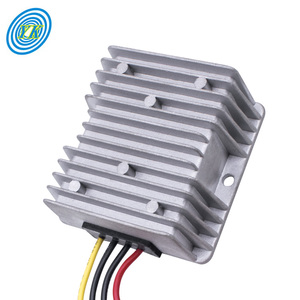
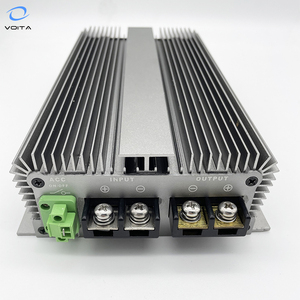
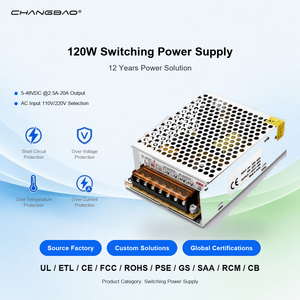
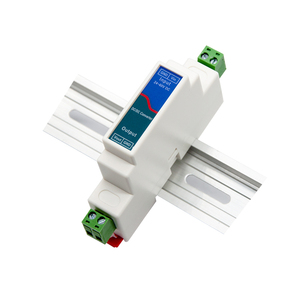
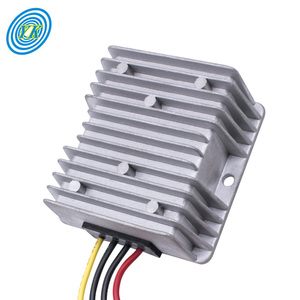
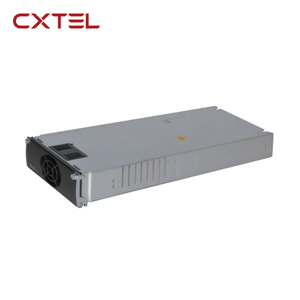
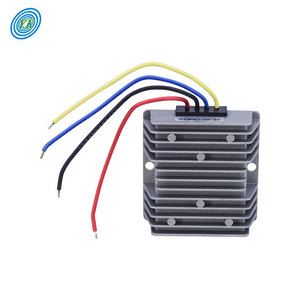
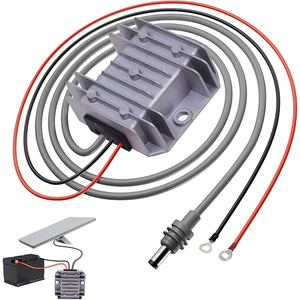
The global demand for high-density, reliable DC-DC power converters has accelerated dramatically across electric vehicles (EVs), renewable energy storage, industrial automation, commercial maritime, and aerospace electronics. As global original equipment manufacturers (OEMs) and system integrators look to optimize power conversion efficiency while lowering overall system thermal footprints, selecting the right manufacturing partner in China has transformed from a simple purchasing decision into a core strategic advantage.
China's DC-DC converter ecosystem has undergone a massive engineering evolution over the past decade. Leading factories are no longer merely assembling low-cost power bricks; they are driving innovations in wide-bandgap (WBG) semiconductors such as Silicon Carbide (SiC) and Gallium Nitride (GaN), planar magnetics integration, synchronous rectification, and ultra-wide input range regulation (such as 10:1 or 8:1 ratio conversion). According to industry intelligence, China accounts for over 45% of global power electronics module manufacturing, driven by complete domestic supply chains for ferrite cores, thermal substrate ceramics, and automated SMD assembly lines.
Whether your application requires low-voltage buck converters for rail-mounted IoT nodes (e.g., 24V to 5V ZLAN series), high-power boost converters for satellite connectivity (such as Starlink Gen3 12V/24V to 30V step-up modules), or ruggedized potted converters for heavy machinery and golf carts, understanding the engineering capability behind factory production lines is vital to risk mitigation.
Selecting the optimal power conversion topology directly dictates power density, electromagnetic compliance (EMC), thermal management complexity, and system bill-of-materials (BOM) cost. When specifying DC-DC step-up (boost), step-down (buck), or buck-boost modules from Chinese factories, design engineers must evaluate three primary topological categories:
Ideal for cost-sensitive, high-efficiency applications where common ground paths between input and output are acceptable. High-efficiency synchronous buck converters achieve up to 97% power efficiency by replacing traditional freewheeling diodes with low RDS(on) MOSFETs.
Utilizes high-frequency planar transformers to physically isolate input and output ground loops. Essential for RVs, marine vessels, telecom infrastructure, and industrial machinery where electrical noise, ground bounce, or transient voltage spikes could damage sensitive downstream microcontrollers.
Advanced hybrid power converters featuring Maximum Power Point Tracking (MPPT) logic. Designed for remote off-grid telecom shelters, hybrid solar arrays, and high-density 48V/3000HE rectifier modules, delivering peak conversion efficiency under dynamic solar irradiance.
| Converter Category | Typical Input Range | Isolation Voltage | Peak Efficiency | Target Application Fields |
|---|---|---|---|---|
| Wide Input Step-Down | 12V – 120V DC | Non-Isolated | 94% – 97% | Electric Vehicles, Golf Carts, Forklifts, Fleet Diagnostics |
| Isolated Heavy-Duty Module | 12V / 24V / 48V / 72V / 110V | 1500V – 3000V DC | 91% – 95% | RVs, Marine Vessels, Industrial Automation, Rail Transit |
| High-Power Boost Converter | 9V – 28V DC (Step to 30V/48V) | Non-Isolated / Isolated | 93% – 96% | Starlink Gen3 Satellite Terminals, Automotive Chargers |
| Smart Rectifier / MPPT | 48V DC / 220V AC Input | 4200V DC | 96.5% – 98% | Telecom Base Stations, Hybrid Microgrids, Data Centers |
As industrial automation, satellite broadband, and electric mobility converge, purchasing departments must align their vendor selection criteria with emerging technology standards. Below are the five dominant procurement trends defining the next decade of DC-DC converter manufacturing in China:
Traditional silicon MOSFETs are rapidly approaching their physical performance limits regarding switching speeds and thermal dissipation. Chinese top-tier manufacturers are heavily integrating Gallium Nitride (GaN) and Silicon Carbide (SiC) devices into standard power modules. Higher switching frequencies (from 100 kHz up to 1 MHz+) reduce the size of internal magnetic components by over 40%, producing ultra-compact power bricks with power densities exceeding 100 W/in³.
Modern field deployments demand extreme environmental protection. Leading factories now utilize total polyurethane or epoxy thermal potting for DC-DC converters exposed to outdoor environments, such as golf cart battery converters (48V/60V/72V to 12V 5A) and automotive chargers. Fully potted enclosures eliminate internal condensation, withstand high shock and vibration (MIL-STD-810H compliant), and provide direct heat transfer through aluminum die-cast housings without requiring noisy cooling fans.
Aluminum baseplate heat-sinking removes fan reliance, dramatically extending mean time between failures (MTBF) to over 500,000 hours in harsh dust-filled or corrosive salt-spray environments.
DC-DC chargers designed for marine, RV, and fleet transport feature multi-stage charging algorithms tailored for LiFePO4 (14.6V output), AGM, and Gel lead-acid batteries.
Custom boosted converters (such as 12V/24V to 30V 3.5A) engineered specifically for high-draw mobile satellite hardware like Starlink Mini and Gen3 terminals operating in remote off-grid locations.
With the rise of Vehicle-to-Grid (V2G) and localized energy storage systems (ESS), DC-DC modules are increasingly required to support bidirectional power flow. Smart power modules now feature CANbus 2.0B or RS485 communication protocols, allowing master central controllers to monitor real-time operating temperature, output voltage ripple, load currents, and fault diagnostics remotely.
To ensure high operational reliability and prevent costly field failures, global procurement engineers should audit potential Chinese DC-DC converter suppliers against strict Experience, Expertise, Authoritativeness, and Trustworthiness (E-E-A-T) criteria. Utilizing modified Commercial Off-The-Shelf (COTS) or custom Modular Off-The-Shelf (MOTS) platforms provides a proven pathway to cut Non-Recurring Engineering (NRE) costs and shorten product launch timelines.
Top-tier suppliers build units tested to rigorous standards, including MIL-STD-810H (environmental shock/vib), MIL-STD-461G (EMI compliance), and MIL-STD-1275E (28V DC input voltage transients and 100V surges).
Ensure manufacturing facilities operate under fully documented quality management systems audited by accredited registrar bodies such as Perry Johnson Registrars (PJR) with ANAB accreditation.
Tier-1 factories maintain complete component lot traceability and active component end-of-life (EOL) monitoring to deliver exact Form-Fit-Function replacement units for multi-year industrial programs.
When selecting a manufacturing facility in China, verify that their quality assurance workflow incorporates the following 5 critical testing checkpoints before shipment:
Direct technical answers to common questions faced by international procurement managers and power design engineers when sourcing DC-DC converters from Chinese factories.
An isolated DC-DC converter physically separates the input and output electrical circuits using a transformer, preventing ground loops and protecting sensitive load electronics from high input voltage surges. A non-isolated converter shares a common ground wire, offering higher efficiency and smaller footprints at a lower cost. Select isolated converters for marine, industrial safety, RV, and telecom systems; select non-isolated units for localized circuit-board step-down voltages.
Leading factories integrate multi-stage input filtering, including metal-oxide varistors (MOVs), transient voltage suppression (TVS) diodes, and custom LC filters designed to clamp voltage spikes according to ISO 7637-2 (automotive) and MIL-STD-1275E (military vehicles 28V DC bus spike survivability up to 100V).
Yes. Most tier-1 factories specialize in modified COTS builds. Engineers can modify output voltage setpoints (e.g., adjusting a standard 12V output to 14.6V for LiFePO4 battery charging), add custom connector harnesses (such as IP67 rated circular connectors), alter PCB thermal copper layer thickness, or add conformal coatings without requiring complete clean-sheet redesigns.
For sealed IP67 aluminum potted modules, converters typically operate at 100% rated power up to 50°C ambient air temperatures. Above 50°C, power derating of 2.5% per °C should be calculated unless conduction cooling via an external cold plate or chassis heat sink is provided.
Standard export orders include Certificate of Conformance (CoC), full factory burn-in test reports, CE declaration, RoHS/REACH compliance documentation, ISO 9001 quality certificates, and customs tariff HS code classifications (typically HS 850440 for static converters).
Need custom voltage rail conversion, extreme thermal potting, or modified COTS power converter modules? Speak directly with our senior power application engineers to review your electrical specifications and sample delivery schedules.