Customized Outdoor Self-defense Anti Knife Proof Stab Proof Vest Protector Tactical Vest
- High-density composite stab-proof shielding
- Ergonomic weight distribution for field ops
- Weatherproof & abrasion-resistant fabric
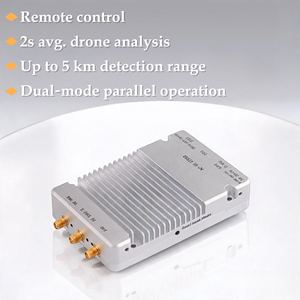
Anti-Drone Module 5km Range 2s Analysis Passive Detection Remote Control UAV Defense
- 2-second rapid spectrum analysis & decoding
- 5km passive detection coverage radius
- Multi-frequency flexible power consumption
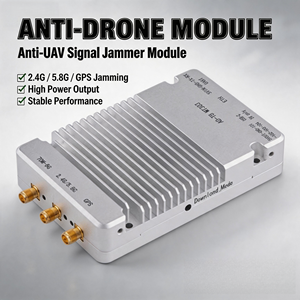
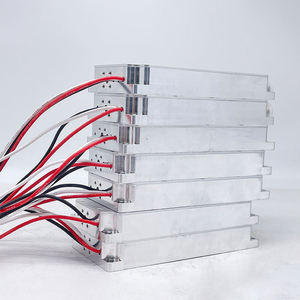
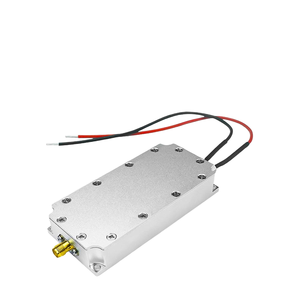
Hot Selling Customized 700-6000MHz RF Module GaN 80W Anti FPV Defense Power Module
- Ultra-wideband 700MHz to 6000MHz coverage
- High-efficiency 80W GaN semiconductor output
- Optimized thermal dissipation for continuous jam
Anti-Drone Module 60g Portable Passive Detection Remote Control DJI O4 Dual-Mode System
- Ultra-lightweight 60g tactical footprint
- DJI O4 protocol passive signal recognition
- Dual-mode efficient low-power operational profile
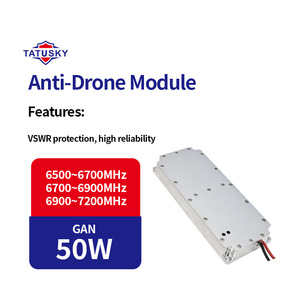
50W 6500-6700MHz / 6700-6900MHz / 6900-7200MHz RF Power Amplifier GaN Defense Module
- Super-high frequency 6.5GHz – 7.2GHz jamming
- 50W solid-state GaN power amplification
- Designed for military-grade electronic attack
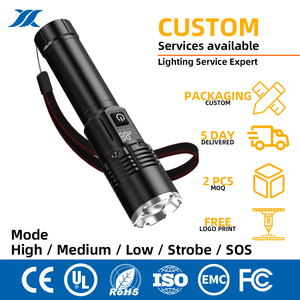
XINYIN White LED Flashlight High Power Digital Display Rechargeable Tactical Zoom Type-C
- High-lumen zoomable white LED beam
- Real-time digital power percentage readout
- Type-C fast charging & ruggedized shell
UANT UB-MK-1200 GaN 1.2GHz 10W/30W/50W/100W Anti FPV 1160-1260MHz Defense Module
- Scalable RF power output up to 100W
- Dedicated 1160MHz – 1260MHz FPV band suppression
- Solid-state GaN thermal efficiency
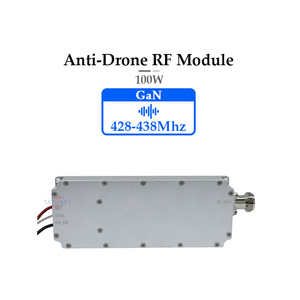
RF Module GaN 433MHz 100W 428-438MHz Anti FPV Defense System Amplifier Module
- 100W continuous output at 428MHz - 438MHz
- High gain GaN power transistor design
- Ruggedized aluminum casing for vehicle deployment
0P327
CAGE Code Qualified
100+
Years Engineering Expertise
ISO 9001
PJR / ANAB Certified
Shipboard Zonal Electrical Power Architecture: Technical Analysis
Modern naval warship procurement has fundamentally shifted away from centralized electrical distribution toward Zonal Electrical Power Management Systems (ZEPMS). As naval vessels integrate high-power radar suites, directed energy systems, and advanced electronic warfare (EW) countermeasures, legacy shipboard power supplies face unprecedented thermal and electrical stress. Leading defense contractors require shipboard power factories capable of delivering modular backplane AC-DC and DC-DC power conversion modules compliant with rigorous military standards.
Core Engineering Compliance: Shipboard power supplies must strictly conform to MIL-STD-1399 Section 300 (Shipboard Electrical Power Interface), withstand MIL-S-901D Grade A High-Impact Shock, meet MIL-STD-167-1A Vibration limits, and adhere to MIL-STD-461G EMI/EMC controls for naval environments.
Shipboard zonal architectures separate conversion, battery backup (UPS), and power distribution units (PDUs) into hot-swappable line-replaceable units (LRUs). By standardizing on backplane-mounted power conversion bricks, naval engineers achieve N+1 electrical redundancy, drastically reduce copper cable weight across hull zones, and minimize Mean Time to Repair (MTTR) to under 15 minutes during active combat operations.
Next-Generation Product Development Trends: GaN RF & C-UAV Power Systems
The convergence of naval power conversion and tactical electronic defense has created a rapid demand for high-efficiency Gallium Nitride (GaN) Solid-State Power Amplifiers (SSPAs). Traditional Silicon (Si) and LDMOS-based power modules are no longer viable for counter-FPV (First-Person View) drone defense due to their high thermal resistance and bulkier footprints. Modern shipboard and mobile defense forces demand ultra-compact, high-density RF power amplification.
Key technological breakthroughs shaping the 2025–2030 manufacturing landscape include:
- Wide Bandgap GaN-on-SiC Semiconductors: Offering up to 68% power added efficiency (PAE), allowing 80W to 100W RF power modules across 700MHz–6000MHz to operate inside compact, conduction-cooled enclosures without active liquid cooling loops.
- Ultra-Fast Passive Spectrum Detection Integration: Integrating 60g lightweight passive RF sensing modules capable of identifying enemy drone control links (including proprietary protocols like DJI O4) within 2 seconds across a 5km radius.
- Fully Sealed IP67 Ruggedized Enclosures: Engineering military power converters and RF jammer power supplies into submersibly sealed, potted aluminum chassis designed for exposed ship decks, tactical ground vehicles, and remote defense towers.
- Multi-Spectrum Tactical Coexistence: Dual-mode power supplies that dynamically adjust switching frequencies to eliminate interference with onboard naval communications and radar systems while driving high-power RF disruption modules (433MHz, 1.2GHz, 5.8GHz, 7.0GHz).
Technical Specifications Matrix: Shipboard vs. Tactical RF Power Systems
Comprehensive benchmarking of naval shipboard zonal power units against vehicle-mounted tactical RF defense modules:
| Performance Parameter |
Shipboard Zonal AC-DC System |
GaN C-UAV RF Power Module |
Tactical Vehicle DC-DC Converter |
| Primary Input Voltage |
115V / 440V AC (60Hz / 400Hz) |
24V – 28V DC Nominal |
18V – 36V DC (MIL-STD-1275E) |
| RF Output Power Range |
N/A (System Power Distribution) |
50W – 100W Continuous RF |
N/A (2000W DC Conversion) |
| Primary MIL Standards |
MIL-STD-1399 Sec 300, MIL-S-901D |
MIL-STD-461G, Broadband RF |
MIL-STD-1275E, MIL-STD-810H |
| Ingress Protection Rating |
IP54 Enclosure / IP65 Modular |
IP67 Sealed / Conduction Cooled |
IP67 Fully Potted Chassis |
| Thermal Management |
Convection / Liquid Cold Plate |
Integrated Heatsink / Direct Mount |
Baseplate Conduction Cooling |
| Target Application |
Warship Zonal Bus Distribution |
Counter-FPV Jamming Systems |
Combat Vehicle C4ISR Racks |
Future Procurement & Sourcing Strategies for Defense Buyers
As global geopolitical defense requirements evolve, procurement directors for naval shipyards and prime defense systems integrators must adopt strategic sourcing frameworks to ensure program longevity, minimize Non-Recurring Engineering (NRE) costs, and protect supply chains.
1. COTS & MOTS Optimization Strategy: Procurement teams are increasingly avoiding clean-sheet custom power designs. By selecting proven Commercial-Off-The-Shelf (COTS) or Modified-COTS (MOTS) power conversion platforms, programs reduce qualification timelines by up to 60%. Customizing output rails, connectors, or conformal coatings on an established baseline maintains compliance with MIL-STD-810H while significantly accelerating time-to-market.
2. Obsolescence Management & Form-Fit-Function (FFF) Warranties: Defense programs often remain fielded for 20 to 30 years. Qualified shipboard power factories must provide guaranteed Form-Fit-Function replacement roadmaps. When active silicon or GaN components reach end-of-life (EOL), the manufacturer must engineer pin-compatible drop-in alternatives that pass re-qualification without altering the shipboard cabinet architecture.
3. Dual-Source Supply Chain Traceability: Compliance with defense acquisition regulations requires full component traceability, conflict-free mineral sourcing, and verification of origin (CAGE Code 0P327 verification). Leading suppliers maintain ISO 9001 quality systems audited by Perry Johnson Registrars (PJR) under ANAB accreditation to ensure zero counterfeit parts enter mission-critical power chains.
What specific requirements does MIL-STD-1399 Section 300 impose on shipboard power factories?
MIL-STD-1399 Section 300 defines the interface standards for shipboard AC electrical power systems on naval vessels. It mandates strict voltage and frequency tolerances, transient recovery limits, harmonic distortion boundaries, and emergency power ride-through capabilities. Power supplies manufactured for shipboard deployment must withstand severe voltage dips, high-voltage spikes, and unbalance without shutting down or degrading output regulation.
Why are GaN (Gallium Nitride) RF modules superior to legacy LDMOS for Anti-FPV drone defense systems?
GaN technology offers substantially higher power density, higher breakdown voltage, and superior thermal conductivity compared to legacy LDMOS silicon. This enables GaN RF amplifiers (such as 433MHz 100W or 700-6000MHz 80W modules) to deliver continuous, high-wattage broad-spectrum jamming inside significantly smaller, lighter enclosures while consuming up to 30% less primary DC power from the host vehicle or battery pack.
Can a standard modified-COTS power supply pass MIL-S-901D Grade A High-Impact Shock testing?
Yes. By utilizing reinforced structural extrusions, heavy-duty card guides, staking on magnetics, mass-balanced internal transformers, and high-tensile mounting hardware, proven COTS/MOTS platforms can achieve full MIL-S-901D Grade A (deck-mounted and direct-hull mounted) shock qualification without incurring the massive expense of a ground-up custom engineering cycle.
How do fully sealed IP67 waterproof power supplies manage heat dissipation without fans?
IP67 sealed units rely on advanced conduction-cooling engineering. Internal heat-generating components (switching MOSFETs, GaN transistors, planar transformers, and rectifiers) are directly coupled to a precision-machined aluminum chassis via high-performance thermal gap pads or full military-grade dielectric potting encapsulation. Heat is conducted outward to the external chassis fins or a cold-plate mounting surface.
What documentation package accompanies international defense exports of shipboard power modules?
All export shipments include comprehensive engineering verification documentation: Certificate of Conformance (CoC), ISO 9001 quality inspection reports, country-of-origin certification, CAGE Code 0P327 manufacturer documentation, electrical test data cut-sheets, 3D STEP models for mechanical integration, and compliance statements regarding ITAR/EAR export classification.
How do passive drone detection modules integrate with high-power RF jammer modules?
Passive detection modules operate silently by scanning the RF spectrum for drone telemetry and video transmission signatures (such as DJI O4). Upon detecting a threat frequency, the module sends an instant digital trigger signal via remote-control interface (UART/RS485/Ethernet) to activate the corresponding broad-spectrum GaN RF power amplifier, enabling automated, zero-latency counter-UAV response.
Accelerate Your Defense Power Sourcing Program
Need modified-COTS shipboard power supplies, MIL-STD qualified rackmount converters, or high-efficiency GaN RF defense modules? Connect directly with our engineering team for technical specs, 3D models, and fast-track quotation support.