Precision-engineered, MIL-STD & DO-160 tested modular power conversion units designed for zero-downtime mission critical systems in France and Europe.
In modern aerospace electronics, avionics architectures, unmanned aerial vehicle (UAV) defense platforms, and satellite ground control stations, electrical power continuity is non-negotiable. As mission complexity accelerates across civil aviation and defense applications in France and the broader European Union, specifying power supply architectures capable of uninterrupted operation despite individual component failure has become a mandatory engineering benchmark. This whitepaper provides a comprehensive analysis of N+1 redundant power supply design engineering, active current sharing mechanisms, high-power-density Gallium Nitride (GaN) switching topologies, and localized deployment strategies for French aerospace OEMs, defense contractors, and system integrators.
Core Engineering Objective: To deliver zero-downtime, microsecond transient recovery power conversion topologies compliant with RTCA/DO-160G, MIL-STD-704F, and EN 2282, enabling French aerospace leaders to achieve sovereign technical superiority, reduced SWaP (Size, Weight, and Power), and complete supply chain resilience.
N+1 redundancy dictates that an electrical power system incorporates a minimum of one more power module than is strictly required to service the maximum continuous payload load ($N$). In a system requiring 1000W of regulated continuous power, an $N+1$ architecture might deploy three 500W modules in parallel ($2+1=3$). If any single 500W module experiences a catastrophic short-circuit, thermal shutdown, or input power interruption, the remaining two modules instantaneously absorb the load without output voltage deviation exceeding critical avionics thresholds (typically <5% transient droop for <100 microseconds).
Achieving true aerospace-grade N+1 redundancy requires solving three primary power electronics challenges:
Replacing traditional high-loss Schottky diodes with active ORing N-channel MOSFET controllers to minimize conduction losses, reducing internal heat generation by up to 80% while preventing back-feeding into a faulted internal power rail.
Utilizing high-speed analog droop or digital inter-module communication buses (CANbus/PMBus) to ensure parallel modules balance output current within ±2% accuracy, eliminating thermal hot-spots and double-digit lifespan degradation.
Incorporating inrush current limiting circuitry and blind-mate mechanical guiding pins that allow live module removal and replacement in tactical ground support or aircraft rack units without interrupting system bus voltage.
Aerospace applications demand extreme reduction in Size, Weight, and Power (SWaP-C). Traditional silicon-based MOSFET power supplies are constrained by switching frequency limits (typically below 150kHz) due to thermal dissipation and switching losses. Our next-generation aerospace power conversion units leverage Wide Bandgap (WBG) Gallium Nitride (GaN) semiconductors, pushing switching frequencies beyond 500kHz to 1MHz.
This high-frequency operation drastically reduces the physical volume and weight of passive magnetic components (transformers, inductors) and filter capacitors by up to 45%. Concurrently, power conversion efficiency is elevated to 96.5%, significantly decreasing heat rejected to the ambient chassis environment. For sealed IP67 payloads or conduction-cooled avionics bays operating in high-altitude ambient temperatures (-55°C to +85°C baseplate), GaN-based N+1 power supplies represent a transformative leap forward.
| Architecture Parameter | Legacy Silicon Schottky-ORed N+1 | Next-Gen Active GaN N+1 (Our Standard) | Impact on French Aerospace Programs |
|---|---|---|---|
| Power Conversion Efficiency | 85.0% - 88.5% | 94.0% - 96.5% | Dramatically reduces thermal budget in pressurized & unpressurized compartments. |
| Power Density (W/in³) | 15 - 25 W/in³ | 50 - 85 W/in³ | Frees payload capacity for additional radar, LIDAR, or sensor electronics. |
| Active Isolation Loss | High (V_f ≈ 0.5V - 0.7V) | Negligible (R_ds(on) < 2mΩ) | Eliminates massive heat sinks; improves system mean time between failures (MTBF). |
| Transient Recovery Time | > 500 microseconds | < 50 microseconds | Protects sensitive digital signal processors (DSPs) from voltage sag under pulse loads. |
| EMI Spectrum Compliance | Requires heavy external filter filters | Integrated multi-stage EMI filtering | Fully compliant with MIL-STD-461G CE102 & CS101 / RTCA DO-160G Section 21. |
France stands as the cornerstone of European aerospace innovation. From the primary aviation manufacturing hub in Toulouse (Occitanie region) to the space technology corridors of Centre National d'Études Spatiales (CNES) and naval defense centers in Brest and Toulon, French engineers enforce stringent standard compliance and environmental endurance specs.
Our aerospace N+1 power supply solutions are engineered to directly interface with key localized French application ecosystems:
Interfacing with standard 115V AC / 400Hz frequency or 28V DC aircraft buses. Providing redundant power to flight control computers, in-flight connectivity hubs, and cockpit glass displays with zero glitch failover.
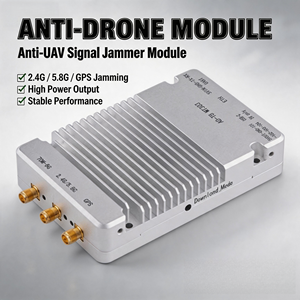
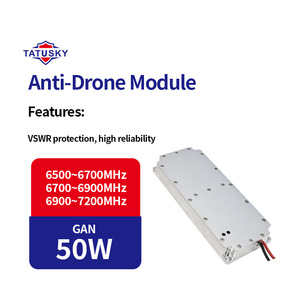
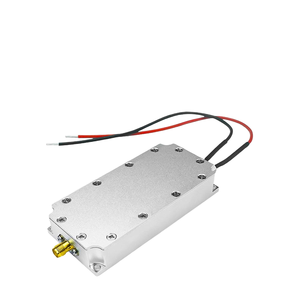
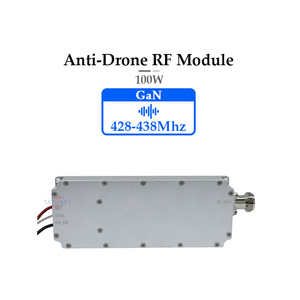
Powers high-power RF GaN jammer modules, passive detection sensors, and tracking radars deployed by defense forces for perimeter protection, low-altitude defense, and tactical mobile vehicles.
Provides continuous, ripple-free 28V/48V DC power to solid-state power amplifiers (SSPAs) and telemetry command systems requiring 99.999% uptime in remote tracking ground stations.
Procurement directors and chief technology officers (CTOs) in the French aerospace sector are operating under shifting geopolitical and environmental dynamics. Success requires aligning factory capabilities with key European trends:
Every power supply unit produced in our specialized facility undergoes rigorous environmental and electrical qualification testing to ensure seamless integration into French military and commercial airframes:
RTCA/DO-160G Compliance: Tested for temperature variation (Category A1/B2), altitude testing up to 70,000 feet, operational shock, crash safety, and magnetic effect limits.
MIL-STD-704F Electrical Power Characteristics: Full immunity against 28V DC overvoltage surges (up to 50V for 100ms), input voltage sags, and 400Hz AC harmonic distortion tolerance.
MIL-STD-461G Electro-Magnetic Interference: Built-in multi-stage differential and common-mode filtering to meet CE101, CE102, RE101, and RE102 radiated emission boundaries without secondary external filter boxes.
Combining world-class power electronics R&D with cost-effective, scalable manufacturing to deliver high-reliability aerospace components.
Our manufacturing workflow follows comprehensive AS9100/EN 9100 quality management protocols, ensuring full component traceability, batch control, and detailed inspection certificates (CoC, Material Test Reports) for every shipment into Europe.
Whether modifying standard COTS (Commercial Off-The-Shelf) enclosures or engineering clean-sheet custom multi-rail outputs, our 100+ engineer strong power design team delivers working prototypes in weeks rather than quarters.
By leveraging China's advanced power semiconductor supply ecosystem and automated manufacturing infrastructure, we deliver high-density N+1 power systems at 30% to 45% competitive cost savings over European/US legacy suppliers.
Every single production unit passes 100% Environmental Stress Screening (ESS), including 48-hour thermal cycling (-40°C to +85°C) and full-load high-temperature burn-in, guaranteeing zero dead-on-arrival (DOA) failures for French deliveries.
Clarifying technical compliance, export documentation, customization options, and delivery logistics for European buyers.
All power supply series exported to France and the European Union are fully CE-marked under the Low Voltage Directive (LVD) and EMC Directive. We issue comprehensive Declaration of Conformity (DoC) documents alongside RoHS 3.0 (Directive 2015/863/EU) and REACH (EC 1907/2006) chemical compliance certificates with complete substance test reports.
Yes. Over 70% of our aerospace deployments involve Modified COTS (MOTS) work. We can customize input/output connector types (e.g., MIL-DTL-38999 circular connectors), custom mounting flanges, specific DC voltage output rails (e.g., +3.3V, +5V, +12V, +28V, +48V), and tailored conformal coatings without restarting full mechanical tooling.
We implement both active democratic analog single-wire current sharing and digital PMBus/CANbus current balancing. The system guarantees output load sharing accuracy within ±2% across modules from 10% load to 100% full rating, preventing thermal imbalance and extending overall system longevity.
We provide complete commercial invoice documentation, harmonized system (HS) code classifications, Certificate of Origin (CO), and dual-use non-military compliance declarations where applicable. Our logistics team works directly with French customs brokers at Paris CDG and Marseille ports to ensure seamless customs clearance.
Our aerospace N+1 power supplies feature a calculated Mean Time Between Failures (MTBF) exceeding 500,000 hours at +40°C ground benign, evaluated under MIL-HDBK-217F Notice 2 standards. For high-altitude applications, modules undergo vacuum thermal chamber verification up to 70,000 feet equivalent pressure.
Standard evaluation samples and COTS units are dispatched within 7 to 10 business days. Custom engineering prototypes are typically completed within 3 to 5 weeks. Mass production manufacturing cycles range from 4 to 6 weeks, supported by air freight options delivering to any French airport within 3 to 5 days.
Connect directly with our senior aerospace power electronics engineers to request custom schematics, 3D STEP models, technical datasheets, or a competitive quotation tailored for your French program.