Fully compliant with MIL-STD-810H, MIL-STD-461G, MIL-STD-704F, and DO-160G airborne standards. Designed for high reliability, hot-swappable N+1 redundancy, and extreme thermal resilience.
The Greater Nagoya region in Aichi Prefecture represents the undisputed heart of Japan’s aerospace and defense manufacturing sector, accounting for over 50% of the nation's aircraft sub-assemblies and avionics production. Hosting heavy-industry leaders such as Mitsubishi Heavy Industries (MHI) Komaki-Minami and Oae plants, Subaru Aerospace in Handa, and Kawasaki Heavy Industries (KHI) in nearby Gifu, the Chubu cluster demands zero-downtime electrical reliability.
For flight-critical ground support equipment (GSE), radar telemetry control centers, and airborne electronics testing rigs, power interruption is unacceptable. A single power rail failure can jeopardize multi-million-dollar qualification campaigns. This creates an imperative demand for China’s premier OEM power manufacturers to deliver active current-sharing, hot-swappable N+1 redundant power systems tailored specifically to regional system integration standards.
Standard power supply designs rely on passive Schottky OR-ing diodes to isolate parallel modules. However, passive diode OR-ing introduces substantial thermal dissipation ($V_f \times I_L$), reduces system efficiency by 3%–5%, and offers zero dynamic load-balancing capability.
Our Chinese manufacturing facilities engineer advanced Active Current Sharing Bus (OR-ing MOSFET Topology with GaN Semiconductors). By actively controlling low-$R_{DS(on)}$ N-channel MOSFETs and incorporating precision droop/active bus current sharing, our redundant N+1 power supplies achieve equal thermal stress distribution across all power modules, prolonging capacitor life and guaranteeing seamlessly smooth microsecond switchovers ($<10\mu s$) if a module unit degrades.
In an N+1 power framework, N represents the exact number of power modules required to satisfy maximum system load demand, while +1 provides an autonomous, hot-pluggable reserve module. Should any single internal converter, inductor, or cooling fan fail, the remaining N units instantaneously absorb the operational current without voltage droop, output ripple spikes, or system reset. This architectural guarantee enables 99.999% (Five-Nines) operational availability across Nagoya’s automated test benches and airborne defense pods.
Quantifiable performance metrics highlighting why high-frequency GaN power modules provide superior volumetric power density ($W/in^3$) for compact aerospace racks.
| Performance Characteristic | Legacy Silicon (Si) N+1 System | China OEM GaN N+1 Aerospace Supply | Value Delivered to Nagoya Integrators |
|---|---|---|---|
| Switching Frequency ($f_{sw}$) | 65 kHz - 100 kHz | 500 kHz - 2.5 MHz | Drastic reduction in passive magnetics size; 40% envelope reduction. |
| Full-Load Efficiency | 88% - 91% | 95.5% - 97.2% | Minimal waste heat; lower thermal stress on hangar environmental control. |
| Power Density ($W/in^3$) | 12 - 18 W/in³ | 45 - 65 W/in³ | Enables 1U/2U rackmount sub-chassis with multi-kilowatt output. |
| Current Sharing Precision | ± 8% (Passive Droop) | ± 2% (Active Bus Interconnect) | Balanced component aging and maximum system MTBF (> 300,000 hrs). |
| Transient Recovery Time | > 500 μs (50% Step Load) | < 50 μs (Voltage Settling) | Protects sensitive FPGA/RF payloads from voltage dip transients. |
| Environmental Standards | Commercial / Standard Industrial | MIL-STD-810H / DO-160G Compliant | Guaranteed operation under extreme shock, vibration, and altitude. |
At aerospace testing hangars surrounding Chubu Centrair International Airport (NGO) and Nagoya Airfield (Komaki), high-power 28VDC and 115VAC 400Hz ground power units are essential for pre-flight avionics validation. Our N+1 hot-swappable rack supplies ensure continuous power during automated functional testing of flight control actuation systems.
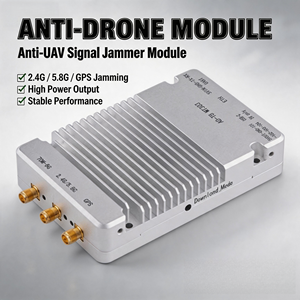
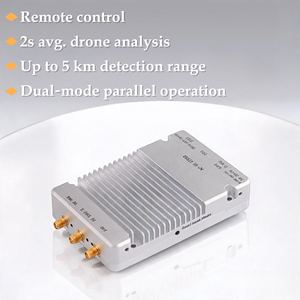
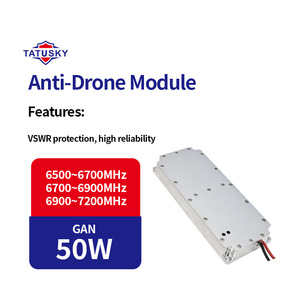
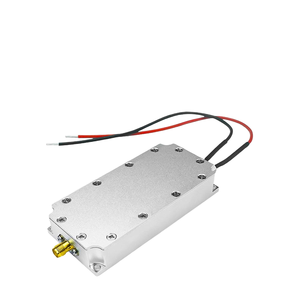
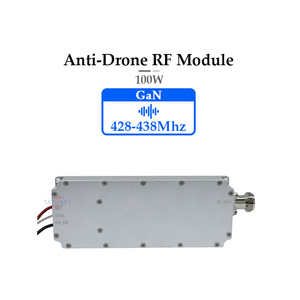
Defensive infrastructure protecting regional maritime ports and military installations around Ise Bay requires robust RF power amplifiers. Utilizing our 700MHz-6000MHz GaN modules with high-density N+1 power rails, systems maintain uninterruptible jammer output and passive 5km radar detection even under extreme thermal environments.
For next-generation unmanned aerial vehicles (UAVs) and experimental vertical takeoff platforms engineered by Aichi aerospace startups, weight and volume are tightly budgeted. Our custom conduction-cooled IP67 AC-DC/DC-DC N+1 modules integrate directly into composite airframes, surviving high vibration without requiring air circulation.
Aerospace Tier-1 suppliers in Aichi are replacing heavy transformer-based power systems with high-frequency GaN/SiC topologies to achieve lower weight, higher power density, and reduced carbon footprint during flight operations.
Procurement teams are shifting away from monolithic single-block power supplies. Modular 1U/2U N+1 sub-racks allow maintenance engineers at Nagoya airports to replace faulty cartridges in seconds, reducing Mean Time to Repair (MTTR) to near zero.
Japanese aerospace integrators increasingly partner with established Chinese manufacturing centers for custom NRE power development. China’s advanced GaN supply ecosystem delivers rapid 4-week rapid prototyping and unbeatable cost-performance ratios.
Over 30 combined years of power conversion engineering expertise, accredited quality management, and clean-sheet custom OEM/ODM manufacturing capability.
Our production lines operate strictly under an ISO 9001 certified quality system registered through PJR with ANAB accreditation. Every aerospace N+1 power supply undergoes 100% full-load burn-in testing under thermal cycling (-40°C to +85°C), automated optical inspection (AOI), and in-house EMI pre-compliance testing prior to international dispatch.
We offer modified Commercial Off-The-Shelf (MOTS) options that dramatically shorten qualification lead times. Whether your project requires specific MIL-DTL-38999 circular connectors, custom output rail voltages (12V, 24V, 28V, 48V, 270VDC), or conformal coating for high-humidity marine/coastal environments around Nagoya, our engineering team delivers complete drawing releases and 3D STEP models within days.
Our N+1 power architectures utilize an analog active current sharing bus coupled with low-loss active OR-ing MOSFET switches. If any individual module experiences an internal component degradation or input failure, the internal OR-ing MOSFET disengages within microseconds ($<10\mu s$), preventing back-feeding into the fault. The remaining operating modules instantly scale current output without any output voltage drop or transient ripple violation, ensuring uncompromised operation of flight-critical electronics.
Yes. Our aerospace power modules are designed and pre-tested to meet RTCA/DO-160G (Sections 16 & 17 for power input and voltage spikes), MIL-STD-704F (airborne electrical power characteristics), and JIS W 0812 (environmental testing for Japanese aircraft equipment). Complete test reports, including EMI CE102/RE102 profiles and thermal shock curves, are supplied with evaluation units.
Absolutely. Most of our deployments in the Chubu aerospace sector involve custom mechanical enclosures. We design 1U, 2U, 3U, half-rack, and cold-plate conduction-cooled enclosures tailored to your mechanical envelope, fixing centers, and thermal dissipation path. 3D CAD models (STEP/IGES) are provided upfront for mechanical fitment verification in your system design.
For modified standard COTS units, prototype samples are delivered within 3 to 4 weeks. Custom clean-sheet engineering projects typically take 6 to 8 weeks to first-article inspection (FAI). Express air freight to Chubu Centrair International Airport (NGO) or ocean shipment to the Port of Nagoya takes 3 to 7 business days, supported by complete customs tariff documentation and certificate of origin (COO).
We provide three distinct thermal topologies depending on your operating environment: (1) Baseplate Conduction Cooling, ideal for vacuum or sealed airborne pods attached to liquid-cooled cold plates; (2) Fully Potted Sealed IP67 Enclosures, using thermally conductive silicone for high-altitude condensation immunity; and (3) Smart Variable-Speed Fan Air Cooling with salt-fog protective conformal coating.
We guarantee long-term availability (10+ years) for aerospace and defense programs. Our component engineering team actively monitors component lifecycles. Should a component approach End-Of-Life (EOL), we issue Product Change Notifications (PCN) 12 months in advance and engineer direct Form-Fit-Function (FFF) replacement modules to ensure zero disruption to fielded systems in Japan.