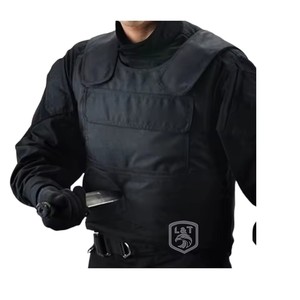
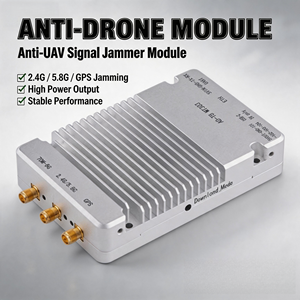
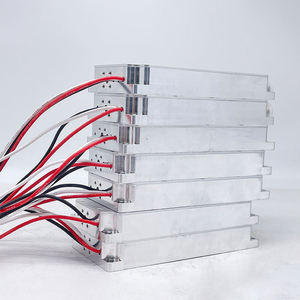
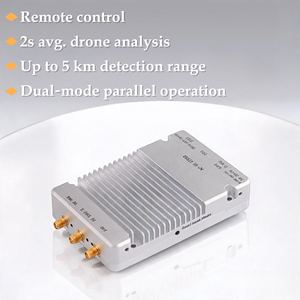
High-reliability military-grade power supplies, anti-FPV jammer modules, and protective tactical gear tested for extreme environmental resilience and seamless C4ISR integration.
An authoritative technical analysis for South Korean defense prime contractors, C4ISR system integrators, and municipal disaster prevention teams procurement strategies.
As the Greater Seoul Metropolitan Area (GSMA)—housing over 25 million people and strategic command structures—faces heightened regional security requirements, modernizing auxiliary tactical power systems is paramount. Modern C4ISR nodes, mobile anti-drone (C-UAV) trucks, and subterranean command shelters demand zero-millisecond power transfer, severe electromagnetic isolation, and resilience against grid frequency anomalies. This document provides actionable technical benchmarks for South Korean defense integrators sourcing high-reliability military-grade UPS and GaN RF hardware from leading Chinese manufacturing hubs.
Deploying sensitive defense electronics within the South Korean peninsula presents a unique matrix of environmental and operational challenges. Tactical Uninterruptible Power Supplies (UPS) engineered for Seoul buyers must move far beyond standard commercial off-the-shelf (COTS) topologies.
South Korea operates a 220V single-phase / 380V three-phase grid at 60Hz. Tactical UPS hardware must offer wide input voltage ranges (80V–300V AC) and broad frequency acceptance (45Hz–65Hz) to absorb unstable generator outputs during field maneuvers in mountainous sectors like Gangwon-do or urban shelters in Seoul.
Underground surveillance radars, optical tracking systems, and RF signal jammers cannot tolerate micro-drops in power. True online double-conversion topology ensures zero transfer time (0ms switchover) between grid AC, generator power, and internal LiFePO4 battery banks.
Tactical units operated near Yongsan, Incheon, or DMZ border posts function amidst intense signal activity. Compliance with MIL-STD-461G ensures that the switching power electronics inside the UPS do not emit interference or suffer from high-power RF disruption.
When selecting a Chinese OEM/ODM partner for tactical UPS, power converters, and RF power amplifiers, engineers in Seoul rely on clear compliance benchmarks. The matrix below defines essential military test frameworks integrated into our manufacturing workflow:
| Standard Standard | Technical Mandate Scope | Engineering Impact on Tactical UPS & RF Hardware |
|---|---|---|
| MIL-STD-810H | Environmental & Climatic Qualification | Full functionality across -32°C (Korean winter) to +55°C ambient temperatures; salt-fog corrosion protection for coastal deployments near Incheon and West Sea islands. |
| MIL-STD-461G | Electromagnetic Interference (EMI/EMC) | Multi-stage LC input filtering, continuous shielding, low radiated emissions ensuring stealth operation of tactical C4ISR vehicles without disrupting radios. |
| MIL-STD-1275E | 28V DC Input Characteristics for Vehicles | Clamping of 100V spikes and 250V surges common in tactical military chassis (K200, K21, K808), preventing voltage-induced power shutdowns. |
| MIL-STD-1399 Sec 300 | Shipboard Electrical Power Quality | Designed for South Korean naval integrators, handling 60Hz/400Hz bus variations, tight regulation under unbalanced shipboard loads, and shock survival. |
| IP66 / IP67 | Ingress Protection Sealing | Sealed aluminum alloy enclosures utilizing circular MIL-DTL-38999 connectors for all-weather outdoor operation, mud exposure, and rain resistance. |
A critical trend among Seoul defense integrators is the pairing of high-power Tactical UPS with advanced Gallium Nitride (GaN) RF jamming modules. Small First-Person View (FPV) loitering munitions present an asymmetrical threat to forward infrastructure. A continuous power link is vital for counter-drone defense units.
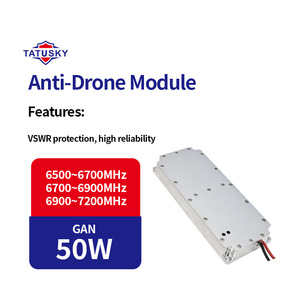
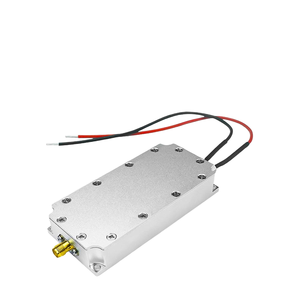
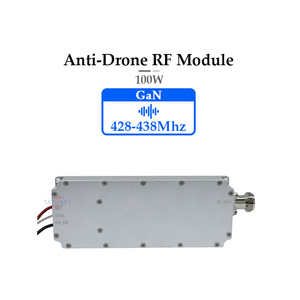
Integrating 700–6000MHz GaN RF amplifiers (such as our 80W and 100W module series) into mobile jamming units requires stable, ripple-free DC voltage. Tactical UPS units provide conditioned 28V/48V DC outputs directly to GaN power modules, maximizing thermal efficiency and RF range (up to 5km passive detection).
Sub-zero temperatures in Gyeonggi and Gangwon provinces severely degrade standard Lithium-Ion batteries. Our custom tactical UPS systems utilize high-rate LiFePO4 chemistry with integrated internal heating blankets, maintaining 90%+ nominal capacity even at -25°C.
Space inside tactical shelters and armored vehicles is extremely limited. Standardized 19-inch rackmount UPS enclosures (1U to 4U height) allow clean integration alongside signal processors, optical receivers, and multi-frequency jammer drivers.
Our ruggedized power conversion and RF defense modules are specifically tailored for integration into diverse Korean operational environments:
Underground installations require non-gassing battery systems, zero-noise operational profiles, and high-efficiency heat dissipation. Our rackmount UPS units provide silent backplane power management for server racks, satellite communications, and command consoles, preventing downtime during grid switching.
Mounted on light tactical vehicles, these mobile units combine our 60g passive drone detection sensors with 50W–100W GaN RF amplifiers. A vehicle-mounted 28V DC-DC converter and rugged UPS sustain active jamming sweeps while absorbing heavy vehicular vibration and engine start voltage drops.
Seoul’s smart city framework relies on thousands of networked IoT sensors, CCTV surveillance grids, and emergency signal towers. Compact IP66 outdoor tactical UPS boxes prevent power loss at traffic control nodes and critical infrastructure substations during severe monsoon events or power outages.
Subsurface sonar processing and coastal radar posts along the Yellow Sea demand shock-hardened (MIL-S-901D) and salt-fog-resistant power units. Our conformal-coated internal electronics guarantee long-term immunity against high-humidity marine air.
Navigating global supply chain logistics requires a vendor that balances cutting-edge engineering with reliable export compliance and rapid custom delivery times.
Our senior engineering board brings decades of specialized experience in high-density power conversion, planar magnetics design, and high-frequency GaN RF power amplification. We don't just sell components; we design tailored power architectures.
Every product undergoes 100% full-load burn-in testing, thermal imaging evaluation, and automated optical inspection (AOI). Complete component-level batch traceability guarantees component reliability for military integrators.
Instead of starting expensive clean-sheet designs, we rapidly modify existing proven COTS chassis—adjusting output voltage rails, connector pinouts (MIL-spec circular connectors), and mounting brackets in weeks rather than months.
Direct answers to compliance, customization, shipping, and technical integration questions commonly asked by South Korean defense buyers.
Consult with our engineering team today to review your electrical specifications, request mechanical CAD drawings, or receive a tailored FOB/CIF quote for Seoul delivery.
Contact Us