Engineered for harsh environments, tactical defense, counter-UAV jammer architectures, and mission-critical U.S. commercial & defense infrastructure.
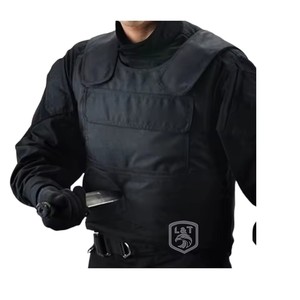
Ergonomic, high-tensile protective vest engineered for law enforcement, security personnel, and tactical defense operators requiring modular gear integration.
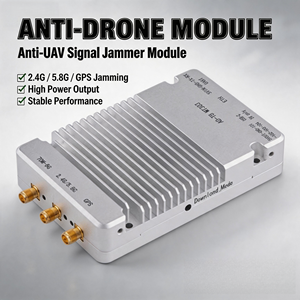
Ultra-fast 2s spectral analysis passive UAV detection module featuring multi-frequency power efficiency for counter-drone perimeter security.
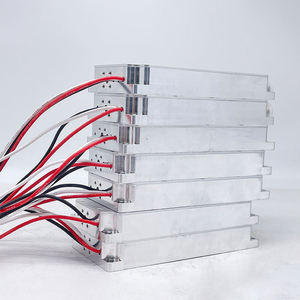
High-efficiency Gallium Nitride (GaN) solid-state power amplifier for FPV anti-drone systems, electronic countermeasures, and tactical radio units.
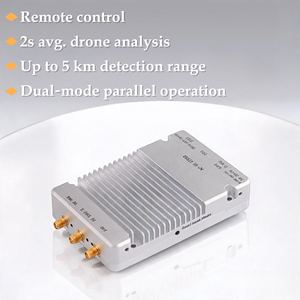
Compact dual-mode passive detection power module tailored for body-worn soldier kits, mobile surveillance robots, and tactical field deployments.
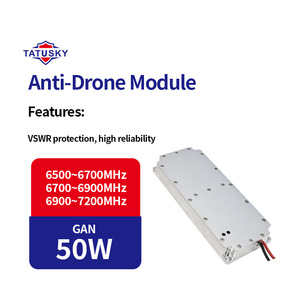
Precision RF power amplifier operating across 6.5GHz-7.2GHz spectrum. Features built-in thermal protection and VSWR ruggedness for continuous operation.
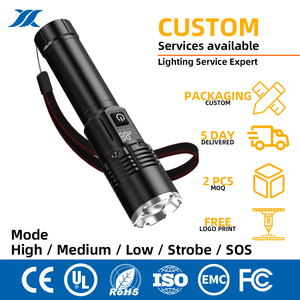
Ruggedized aluminum alloy self-defense flashlight with real-time digital battery power output status display and Type-C fast charging system.
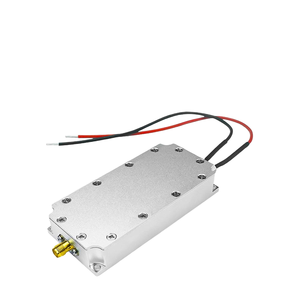
Customizable high-power L-band amplifier module targeting GPS L2/L5 and FPV video control links. Engineered for rugged vehicle-mounted arrays.
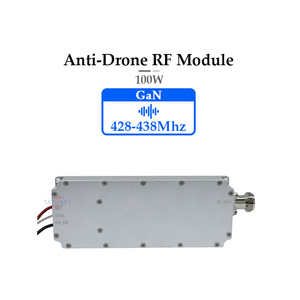
Heavy-duty 100-Watt GaN power conversion module designed specifically for long-range 433MHz control link disruption in tactical counter-drone installations.
The demand for reliable, high-density, and environmentally ruggedized embedded power supply modules across North American defense, aerospace, naval, and industrial automated sectors has undergone a radical transformation. As systems shift toward modular open architectures, system integrators in the United States require embedded power factories capable of delivering custom COTS (Commercial Off-The-Shelf) and MOTS (Modified Off-The-Shelf) power conversion topologies optimized for stringent Size, Weight, Power, and Cost (SWaP-C) criteria.
Modern embedded power solutions are no longer passive brick components; they are dynamic, intelligent power distribution units (PDUs), Solid-State RF Power Amplifiers (SSPAs) leveraging Gallium Nitride (GaN) semiconductor chemistry, and uninterruptible power supply (UPS) systems designed to ride through harsh transient surges, high-impact mechanical shocks, and severe electromagnetic interference (EMI). This comprehensive technical guide provides defense prime contractors, industrial system architects, and procurement procurement directors with actionable engineering insights into selecting, custom-designing, and sourcing embedded power infrastructure in compliance with U.S. defense and commercial standards.
Core Information Gain: U.S. procurement regulations dictate strict adherence to environmental qualification protocols. Sourcing from experienced embedded power factories ensures full compliance with MIL-STD-810H (Environmental), MIL-STD-461G (EMI), MIL-STD-1275E (Vehicle 28VDC), MIL-STD-1399 (Shipboard 60Hz/400Hz), and MIL-STD-704 (Airborne Electrical Systems).
Embedded power modules operate at the heart of mission-critical machinery across diverse American industries. Understanding the operational environmental profiles for each deployment scenario allows electrical engineers to tailor input transient filters, thermal paths, and enclosure sealing profiles effectively:
Deploying multi-frequency GaN RF power amplifier modules (433MHz, 1.2GHz, 5.8GHz, 6.8GHz) into mobile counter-drone jamming units and passive spectrum monitoring radars requiring high power-added efficiency (PAE) and 2-second fast signal detection response.
Custom 28 VDC input DC-DC converters and rackmount power supplies meeting MIL-STD-1275E transient spikes (up to 100V surges for 50ms) to ensure continuous operation of battlefield C4ISR command platforms.
Hot-swappable backplane AC-DC modules, shipboard UPS systems, and IP67 sealed power converters designed for 60Hz/400Hz shipboard power buses meeting MIL-STD-1399 Section 300 and high-impact shock standard MIL-S-901D Grade A.
Lightweight, high-density power converters and inverters operating from 115 VAC / 400 Hz airborne buses complying with MIL-STD-704 hold-up time and phase balance requirements for defense flight decks.
Continuous-duty DIN-rail and rack-mounted industrial AC-DC power systems for oil & gas refineries, smart grid energy distribution hubs, automated assembly robotics, and telecom base station towers.
Body-worn stab-proof armor vest protections paired with high-power Type-C fast-charging rechargeable tactical illumination systems designed for law enforcement and private security details across U.S. municipalities.
The U.S. embedded power procurement market is experiencing four major technological shifts that influence hardware purchasing decisions among Tier-1 defense contractors and original equipment manufacturers (OEMs):
1. Transition from Silicon MOSFETs to Gallium Nitride (GaN) & Silicon Carbide (SiC): Traditional silicon-based RF power amplifiers suffer from thermal bottlenecks and efficiency caps around 35-40%. By integrating GaN-on-SiC semiconductor dies, next-generation RF embedded modules achieved over 60-70% power-added efficiency (PAE), allowing defense systems to output 80W-100W of clean RF jamming energy in chassis footprints half the size of legacy systems.
2. Modern COTS and MOTS Architecture Adoption: Clean-sheet custom engineering projects incur exorbitant Non-Recurring Engineering (NRE) costs and extended qualification timelines lasting 18 to 24 months. U.S. procurement agents are rapidly transitioning toward modified COTS standard chassis. By leveraging pre-qualified mechanical housings and modifying internal PCB output rails or connector types (e.g., circular MIL-DTL-38999 connectors), program managers compress delivery timelines to weeks while fulfilling specialized requirements.
3. SWaP-C (Size, Weight, Power, and Cost) Optimization: Portable airborne platforms, uncrewed aerial vehicles (UAVs), and soldier-worn tactical gear place extreme constraints on mass. The integration of 60-gram passive detection modules and lightweight conduction-cooled DC-DC bricks enables extended operational endurance without sacrificing signal processing performance.
4. Extreme Environmental Ingress Protection (IP65 / IP67 / IP68): Ground combat environments and naval deck installations subject electronic payloads to salt fog, sandstorms, submersion, and chemical washing. Embedded power suppliers are responding with fully potted chassis, vacuum-sealed enclosures, and thermal conduction cooling paths that bypass air-intake fans prone to dust clogging.
To facilitate procurement evaluation for U.S. government contracts and industrial projects, the matrix below details the critical engineering standards applied across our embedded power product lines:
| Standard | Technical Scope | Design Implementation & Hardware Impact |
|---|---|---|
| MIL-STD-810H | Environmental Engineering Considerations | Thermal derating (-40°C to +85°C), vibration-isolated magnetics, conformal coating, humidity & salt-fog resistance. |
| MIL-STD-461G | Electromagnetic Interference (EMI / EMC) | Multi-stage LC input EMI filters, shielded enclosures, low-radiated emission switching topologies, ground bonding. |
| MIL-STD-1275E | 28 VDC Electrical Input for Military Vehicles | Heavy-duty TVS transient voltage surge suppressors, reverse polarity protection, 250V spike clamping, cranking drop hold-up. |
| MIL-STD-1399-300 | Shipboard Electrical Interface & Power Quality | Low harmonic distortion (THD < 3%), 60Hz/400Hz AC input tolerance, tight output voltage regulation during bus transfer spikes. |
| MIL-STD-704F | Aircraft Electrical Power Characteristics | High-frequency 400Hz transformer isolation, emergency bus power ride-through capacitance, phase balance control. |
| MIL-S-901D | High-Impact Mechanical Shock (Shipboard) | Structural aluminum chassis reinforcement, mass-balanced transformers, potted component potting, locked card guides. |
| IP65 / IP67 / IP68 | Ingress Protection Rating | O-ring gasket seals, MIL-DTL-38999 circular connectors, liquid-tight potted potting, fanless conduction cooling. |
As a dedicated veteran-friendly manufacturing partner backed by decades of power design heritage, our production facilities provide full-spectrum engineering, prototyping, and mass production capabilities for North American customers:
In-House R&D and Thermal Modeling: Every custom embedded power module undergoes 3D Finite Element Analysis (FEA) thermal simulation to eliminate hot spots on power MOSFETs, GaN transistors, and planar transformers before physical PCB spinning. This guarantees long mean-time-between-failures (MTBF) exceeding 100,000 hours under rated stress conditions.
State-of-the-Art SMT Assembly & Potting Lines: Automated Surface Mount Technology (SMT) lines process high-density multi-layer FR4 and aluminum substrate PCBs. For harsh environment products, automated polyurethane or silicone potting dispensing systems provide total environmental encapsulation against moisture, vibration, and dust.
100% Automated Burn-In & Environmental Stress Screening (ESS): Quality control is paramount. Every production unit completes full load dynamic burn-in testing inside thermal cycling chambers combined with real-time electrical parameter logging to identify infant mortality failures prior to shipment.
Supply Chain & Quality Certifications: Operating under an ISO 9001:2015 registered quality management system with PJR and ANAB accreditation, our facility maintains CAGE Code 0P327 verification, ensuring compliance with federal procurement standards, complete component traceability, and ITAR-aware handling protocols.
Below are direct answers to technical and procurement questions frequently asked by system integrators, electrical engineers, and purchasing officers in the U.S. market:
Need a custom GaN RF power amplifier, a ruggedized MIL-STD converter, or a specialized embedded power distribution system for your U.S. application? Contact our engineering team today for technical support and custom quotes.