


Whitepaper: Strategic Engineering & Procurement of Shipboard Backplane Systems in Morocco
As the Kingdom of Morocco advances its maritime security, naval defense modernization, and port automation infrastructure, the demand for specialized, high-reliability shipboard backplane systems and tactical defense electronics has grown exponentially. Facing harsh operational conditions in the Atlantic Ocean and Mediterranean Sea—ranging from high saline corrosion and thermal extremes to intense mechanical vibration—marine procurement officers and defense systems integrators require robust hardware built to withstand rigorous international military standards.
This comprehensive technical whitepaper explores the critical engineering paradigms governing modern shipboard backplane architectures, modular power conversion systems, Solid-State GaN RF power amplifiers, and counter-unmanned aerial systems (C-UAS). Furthermore, it details how partnering directly with top-tier Chinese original equipment manufacturers (OEMs) provides Moroccan defense contractors with superior technological performance, compliance assurance, and significant cost efficiencies.
1. The Evolution of Shipboard Backplane Power Systems in Naval Architecture
Traditional naval power distribution relied heavily on decentralized, hardwired power conversion units scattered across various vessel compartments. This legacy approach created massive wiring harness clutter, added unnecessary dead weight to naval hulls, and significantly increased maintenance downtime during combat or routine operations. Modern naval engineering, spearheaded by standards such as MIL-STD-1399 Section 300, has shifted toward Zonal Electrical Power Management.
At the heart of zonal electrical architecture is the Shipboard Backplane Power System. By standardizing power and data pathways onto an integrated, heavy-duty backplane chassis (such as VPX, VME, or custom industrial sub-racks), naval engineers achieve unprecedented operational benefits:
- Hot-Swappable Line-Replaceable Modules (LRMs): Power supply units (PSUs), DC-DC converters, and AC-DC rectifiers can be removed and replaced within minutes without shutting down main combat computers or unwiring complex junction boxes.
- N+1 and N+2 Redundancy: Multiple parallel power modules share load capacity over the backplane bus. If a single module experiences an unexpected fault, redundant modules automatically absorb the electrical load without voltage sag or system reboot.
- Superior Electromagnetic Interference (EMI) Shielding: Enclosing power conversion and data backplanes within precision-machined aluminum structures compliant with MIL-STD-461 eliminates cross-talk and RF leakage, protecting sensitive naval radar and sonar systems.
2. Localized Defense & Maritime Trends in the Morocco Market
Morocco’s unique geopolitical position as the gateway between Africa and Europe requires intense focus on maritime domain awareness, port security, and coastal defense. Major initiatives such as the Tanger Med Port expansion, new naval base upgrades in Ksar Sghir and Casablanca, and offshore EEZ (Exclusive Economic Zone) patrols have driven specific technical requirements for defense procurement:
- Salt Fog and Humidity Resilience: Maritime electronics deployed along North African coastlines are constantly exposed to high humidity and corrosive salt fog. Systems supplied to Morocco must feature conformal coated circuit boards, gold-plated backplane connector pins, and IP67-rated sealed enclosures.
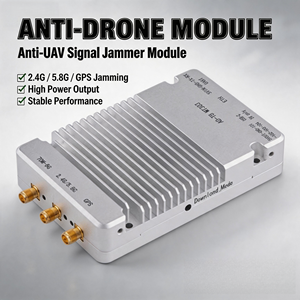
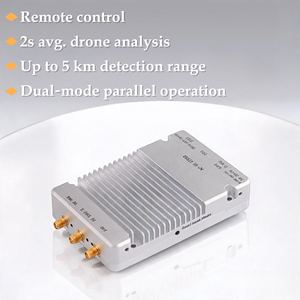
- Counter-UAS & Tactical RF Defense: The proliferation of low-cost commercial drones and asymmetric threat vectors has forced naval vessels and coastal patrol craft to integrate active RF jamming and passive detection modules. High-power GaN (Gallium Nitride) RF amplifiers operating across broad spectrum bands (from 400MHz up to 7.2GHz) are now directly integrated into shipboard defense sub-racks.
- Hybrid Power Source Compatibility: Modern Moroccan naval vessels and mobile coastal command stations often alternate between 115V/400Hz airborne/naval generator power, 230V/50Hz shore power, and 28V DC battery banks. Backplane power units must support wide-range inputs with active Power Factor Correction (PFC).

Advanced RF Module Integration on Naval Backplanes
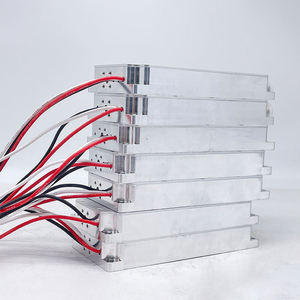
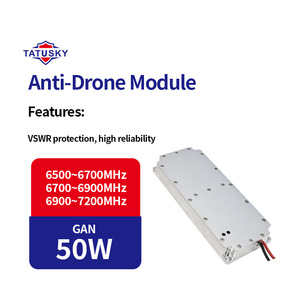
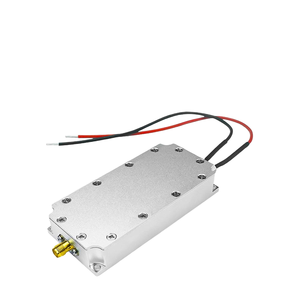
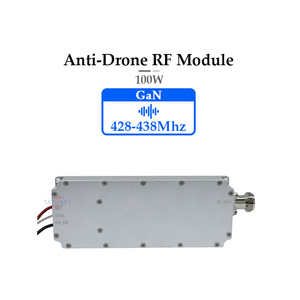
Modern defense systems require seamless synergy between power distribution and RF signal processing. Our specialized GaN RF power amplifier modules (ranging from 10W to 100W output) are built in standardized backplane form factors. These modules allow fast integration into shipboard counter-drone suites, providing localized directional jamming against FPV targets while drawing regulated, noise-filtered DC power directly from the main shipboard backplane bus.
3. Technical Analysis: GaN Solid-State RF Modules vs. Legacy Silicon Systems
In the realm of electronic warfare and drone defense, power density and thermal efficiency are paramount. Original procurement strategies often utilized Silicon LDMOS transistors, which suffered from high thermal dissipation and limited high-frequency output. By adopting Gallium Nitride (GaN-on-SiC) technology manufactured in premier Chinese production facilities, our RF defense modules achieve significant performance leaps:
- Higher Power Density: GaN devices operate at higher breakdown voltages, allowing 80W to 100W RF outputs from compact form-factors that easily slide into 2U or 3U backplane slots.
- Broadband Frequency Coverage: Single module designs can span frequencies from 700MHz to 6000MHz, eliminating the need for multiple discrete amplifier boxes.
- Thermal Tolerance: GaN junctions maintain stable linear power output even at elevated heatsink temperatures up to +85°C, ensuring reliable operation in North African desert-coastal fringe zones.
4. Quality Assurance, ISO 9001, and Supply Chain Integrity
When Moroccan defense primes select a Chinese manufacturer for shipboard backplanes and tactical electronics, regulatory compliance and quality assurance are non-negotiable. Leading Chinese suppliers adhere to strict international quality management standards:
Manufacturing facilities operate under ISO 9001 certified quality systems registered through Perry Johnson Registrars (PJR) with ANAB accreditation. Every step of the production process—from raw PCB fabrication and surface-mount technology (SMT) component placement to automated optical inspection (AOI), full-load thermal burn-in, and vibration screening—is meticulously logged. Complete Certificate of Conformance (CoC), test reports, and 3D STEP models are provided to Moroccan engineering teams to facilitate frictionless integration and import customs clearance.