High-reliability power amplification, passive UAV detection, and tactical survival systems optimized for severe operational environments in Australia and export markets.
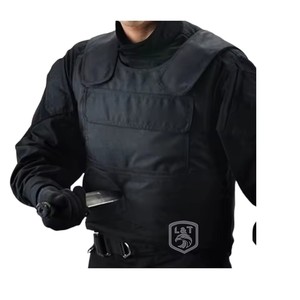
Engineered with advanced composite aramid lining, offering high multi-threat protection against sharp weapons, spikes, and blunt ballistic impacts for field personnel.
Ultra-fast spectrum analysis identifying unmanned aerial threats within 2 seconds. Delivers multi-frequency passive detection across 5km operational radius.
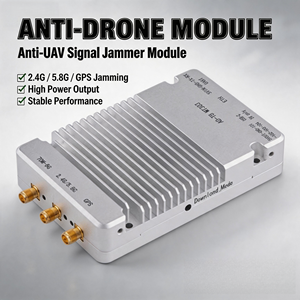
Broadband Gallium Nitride power amplifier delivering 80W output across 700MHz to 6000MHz. Purpose-built for anti-FPV jammer payloads and EW systems.
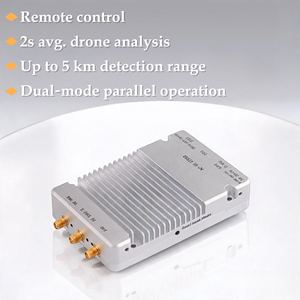
Ultra-lightweight 60g tactical sensor designed for infantry deployment. Detects DJI O4 protocols and custom digital video links with dual-mode efficiency.
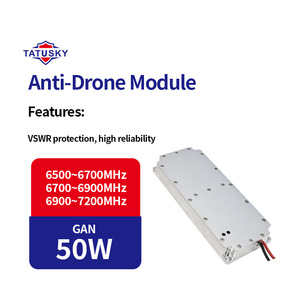
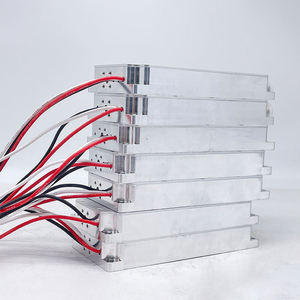
Precision high-band GaN power module providing saturated 50W output for targeted microwave frequency counter-drone interdiction.
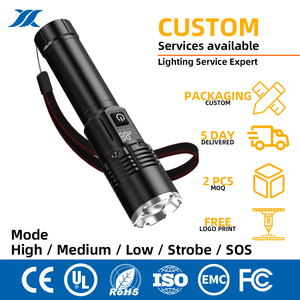
Rugged aircraft-grade aluminum illumination system featuring real-time digital power telemetry, Type-C quick charging, and optical zoom beam focusing.
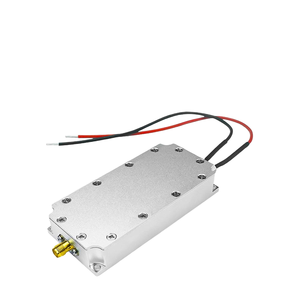
Scalable L-band power amplifier configured for 10W, 30W, 50W, or 100W output. Tailored for GNSS/GPS navigation denial and drone control link breaking.
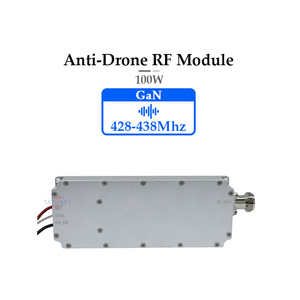
High-efficiency UHF solid-state module generating 100W continuous wave power for neutralizing long-range custom radio-controlled drone links.
Sovereign Industrial Capability, MIL-STD Engineering Integrity, and Next-Generation Counter-UAV Power Conversion
As Victoria, Australia accelerates its standing as the primary hub for land defense systems, autonomous warfare innovation, and advanced aerospace engineering, defense prime contractors across Melbourne require highly specialized power conversion, distribution, and RF amplification systems. Meeting the rigorous expectations of the Australian Department of Defence (DoD), Capability Acquisition and Sustainment Group (CASG), and global prime integrators demands hardware engineered beyond standard commercial tolerances.
Whether powering tactical command shelters along the Port Phillip defense industry precinct, supplying clean 28 VDC power to armored combat vehicles under Australian land capability initiatives (such as LAND 400), or deploying high-density Gallium Nitride (GaN) RF power modules for Counter-Unmanned Aerial Systems (C-UAS) along critical assets, robust electrical design forms the backbone of operational readiness.
Australian operational theaters vary from humid tropical maritime coasts to harsh, dusty, 50°C Outback environments. Power conversion systems must incorporate conduction cooling, fully potted IP67 sealing, and optimized heat dissipation to operate without thermal derating under prolonged duty cycles.
Modern drone threats (including low-altitude FPV loitering munitions) rely on frequency-hopping radio control links and digital video streams. Utilizing Gallium Nitride (GaN) on Silicon Carbide (SiC) substrates delivers unmatched power density, enabling 80W–100W RF outputs in ultra-compact form factors.
Re-engineering power supplies from scratch incurs excessive Non-Recurring Engineering (NRE) costs and multi-year lead times. Modified Commercial-Off-The-Shelf (MOTS) architectures leverage baseline MIL-STD qualifications to reduce acquisition cycles for Melbourne defense buyers.
Detailed comparative breakdown of defense power compliance benchmarks required across Australian and international military programs.
| Standard | Military Operational Scope | Specific Defense Power Engineering Challenge | AJPS & RF Solution Engineering Impact |
|---|---|---|---|
| MIL-STD-810H | Environmental Test Methods & Engineering Guidelines | Extreme temperature shock (-40°C to +71°C), mechanical vibration during off-road transit, sand, salt fog, and dust exposure. | Conformal coating, silicone encapsulation, shock-hardened magnetics, non-corrosive aluminum enclosure designs. |
| MIL-STD-461G | Requirements for the Control of Electromagnetic Interference (EMI) | High-frequency switching noise interference with co-located tactical communications, radar, and navigation sensors. | Multi-stage LC input filtering, 360° shielded enclosures, bonded chassis grounding, and spread-spectrum modulation. |
| MIL-STD-1275E | Characteristics of 28 Volt DC Electrical Systems in Military Vehicles | Severe voltage spikes (+100V transients), cranking voltage dropouts (down to 6VDC), and reverse polarity hazards. | Active transient surge suppression circuits, ultra-fast clamping diodes, and high-energy capacitive hold-up banks. |
| MIL-STD-1399 (Sec. 300B) | Shipboard Interface Requirements for Electric Power Equipment | Naval vessel 60 Hz / 400 Hz bus voltage spikes, phase imbalance, line harmonics, and severe deck shock requirements. | High power factor correction (PFC > 0.99), low harmonic distortion (THD < 3%), zonal electrical backplane isolation. |
| MIL-STD-704F | Aircraft Electrical Power Characteristics | Avionics power transfer interruptions, variable frequency 360–800Hz AC inputs, high altitude ambient cooling constraints. | Conduction-cooled cold-plate design, emergency power ride-through, ultra-lightweight high-density power modules. |
| IP65 / IP67 / IP68 | Ingress Protection Rating for Harsh Environments | High-pressure water jet washdown, complete submersion during amphibious operation, fine dust ingress protection. | O-ring environmental seals, MIL-DTL-38999 circular connectors, pressure relief valves, and vacuum potting process. |
How our defense power supplies, RF modules, and tactical gear support Australian defense capability programs across land, maritime, air, and joint domain force protection.
Melbourne-based land defense integrators outfitting next-generation combat reconnaissance vehicles require MIL-STD-1275E compliant 28 VDC to DC power converters. These units power onboard C4ISR command hardware, satellite communications, and counter-IED / counter-FPV jamming modules directly from vehicle alternator buses without risking voltage collapse during engine startup.
Critical Australian infrastructure—including naval shipyards, air bases, and government facilities—requires 24/7 automated drone defense. Integrating multi-band GaN RF modules (700-6000MHz and 1.2GHz L-Band) into automated stationary radar and jammer towers enables long-range spectrum monitoring and immediate directional neutralization of rogue drones within 2 seconds.
Supporting naval modernization programs across Victoria's shipyards, hot-swappable N+1 redundant backplane AC-DC power supplies ensure uninterrupted electrical distribution for naval radar arrays, combat systems, and shipboard computing racks compliant with MIL-STD-1399 Section 300 standards.
Dismounted special forces and defense security teams operating in forward positions leverage ultra-portable 60g passive drone detection sensors paired with multi-threat stab-proof tactical vests and high-power illumination gear for rapid tactical reconnaissance, perimeter guard duties, and stealth threat avoidance.
A disciplined, ISO 9001 certified engineering lifecycle ensuring seamless integration, risk reduction, and rapid delivery for defense procurement officers.
Comprehensive evaluation of electrical parameters (transients, efficiency, harmonics), mechanical constraints (rack depth, weight, connector orientation), and MIL-STD compliance matrix targeting program specifications.
Evaluation of field-proven baseline hardware platforms. Reusing qualified power and RF topology significantly reduces Non-Recurring Engineering (NRE) costs and speeds time-to-market.
Advanced finite element analysis (FEA) thermal modeling and 3D EMI shielding simulations to guarantee operation at full load under maximum ambient heat and electromagnetic exposure.
Prototype fabrication under strict quality control, followed by internal screening for line/load regulation, efficiency, environmental burn-in, thermal rise, and MIL-STD-461 pre-compliance.
Delivery of complete engineering data packages (3D STEP models, electrical cut sheets, test reports) alongside guaranteed long-term component obsolescence monitoring and sustainment support.
Veteran-Owned Heritage, Uncompromised Manufacturing Quality, and Global Export Expertise
Established in 1987 as a Veteran-Owned Small Business (VOSB) with CAGE Code 0P327, AJ's Power Source Inc. (AJPS) has engineered mission-critical power conversion and power distribution systems for over three decades. Our technology is deployed globally across ground, naval, aerospace, and defense electronics sectors.
Addressing common technical, procurement, and compliance queries raised by Australian and international defense project managers.
Our military power conversion platforms and RF modules are qualified against core US Military Standards (MIL-STD-810H, MIL-STD-461G, MIL-STD-1275E, MIL-STD-1399, MIL-STD-704F), which form the baseline for Australian DEF(AUST) specifications and Capability Acquisition and Sustainment Group (CASG) tenders. We provide full compliance matrices and test data to simplify local integration.
Gallium Nitride (GaN) power amplifiers deliver significantly higher power efficiency, wider bandwidth capability, and superior thermal conductivity compared to legacy LDMOS or GaAs devices. This allows our anti-drone modules (such as the 700-6000MHz 80W and 433MHz 100W units) to generate dense jamming signals with lower power consumption and smaller mechanical footprints.
Yes. Modifying proven COTS or MOTS designs is the standard approach to satisfying custom output voltage rail, connector (e.g., MIL-DTL-38999), environmental sealing (IP67), or mechanical envelope requirements. Reusing pre-qualified power topologies drastically cuts lead times and avoids costly full custom engineering fees.
Our portable and long-range anti-drone detection modules monitor radio spectrum emissions passively without alerting adversary spectrum analyzer tools. Featuring 2-second signal analysis, the modules identify control signals (including DJI O4 digital video links and custom radio frequency hops) across up to 5km range.
We regularly support defense export logistics to Australia, Europe, and allied nations. Every quote includes detailed CAGE code (0P327) data, Harmonized System (HS) codes, compliance statements, and export documentation required by defense procurement authorities.
You can connect immediately with our engineering team by clicking the global live inquiry button located on any product card or in the call-to-action module below. Our senior power and RF design engineers will review your specifications and respond promptly.
Whether you require customized GaN RF amplifier modules, MIL-STD-1275 vehicle power supplies, or specialized tactical protection gear for programs in Melbourne or worldwide, our technical team is ready to assist.